

Electricity in Algeria in 2023
In 2023, Algeria’s electricity consumption was supplied almost entirely by fossil fuels: about 99% came from fossil sources, with gas alone accounting for nearly 99%. Low-carbon electricity supplied only about 1%, leaving clean sources with a very small role. This heavy reliance on fossil electricity highlights the opportunity to expand low-carbon generation and reduce the climate-changing emissions and air pollution associated with fossil fuels.
Is Electricity Growing in Algeria?
Electricity consumption per person is growing in Algeria. In 2023, it reached a new record of about 2,086 kWh per person, up 75 kWh—or roughly 4%—from the previous record set in 2022. That growth is encouraging as electrification and expanding digital services increase electricity needs. However, low-carbon generation has not kept pace: it stood at only about 20 kWh per person, around 8 kWh below the historical record reached in 1985. This disappointing shortfall shows that growth in electricity supply needs to be accompanied by much faster expansion of clean generation.
Suggestions
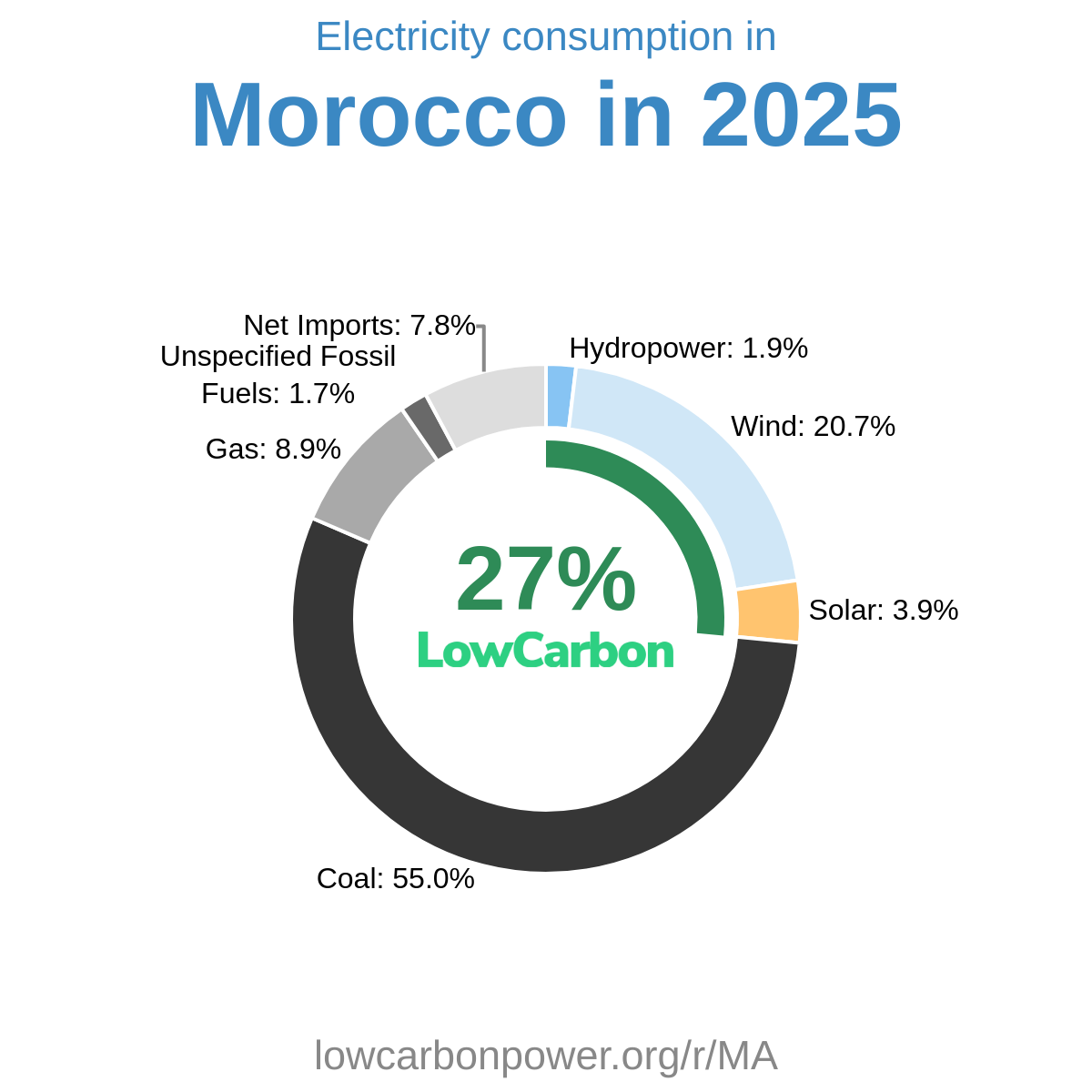
Algeria should prioritize solar deployment while developing nuclear electricity and suitable wind projects. Relevant examples include nearby Morocco, where wind supplies about 20% of electricity, and sunny Mediterranean regions such as Spain and Cyprus, where solar supplies roughly 23%. The US state of Nevada demonstrates an even larger solar contribution, at about 35%. For nuclear, the United Arab Emirates offers a useful regional example, generating about 20% of its electricity from nuclear, while France demonstrates how nuclear can supply roughly two-thirds. Algeria can learn from these regions’ experience in building clean generation, developing skilled workforces, and strengthening electricity grids to support a growing solar, wind, and nuclear fleet.
History
Algeria’s recorded low-carbon electricity history is largely one of fluctuating hydropower output rather than sustained expansion. During the 1980s, annual hydro increases of about 0.2–0.3 TWh alternated with declines of 0.3–0.4 TWh. The 1990s brought smaller movements, mostly gains or losses of about 0.2 TWh, followed by a modest increase in 1998. In the 2000s and early 2010s, further hydro gains were repeatedly offset by declines, including a 0.3 TWh increase in 2005 followed by an equally large decrease in 2006, and a similar pattern in 2011 and 2013. A notable clean-electricity advance came in 2017, when solar generation increased by 0.5 TWh, more than offsetting that year’s 0.2 TWh hydro decline. That solar growth provides an encouraging foundation for a broader, sustained low-carbon expansion.
Electricity Imports and Exports
Balance of Trade
Nearby Regions