

From September 2025 through August 2026, low-carbon sources supplied about 44% of Estonia’s electricity consumption, net imports accounted for roughly 37%, and fossil sources supplied the remaining 18%. Wind and solar each contributed around 15–16%, while biofuels provided about 13%. Coal accounted for just over 1% of electricity consumption and was included in the fossil share. Clean electricity therefore supplied more than twice the share supplied directly by fossil sources, although the substantial import share cannot be classified as clean or fossil from the available data.
Is Electricity Growing in Estonia?
Estonia’s latest figures do not show record-setting electricity growth. Electricity consumption in 2026 stood at about 5,800 kWh per person—roughly half the historic peak of 11,700 kWh per person in 1986, a decrease of about 5,850 kWh per person. Low-carbon electricity generation was much closer to its record: about 2,590 kWh per person, compared with 2,620 in 2025, a small decline of around 1%. That slight setback in clean generation is disappointing given the need for more electricity to support electrification and growing AI demand. However, comparison with historic records alone does not establish the recent year-to-year trend in total consumption.
Suggestions
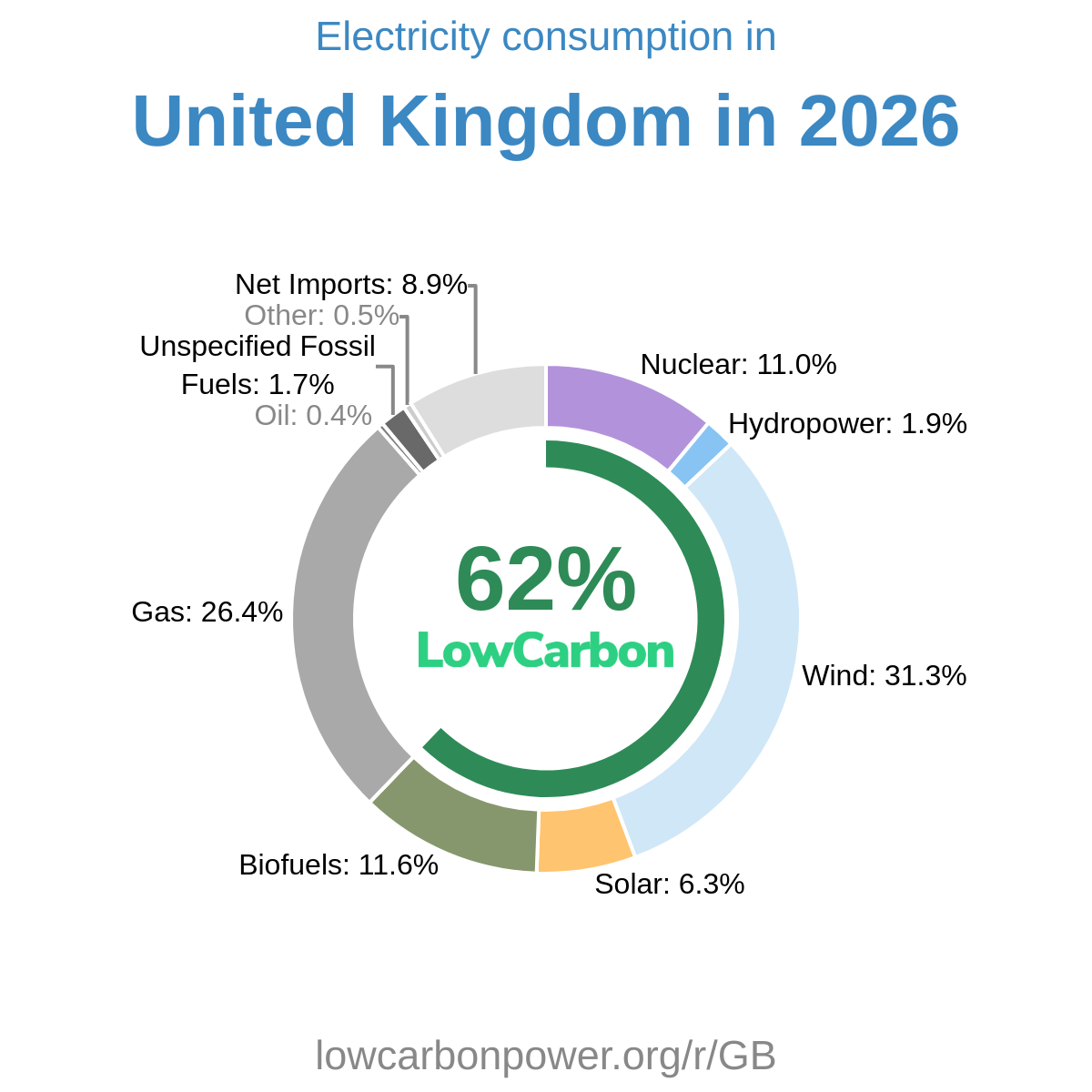
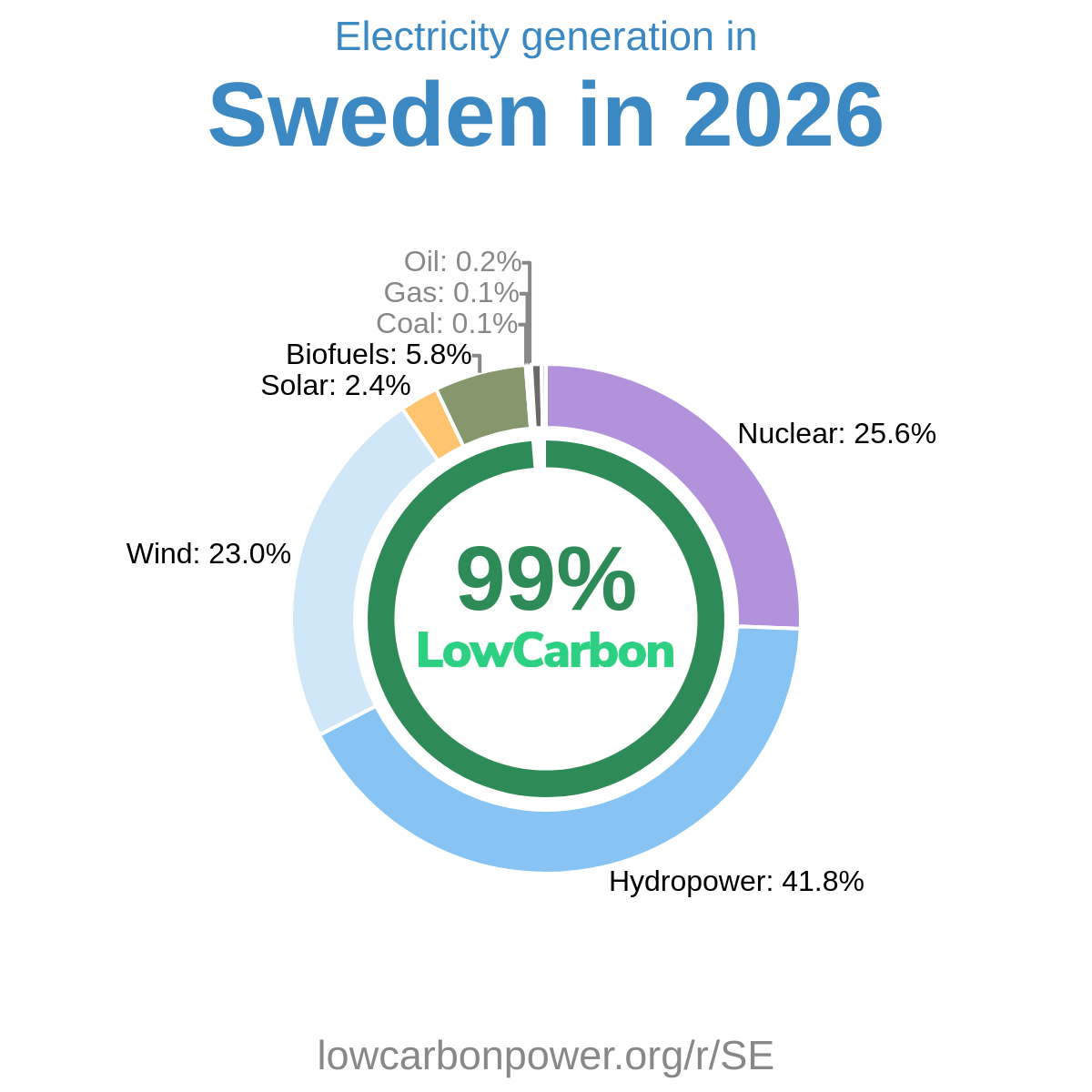
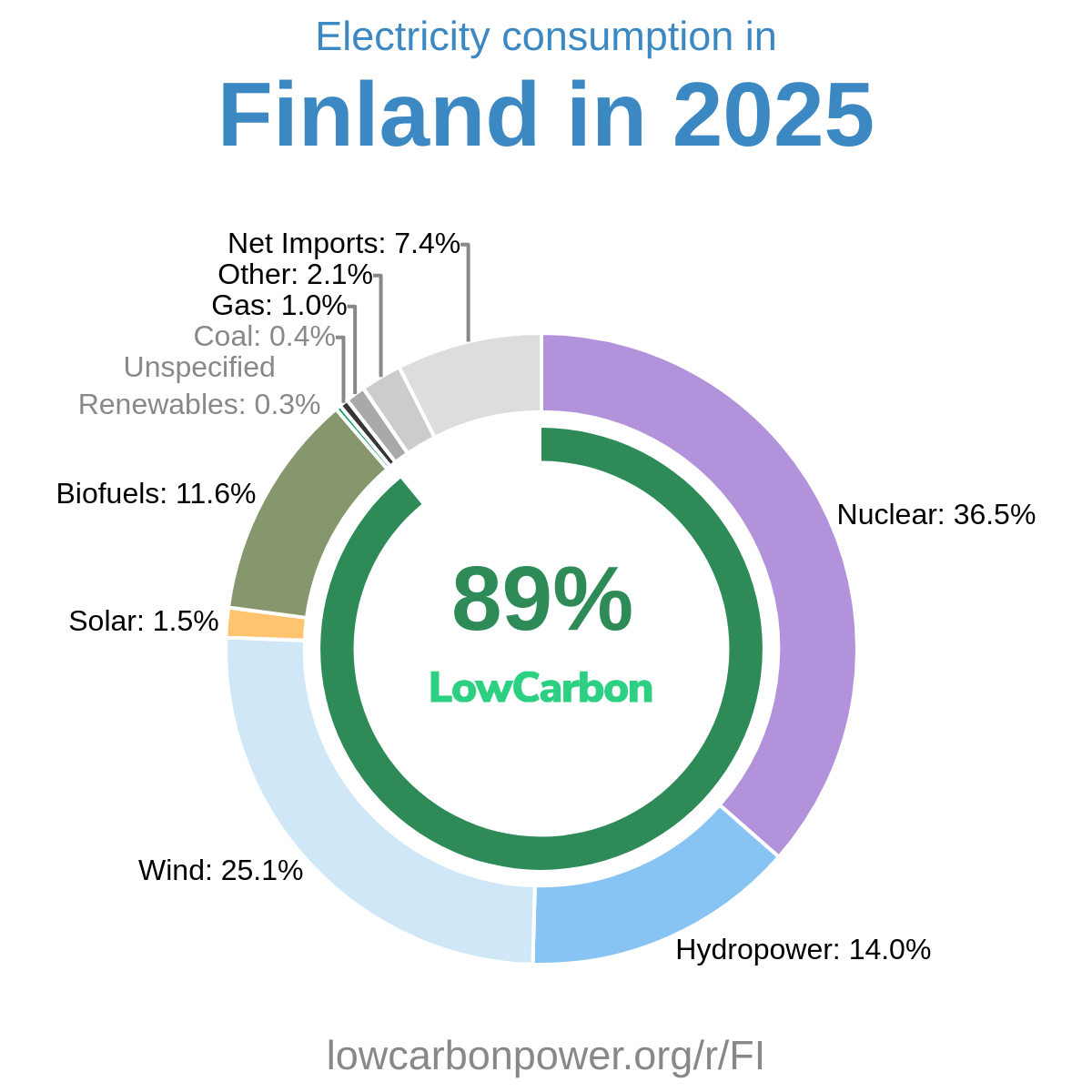
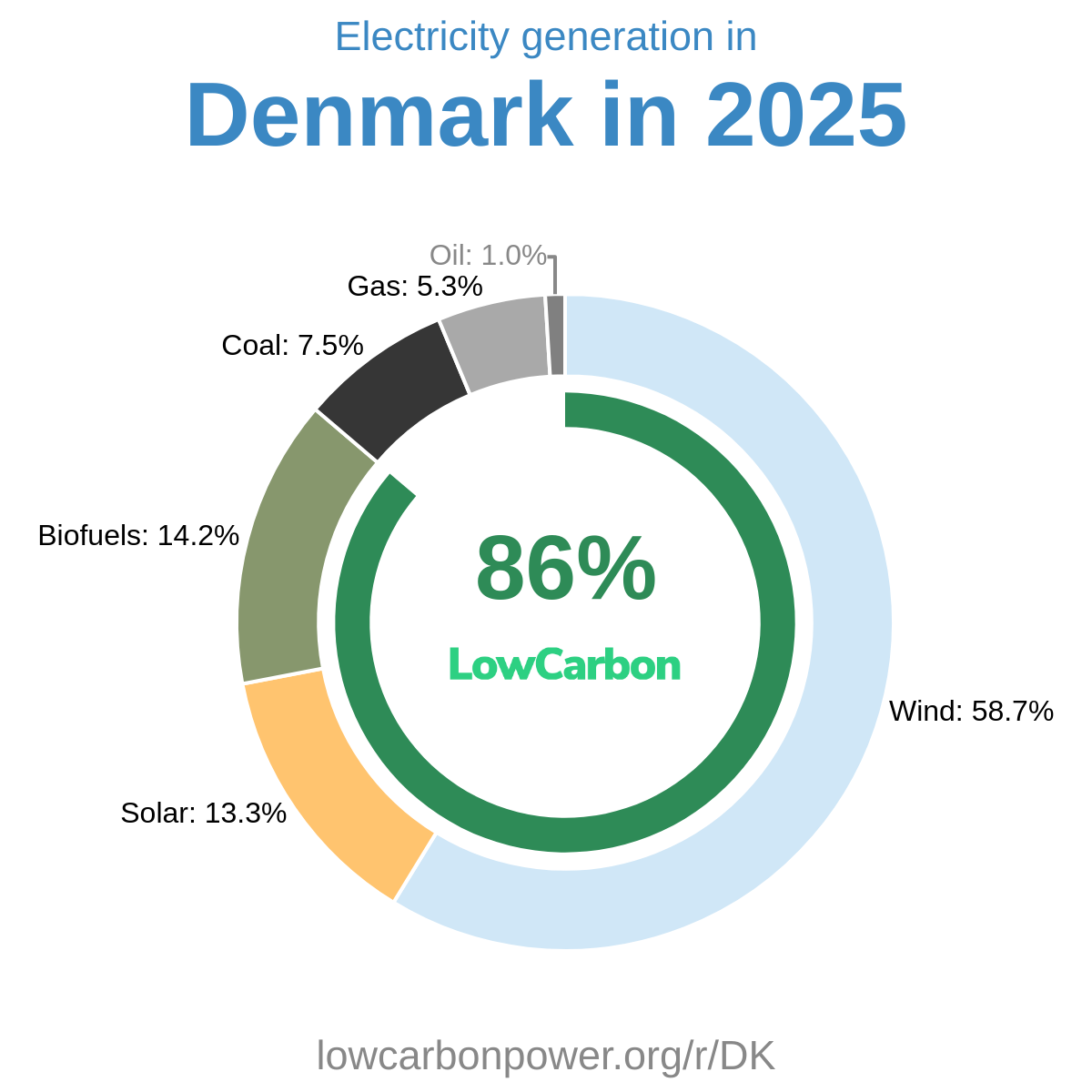
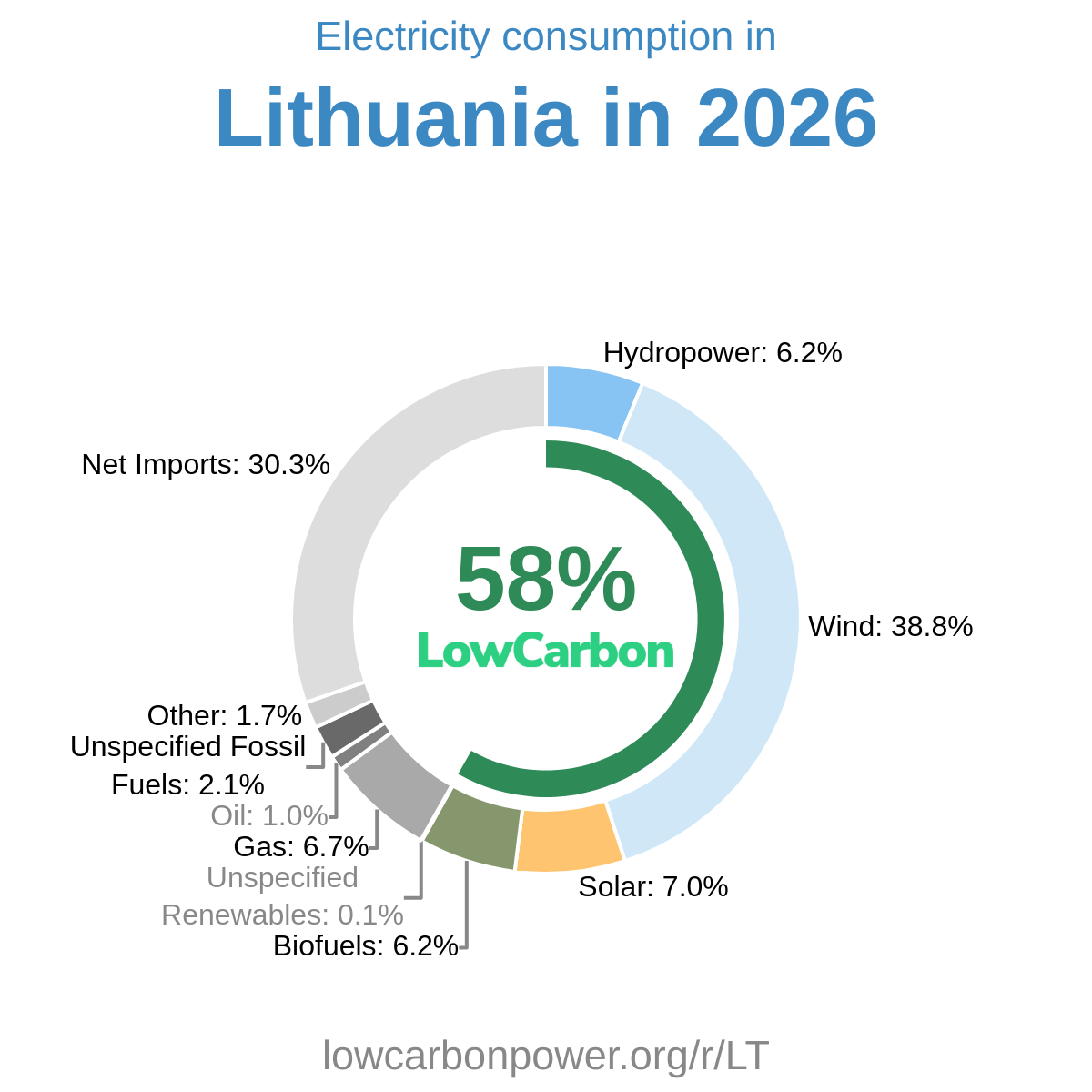
Estonia should build on its existing wind and solar production while considering nuclear electricity as an additional clean source. Nearby Lithuania generates 39% of its electricity from wind, and Denmark generates 57%, offering relevant examples of substantial wind deployment. For solar, the US states of Nevada and California generate about 35% and 31%, respectively, demonstrating the technology’s potential, although Estonia should tailor deployment to its own conditions. Finland is a particularly relevant nuclear example, generating 38% of its electricity from nuclear power; Sweden generates 25%, while France reaches about two-thirds. Expanding wind and solar alongside developing nuclear generation could increase Estonia’s domestic low-carbon electricity supply and reduce reliance on fossil electricity, with its associated climate change and air pollution impacts.
* 12M = Last 12 months (Sep 2025 – Aug 2026) — a rolling 12-month period, not a calendar year.
History
Estonia’s low-carbon electricity history shows an early period led by biofuels, followed by increasingly strong wind and solar growth. Biofuel generation rose by 0.3 TWh in 2009, 0.4 TWh in 2010 and 0.2 TWh in 2012, before falling by 0.3 TWh in 2013. During 2016–2018, biofuels added a combined 0.5 TWh, while wind’s 0.1 TWh decline in 2016 was offset by an equal increase in 2017. In 2020, all three sources grew: biofuels by 0.3 TWh and wind and solar by 0.2 TWh each. Solar continued rising in 2022 and 2023, adding 0.3 TWh altogether, while biofuels declined by the same combined amount. The strongest recent progress came in 2024 and 2025, when wind added a combined 0.7 TWh and solar added 0.6 TWh—encouraging gains that Estonia should build upon.
* 12M = Last 12 months (Sep 2025 – Aug 2026) — a rolling 12-month period, not a calendar year.
Electricity Imports and Exports
Balance of Trade
* 12M = Last 12 months (Sep 2025 – Aug 2026) — a rolling 12-month period, not a calendar year.
Nearby Regions