

Electricity in Guyana in 2023
In 2023, Guyana’s electricity consumption was overwhelmingly supplied by fossil fuels, which accounted for about 93% of the total. Low-carbon sources provided only about 7%, comprising roughly 5% from biofuels and 1.5% from solar. This leaves considerable room to expand clean electricity, particularly solar, and reduce dependence on fossil fuels and their contributions to climate change and air pollution.
Is Electricity Growing in Guyana?
Electricity consumption in Guyana is growing: it reached a record 1,622 kWh per person in 2023, about 76 kWh—or 5%—above the previous record set in 2022. Low-carbon electricity generation also reached a new high of 109 kWh per person, exceeding its previous record of 40 kWh in 2015 by 69 kWh per person. That means clean electricity generation per person was nearly three times its earlier peak, an encouraging improvement even though its share of electricity remains small. Continued growth would help meet future demand from electrification and expanding digital services, including AI.
Suggestions
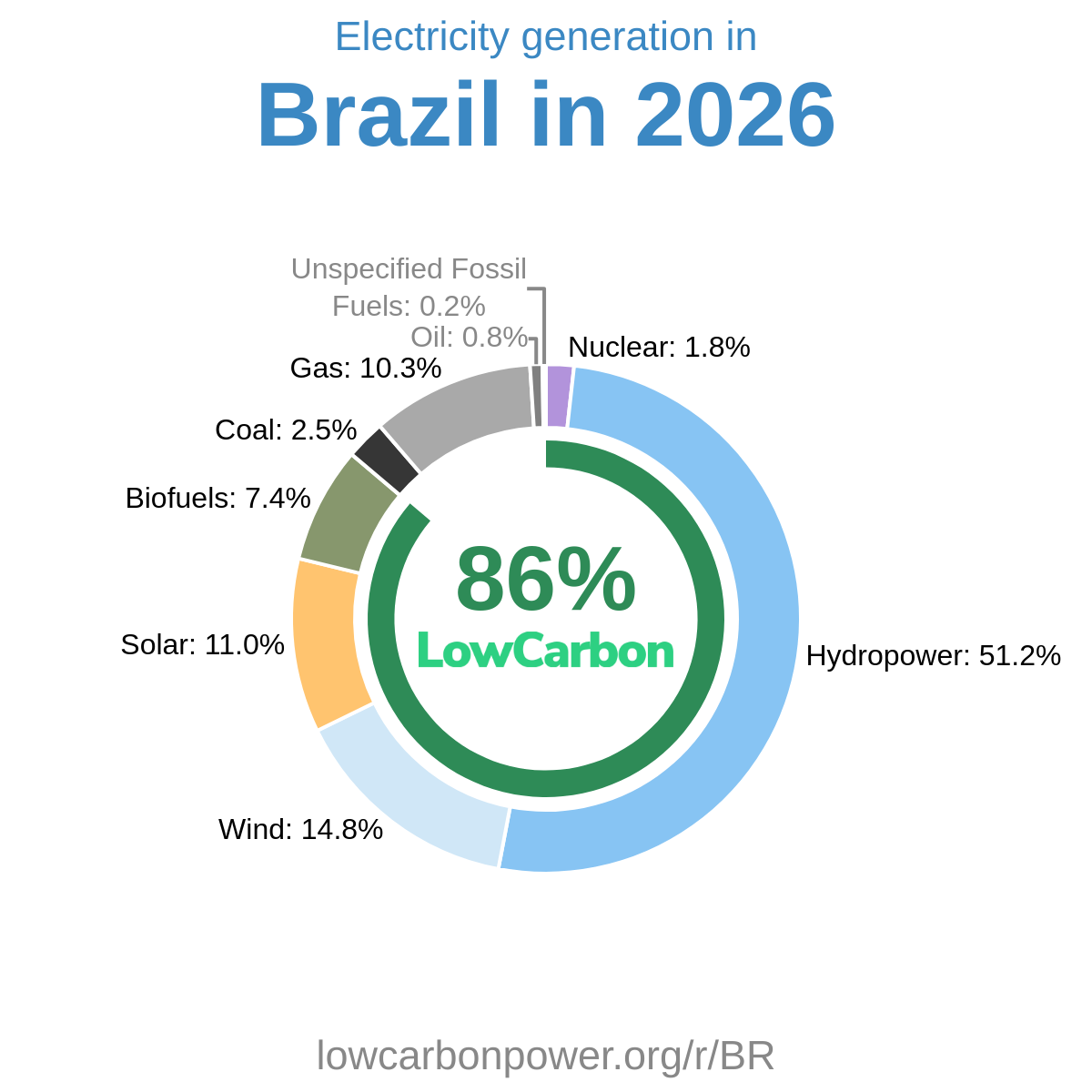
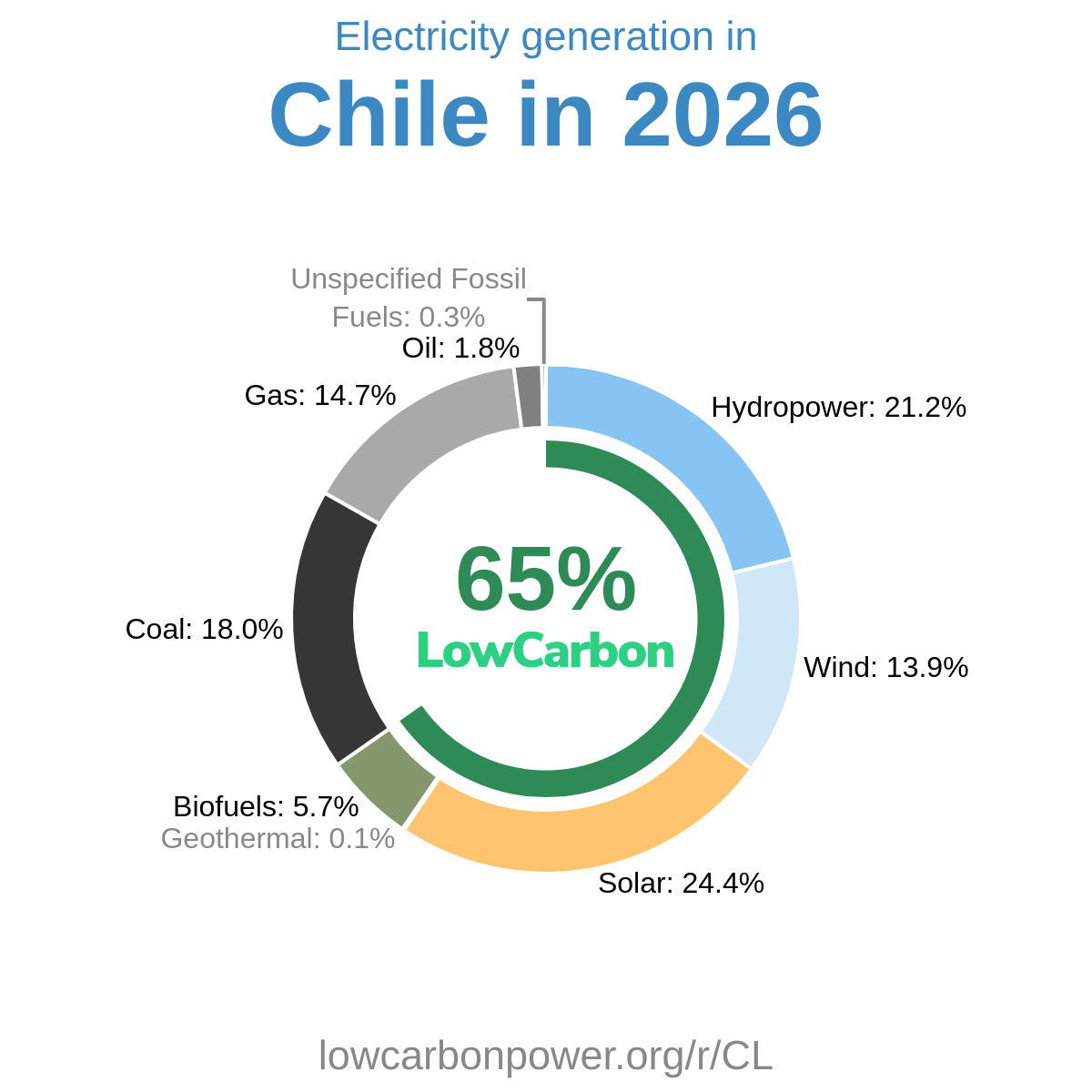
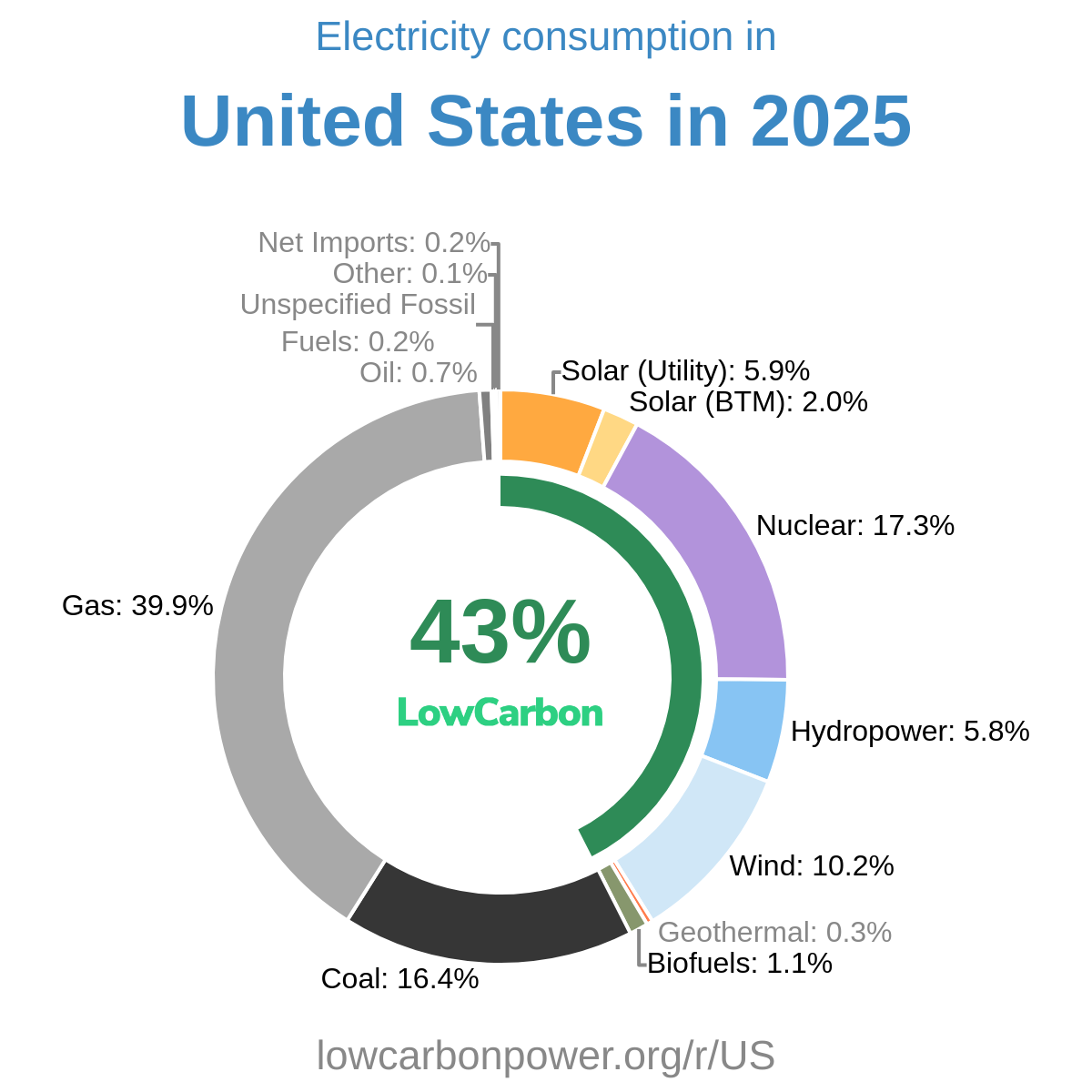
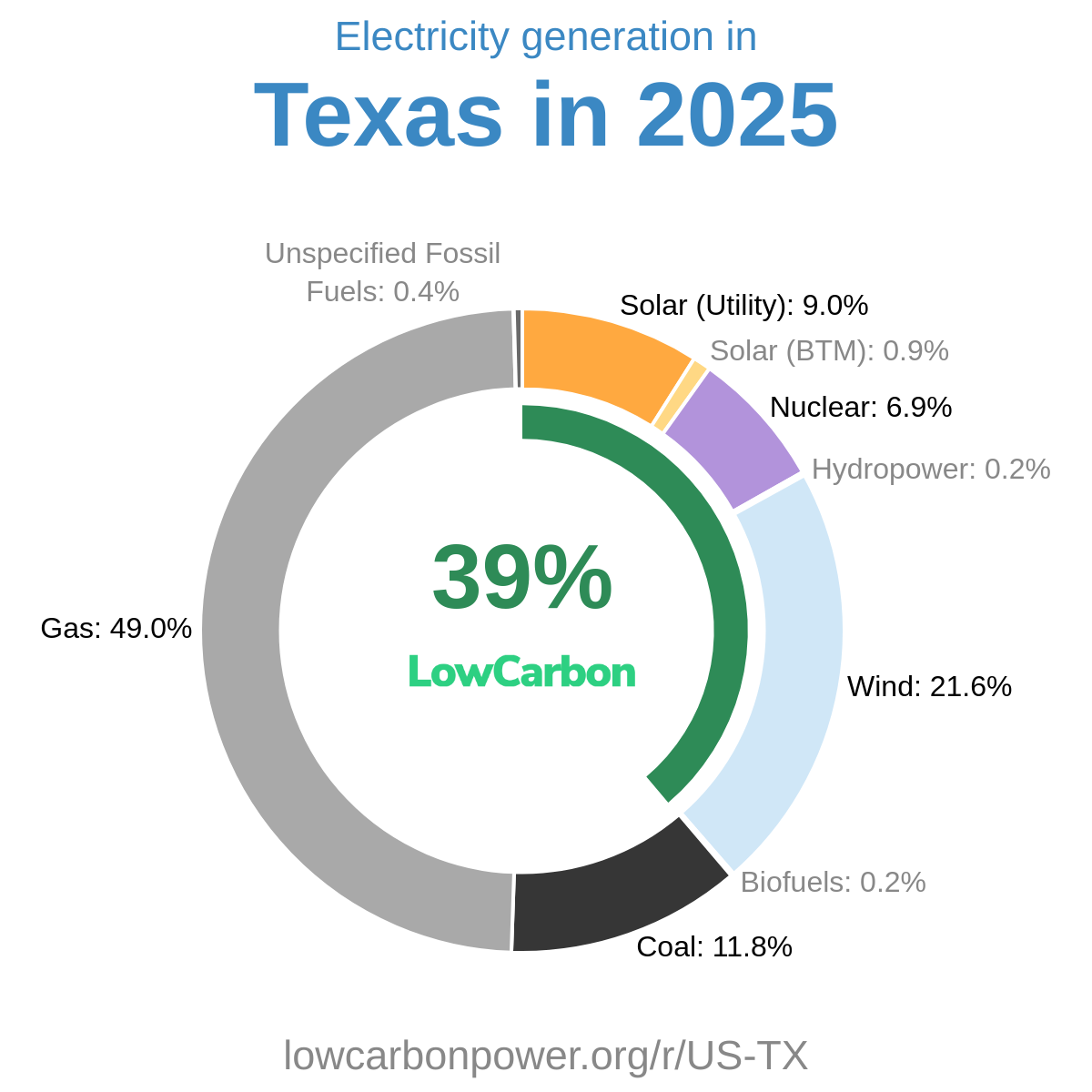
Guyana should prioritize expanding solar electricity while exploring wind and nuclear options. Nearby regional examples offer useful lessons: Chile generates about a quarter of its electricity from solar, while Brazil generates about 15% from wind and Uruguay about a third. Guyana could learn from these places’ approaches to developing projects and integrating clean generation into the grid, with wind investment guided by local resource assessments. Solar leaders such as the US state of Nevada, where solar supplies about 35% of electricity, also demonstrate the technology’s potential. For dependable low-carbon generation, Guyana should consider nuclear development suited to its future electricity needs, drawing on experience from France, where nuclear supplies about two-thirds of electricity, and the United Arab Emirates, where it supplies about a fifth.
History
The supplied historical figures show little recorded growth in Guyana’s low-carbon electricity generation through the 2000s and much of the 2010s. All listed annual changes in biofuel generation from 2000 through 2017 were zero at the reported precision; solar likewise recorded zero change in 2017, 2019 and 2020. This prolonged lack of visible growth underscores the importance of accelerating clean electricity development. In 2023, biofuel generation increased by about 0.1 TWh, while the reported change in solar generation remained zero. These are rounded year-to-year changes, so a zero does not necessarily mean there was no generation or no small increase.
Electricity Imports and Exports
Balance of Trade
Nearby Regions