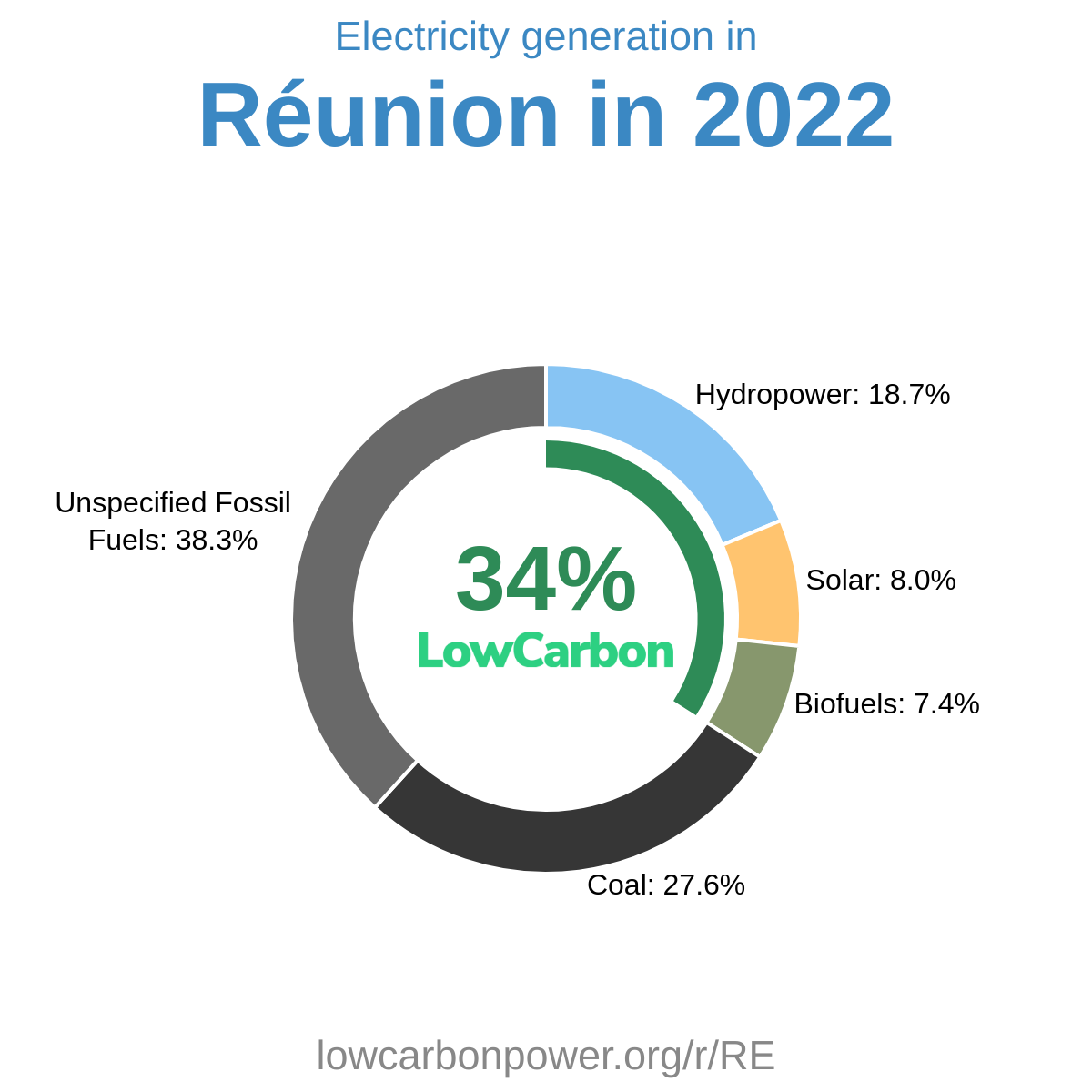


In 2022, Madagascar’s electricity consumption was just 87 kWh per person—about 2% of the global average of 3,794 kWh, or roughly 44 times lower. Fossil fuels supplied 1.71 TWh of electricity, accounting for approximately two-thirds of consumption, while low-carbon sources contributed about one-third, or 31 kWh per person. Such limited electricity availability can constrain healthcare, education, refrigeration, business development, and access to digital services. Expanding clean electricity would help meet these essential needs while reducing reliance on fossil fuels and their associated air pollution and climate impacts.
Is Electricity Growing in Madagascar?
Madagascar’s latest figures do not show sustained growth in electricity consumption per person. At 87 kWh in 2022, consumption remained slightly below the previous record of 88 kWh in 2019. Low-carbon electricity generation per person was also below its peak: 31 kWh in 2022 compared with 38 kWh in 2015, a shortfall of around 8 kWh according to the supplied comparison. This stagnation is concerning when substantially more electricity is needed for development and future demand from electrification and digital technologies. These per-person figures, however, do not by themselves establish whether total national electricity consumption increased or decreased.
Suggestions
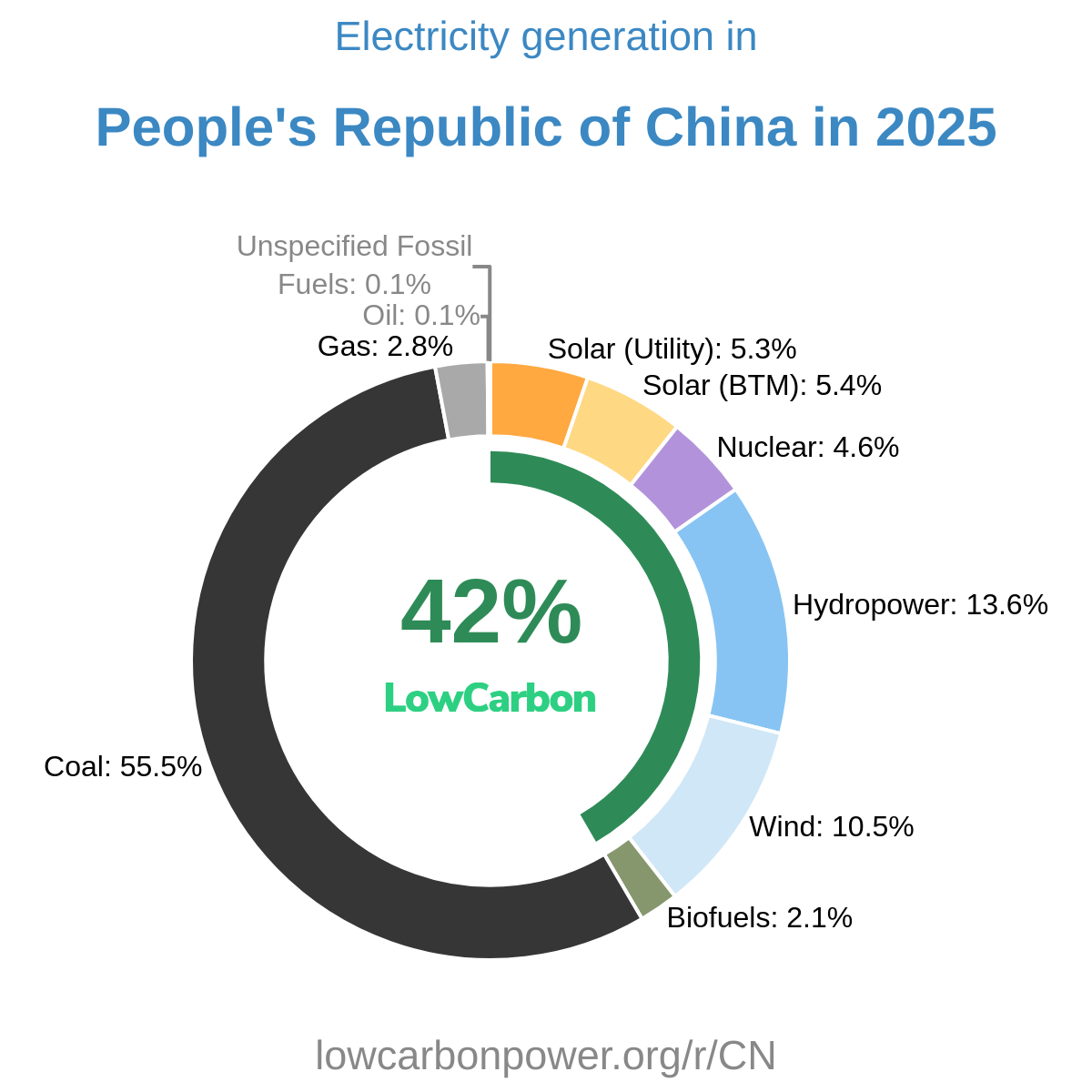
Madagascar should prioritize expanding solar electricity, supported by stronger grids, storage, and local electricity networks, while developing wind projects in suitable locations and exploring nuclear electricity as part of a long-term clean electricity strategy. South Africa offers a relevant regional example, generating about 20 TWh from solar, 12 TWh from wind, and 12 TWh from nuclear. India’s approximately 192 TWh of solar electricity and 124 TWh of wind electricity also demonstrate how these technologies can support growing electricity needs. For nuclear development, Madagascar could learn from South Africa’s operating experience and France’s substantial nuclear generation of around 379 TWh, particularly through workforce training, institutional development, and international partnerships. These examples illustrate possible pathways, rather than output targets directly transferable to Madagascar.
History
The supplied history shows that Madagascar’s low-carbon electricity development has largely consisted of modest hydropower increases followed by uneven progress. Hydro generation rose by about 0.1 TWh in both 1981 and 1984, with similarly sized increases in 1995 and 1997. The 2000s brought further gains in 2003 and 2007, while 2000 and 2009 showed no change. Growth became more consistent from 2012 through 2015, with an increase of about 0.1 TWh each year. Unfortunately, declines in 2016 and 2017 were followed by a 0.2 TWh recovery in 2018, then further declines in 2019 and 2020. Hydropower generation was unchanged in 2021 and 2022, and solar recorded no increase in 2022. This uneven trajectory underscores the need for sustained expansion and a broader low-carbon electricity supply.
Electricity Imports and Exports
Balance of Trade
Nearby Regions