

In 2023, more than three-quarters of Angola’s electricity consumption came from low-carbon sources, while almost a quarter came from fossil fuels. Hydropower dominated, supplying about 74% of electricity, with solar contributing just over 2%. Gas supplied around 9%, with other fossil sources accounting for the remaining roughly 14%. Angola therefore has a strong clean electricity foundation, but expanding low-carbon generation could further reduce fossil-fuel use and its associated climate change and air pollution.
Is Electricity Growing in Angola?
Angola’s electricity consumption per person remained below its historic peak in 2023, rather than reaching a new record. Consumption stood at 488 kWh per person, compared with 503 kWh in 2020—about 3% below the peak. Low-carbon electricity generation was also below its record, at 373 kWh per person versus 380 kWh in 2020, a decline of about 2%. These comparisons do not establish whether total electricity consumption grew, since population changes also matter, but the shortfall in electricity available per person is concerning. Angola needs sustained growth in clean electricity to support wider electrification, economic development and emerging demand, including from AI.
Suggestions
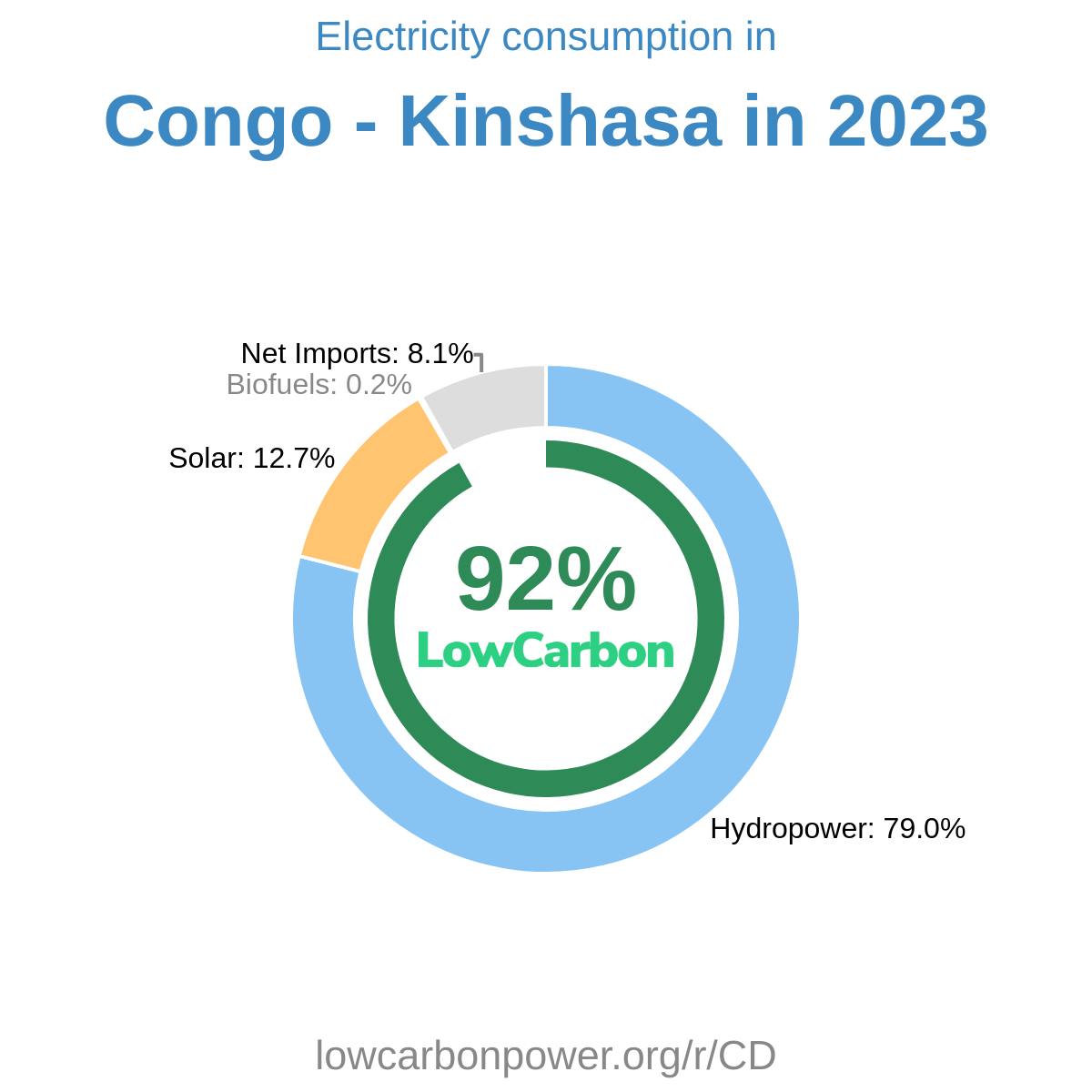
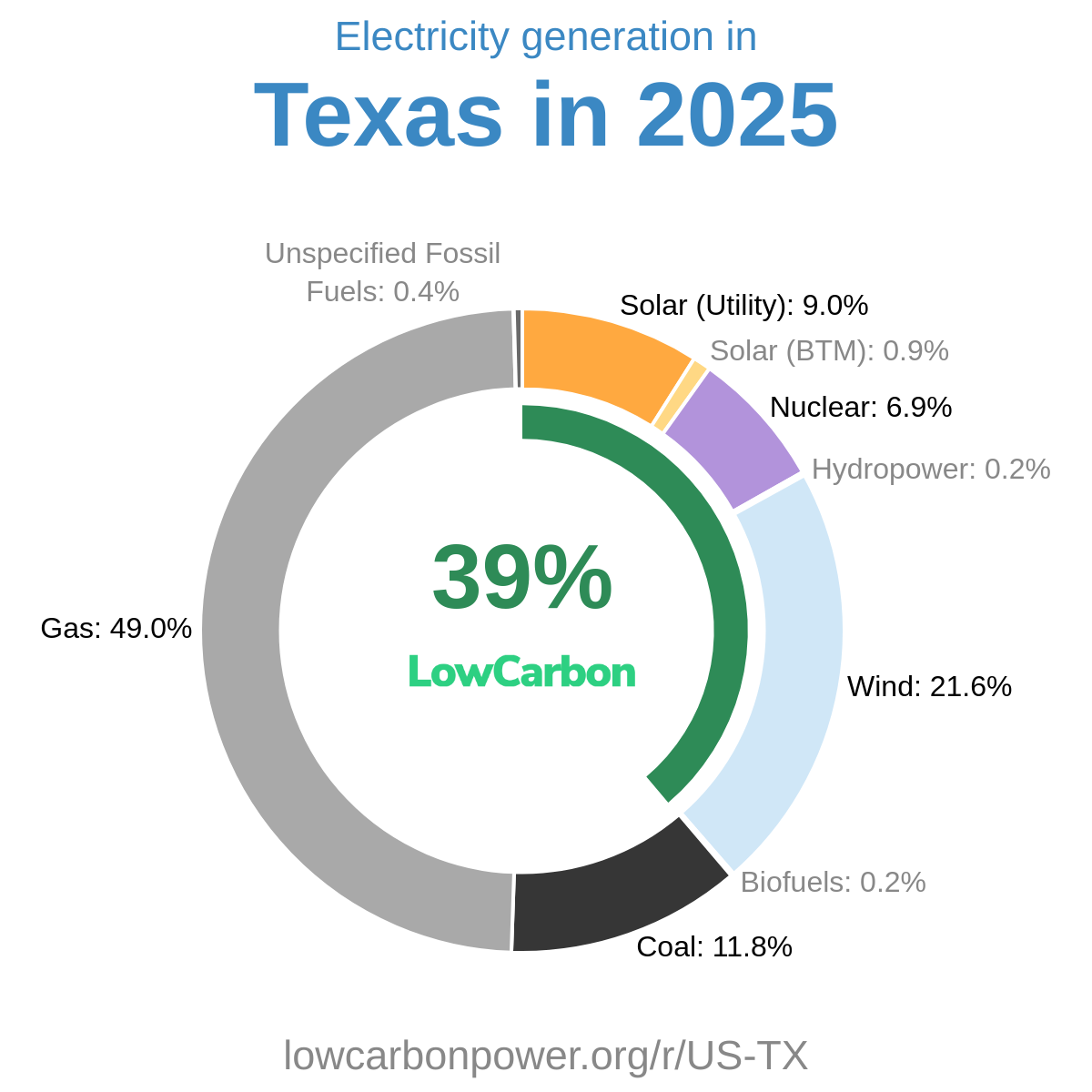
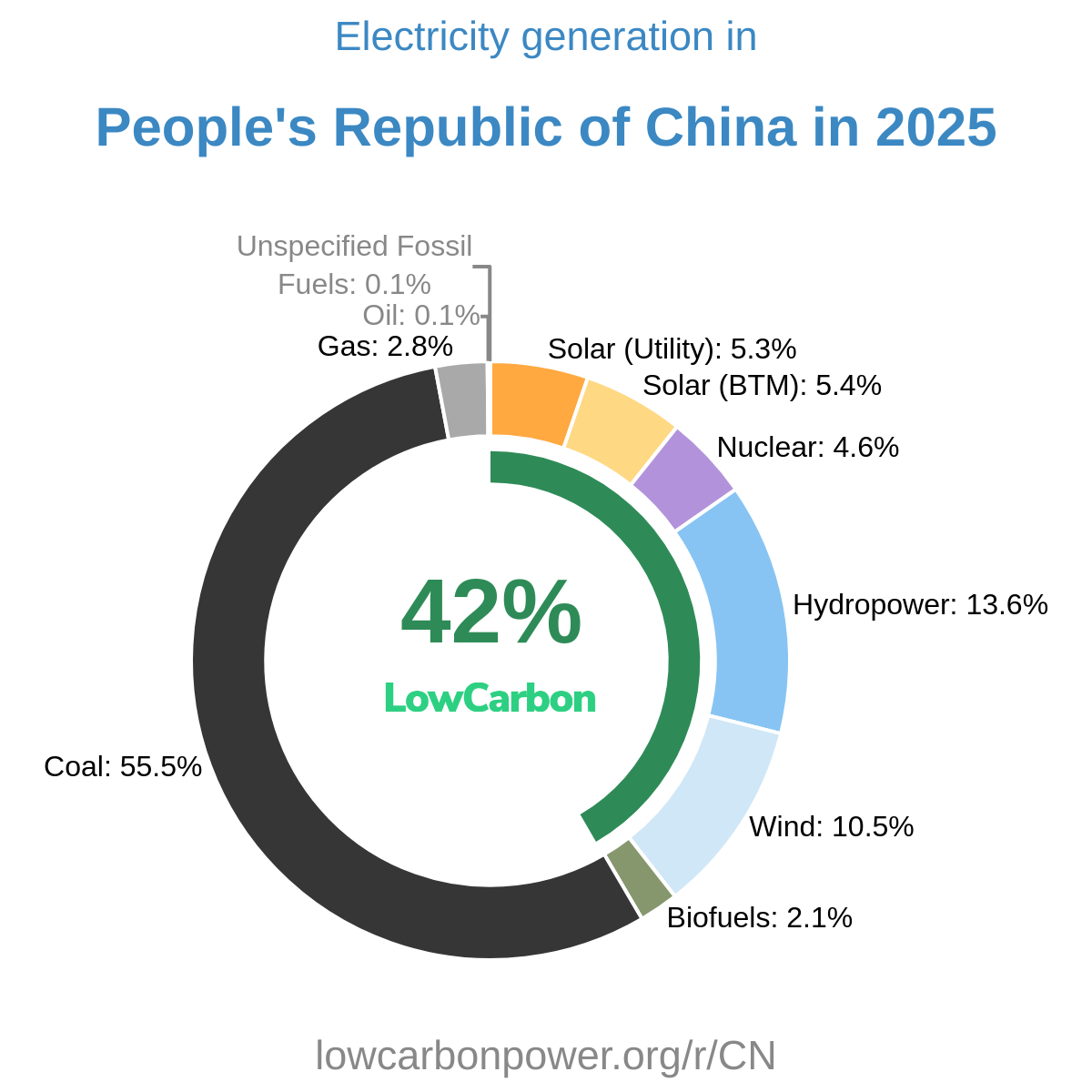
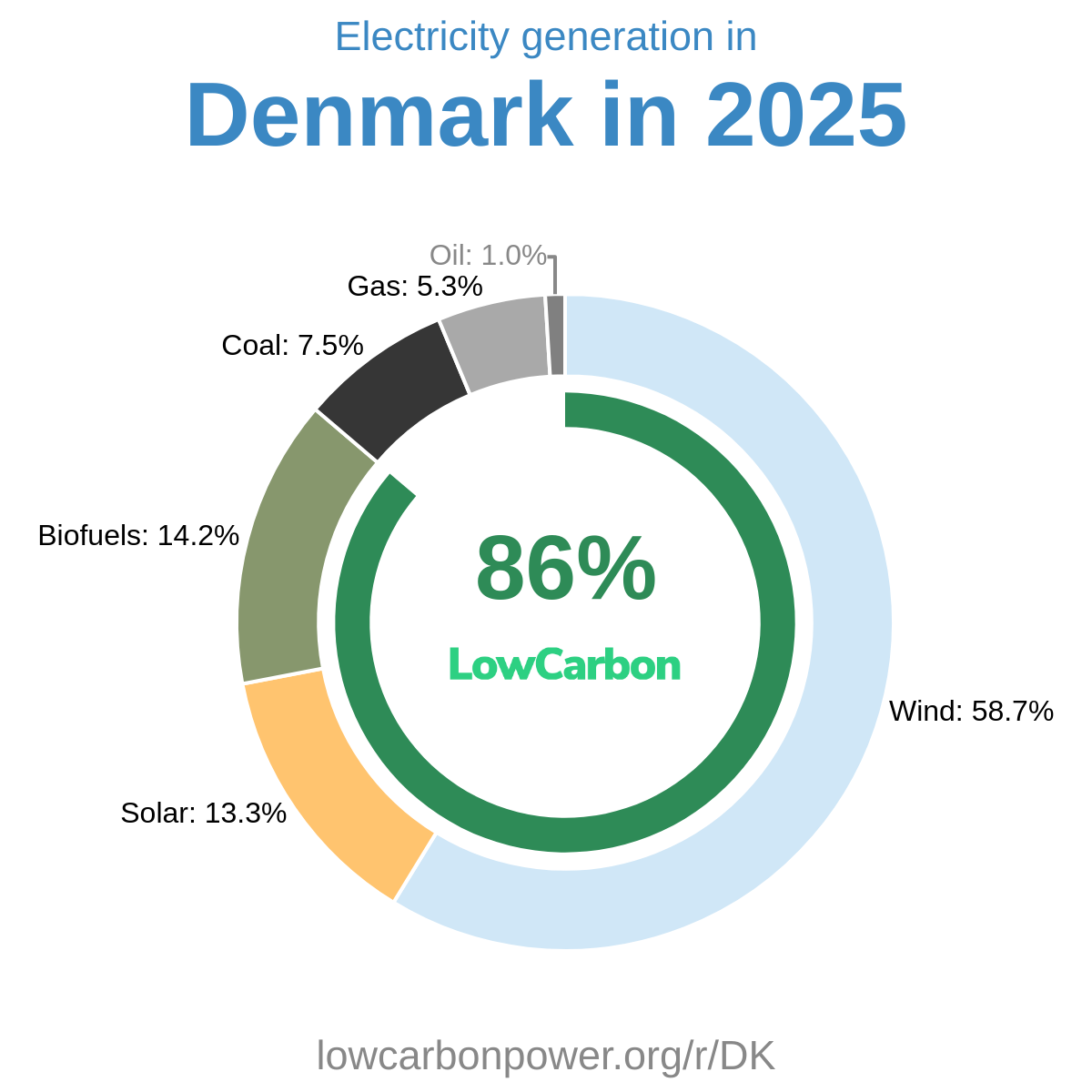
Angola can build on its hydropower foundation by expanding solar generation and considering nuclear power as part of its long-term electricity strategy. Nearby Congo–Kinshasa generates about 13% of its electricity from solar, while Cape Verde reaches around 14%, offering relevant regional examples. Angola could also learn from Chile and Pakistan, where solar supplies almost a quarter of electricity, through experience with project development and grid integration. For nuclear, Pakistan generates about 13% of its electricity from this source, while France demonstrates its potential at scale, with roughly two-thirds of electricity coming from nuclear. Developing technical expertise, strong institutions and international partnerships would help Angola pursue a larger, more diverse clean electricity supply.
History
Angola’s recorded low-carbon electricity growth has largely come from hydropower. A 0.2 TWh increase in 1998 was reversed in 1999, followed by generally positive developments during the 2000s: the listed gains between 2002 and 2008 totalled about 2 TWh, despite a small decline in 2007. Growth continued in the early 2010s, including a 1 TWh increase in 2013, although 2012 saw a modest setback. The strongest expansion came in the late 2010s, with annual increases of 1.8 TWh in 2017, 1.1 TWh in 2018 and 2.8 TWh in 2019. Hydropower added another 1.1 TWh in 2020 and 0.6 TWh in 2023, while solar contributed a welcome 0.4 TWh increase in 2022—an encouraging step toward broadening Angola’s clean electricity generation.
Electricity Imports and Exports
Balance of Trade
Nearby Regions