

Electricity in American Samoa in 2023
In 2023, American Samoa relied entirely on fossil fuels for its electricity: they supplied 100% of consumption, while low-carbon sources contributed none. This leaves its electricity supply fully dependent on fossil fuels, which contribute to climate change and air pollution, and highlights the opportunity to develop clean electricity.
Is Electricity Growing in American Samoa?
Electricity consumption per person declined rather than grew in 2023. It reached about 3,600 kWh per person, down from the 2022 record of about 3,700 kWh—a drop of 146 kWh, or roughly 4%. Low-carbon electricity generation also fell, from its 2022 record of 207 kWh per person to zero in 2023. These declines are concerning: expanding clean electricity would help support future demand from electrification and digital services.
Suggestions
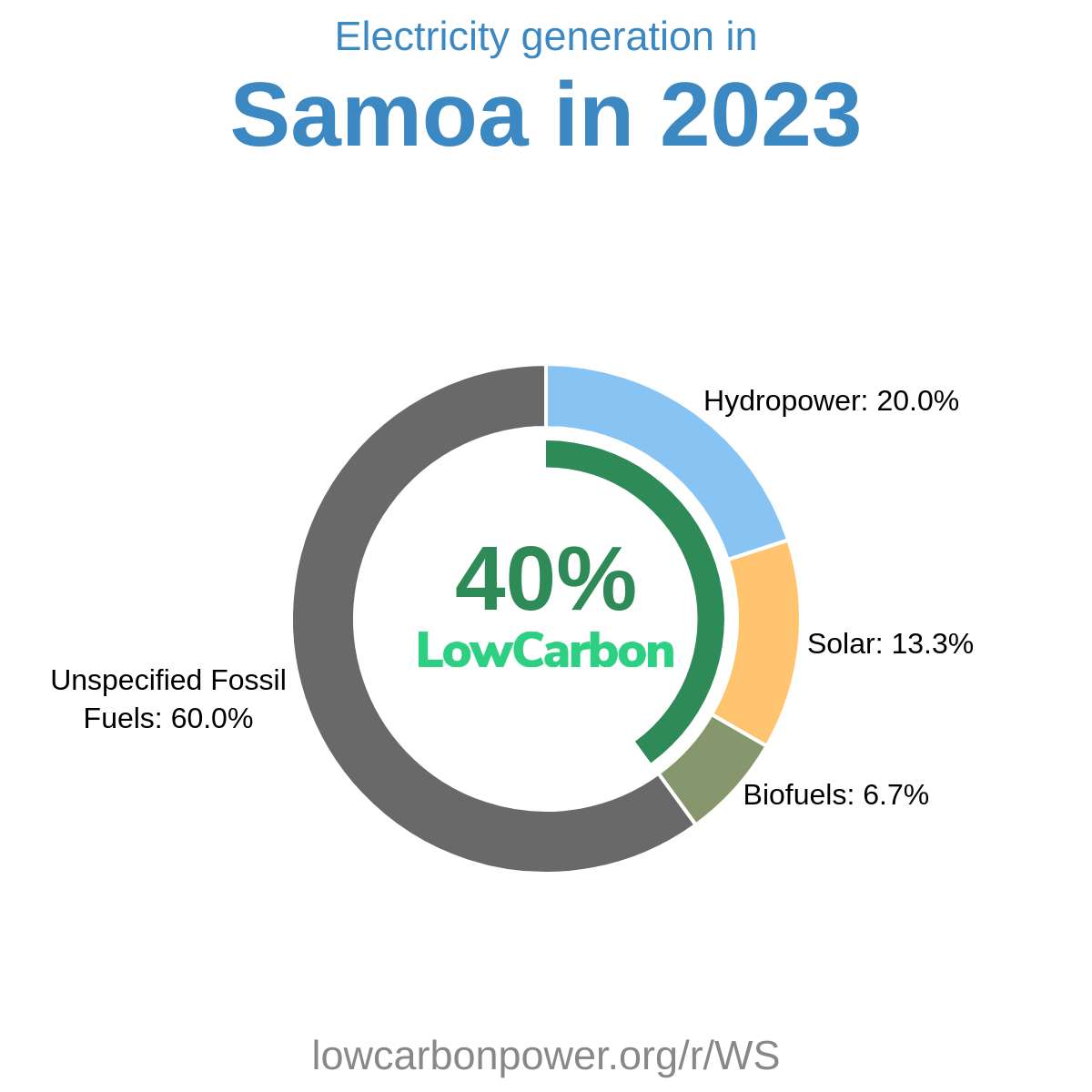
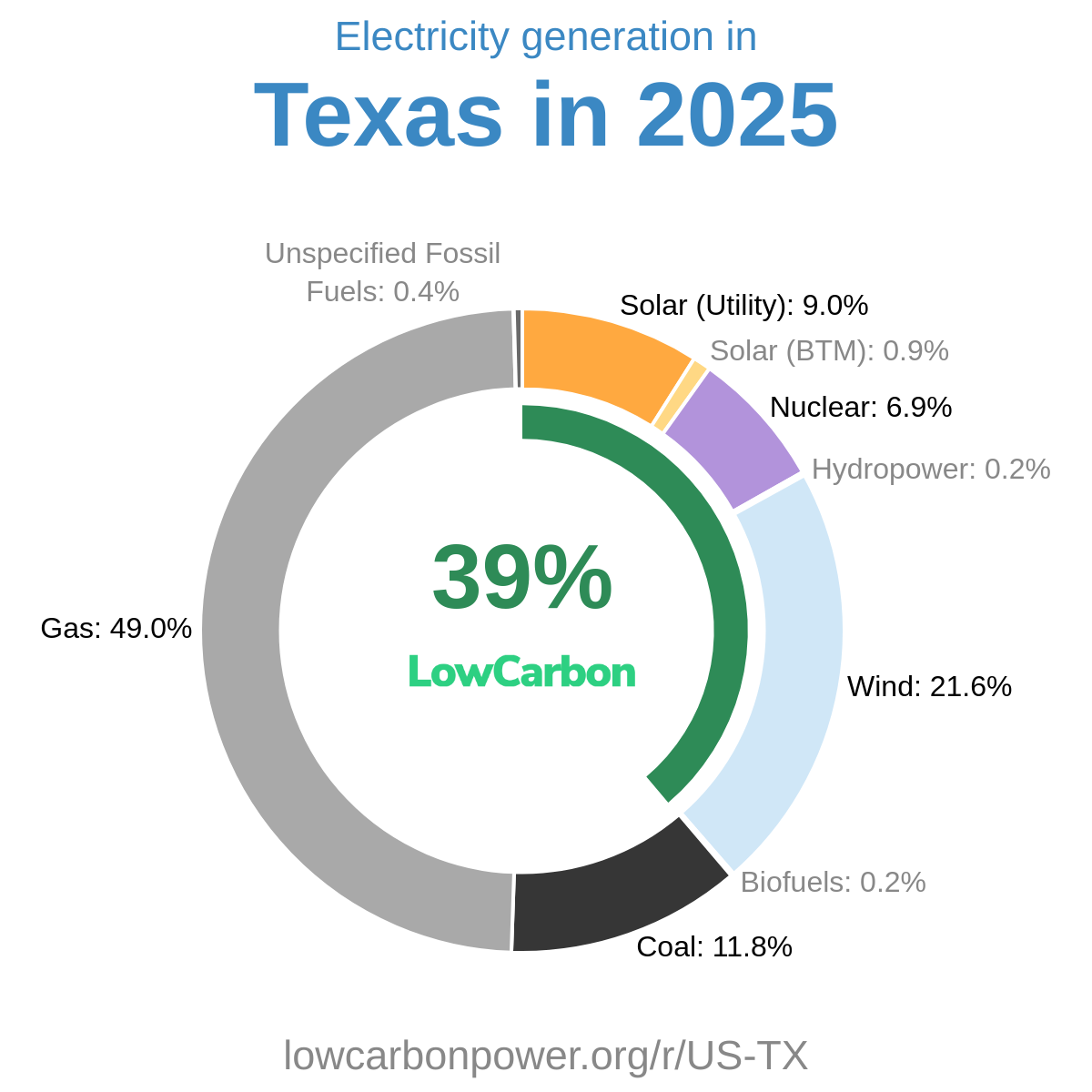
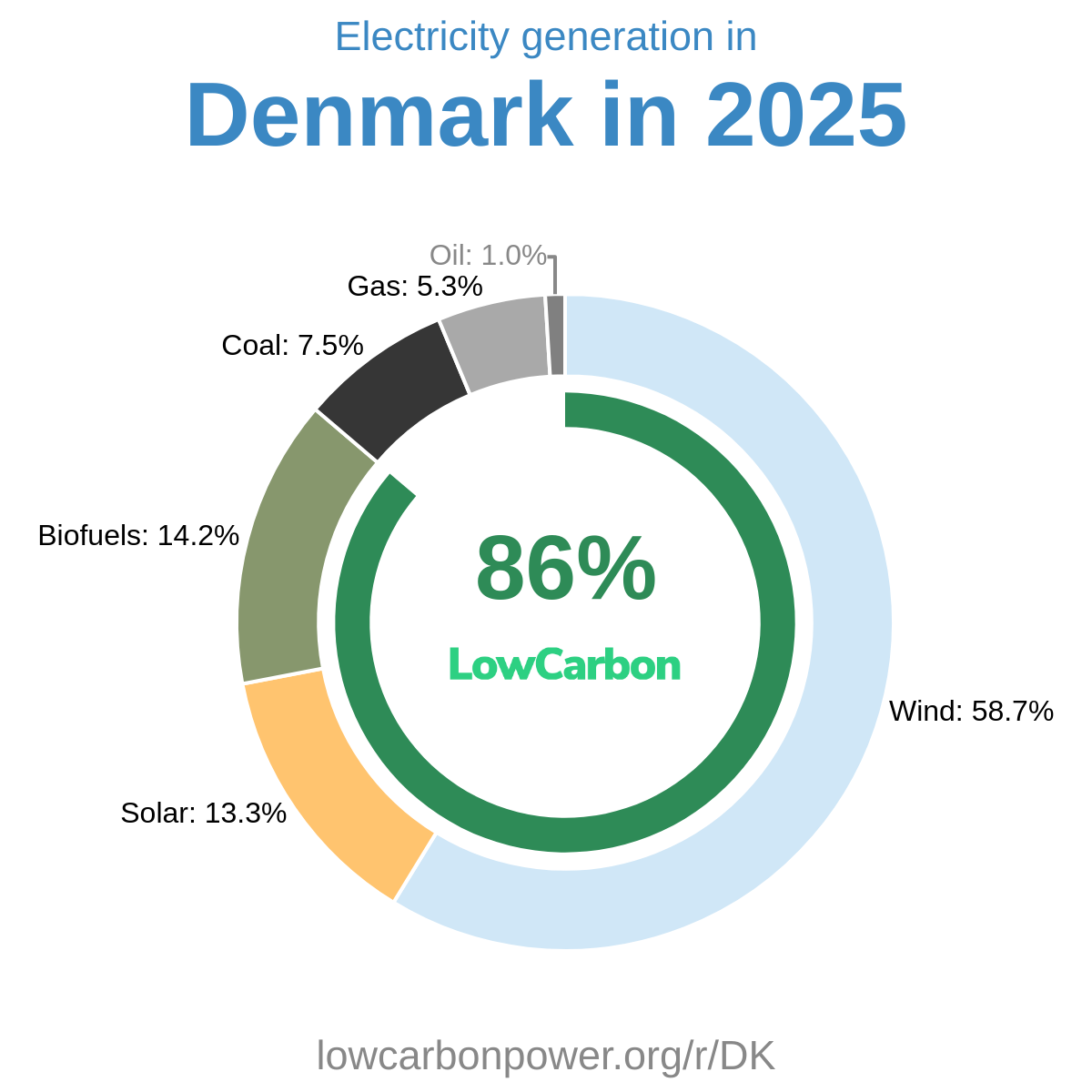
American Samoa could prioritize solar electricity, learning from nearby Samoa and Vanuatu, where solar supplies 13% of electricity generation, and from the US state of Hawaii, where it supplies almost a quarter. Rooftop and larger solar installations, paired with storage and grid improvements, could help build a stronger clean electricity supply. Wind is also worth assessing where local conditions are suitable; the island nation of Cape Verde generates 14% of its electricity from wind and another 14% from solar. Nuclear should be considered as a longer-term option through an assessment of technologies suited to the territory’s electricity needs. France, which generates about two-thirds of its electricity from nuclear, and the US state of South Carolina, where nuclear supplies more than half, illustrate its potential contribution to low-carbon electricity.
History
The historical change data provided are very limited: the only entry records no change in solar electricity generation in 2022 compared with the previous year, at 0 TWh. That indicates stagnation in solar generation for that year, not necessarily an absence of solar electricity. Separately, the per-person figures show that low-carbon generation was present in 2022 but fell to zero in 2023. Together, these figures underline the need to restore and expand clean electricity generation, although they do not establish a longer-term historical trend.
Electricity Imports and Exports
Balance of Trade
Nearby Regions