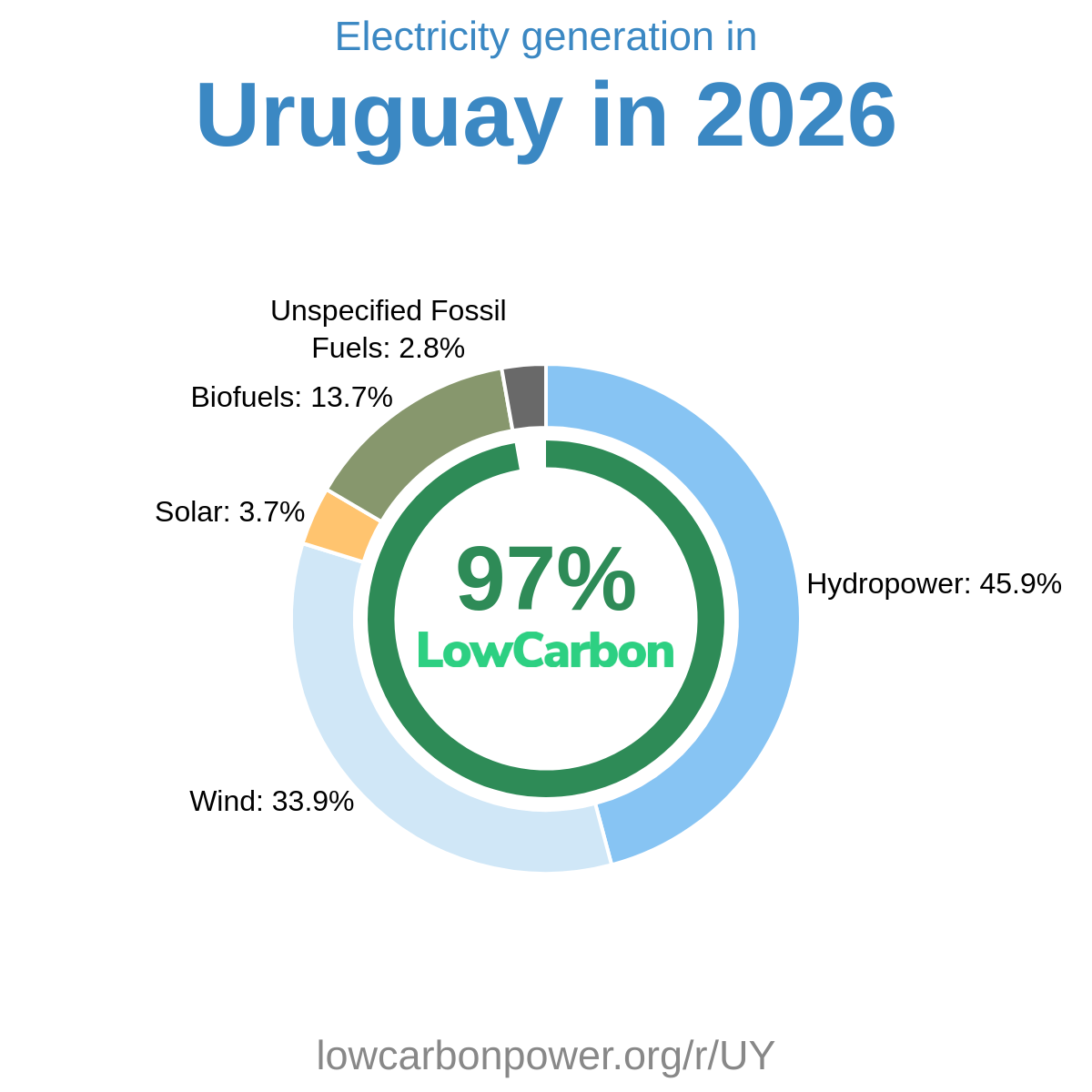


Uruguay has achieved a remarkable feat by sourcing nearly all of its electricity from low-carbon sources. With more than half of the electricity coming from hydropower, combined with significant contributions from wind and biofuels, the country has positioned itself as a leader in clean electricity generation. Wind power delivers almost a third of the electricity, while biofuels contribute around one-tenth and solar energy accounts for a small but vital fraction. Fossil fuels represent close to none of Uruguay's electricity generation at a mere 2.79%, showcasing the country's dedication to a sustainable future. Moreover, Uruguay's status as a significant net electricity exporter has a positive impact on reducing emissions in neighboring regions. Moving forward, the challenge remains to meet increasing demands for electricity as the country seeks to electrify transport, heating, and industry sectors.
Is Electricity Growing in Uruguay?
Examining electricity trends in Uruguay reveals a worrying decline in electricity consumption when compared to previous years. Currently, electricity consumption sits at 3919 kWh per person, a decrease from the 2019 record of 4730 kWh per person. This represents a significant drop of 812 kWh per person. Similarly, low-carbon electricity generation has also seen a decline, with the latest figures of 3809 kWh per person falling short of the 2019 peak of 4648 kWh per person by 839 kWh. These declines are troubling as they suggest challenges in both consumption and generation of electricity, especially low-carbon energy, which is crucial for sustainable growth and sectoral electrification.
Suggestions
To bolster low-carbon electricity generation, Uruguay should focus on expanding existing wind energy infrastructure, which has proven to be an effective and substantial part of its energy mix. Further investments in wind energy could enhance capacity and reliability, meeting future demands driven by electrification and technological advances. Uruguay should also consider adopting solar and nuclear energy solutions, both of which offer stable, low-carbon electricity that can complement the strengths of wind and hydroelectric sources. These technologies will not only support Uruguay's ambition for a greener energy future but also ensure that electricity generation thrives to meet increasing needs without reverting to fossil fuels.
* 12M = Last 12 months (May 2025 – Apr 2026) — a rolling 12-month period, not a calendar year.
History
Looking back at Uruguay's history with low-carbon electricity, significant changes can be observed over the decades. In the early 1980s and into the 1990s, hydropower saw notable fluctuations, including a significant increase in 1990 with a gain of 3.1 TWh. Similarly, the late 1990s showed variability, with both substantial gains and declines. More recently, the addition of biofuels in 2022 showcases diversification efforts. However, fluctuations in hydroelectric output continued into the 2020s, with net decreases and increases revealing the dynamic nature of this energy source. Uruguay’s commitment to low-carbon electricity is evident in these trends, highlighting a trajectory of adaptation and resilience in face of ever-changing conditions and challenges. As the country aims higher, supplementing these efforts with stable, low-carbon sources like nuclear and solar is crucial.
* 12M = Last 12 months (May 2025 – Apr 2026) — a rolling 12-month period, not a calendar year.
Electricity Imports and Exports
Balance of Trade
* 12M = Last 12 months (May 2025 – Apr 2026) — a rolling 12-month period, not a calendar year.
Nearby Regions