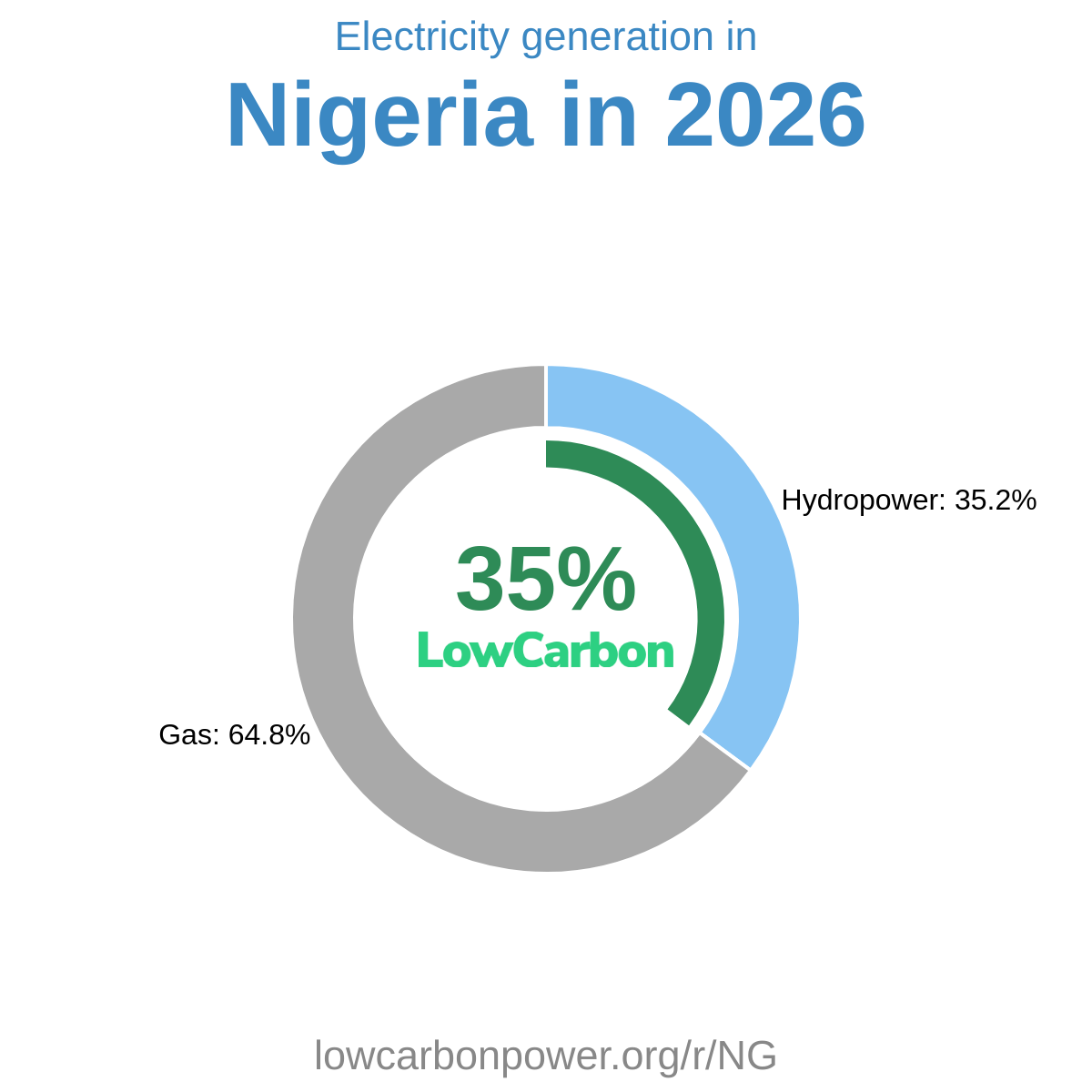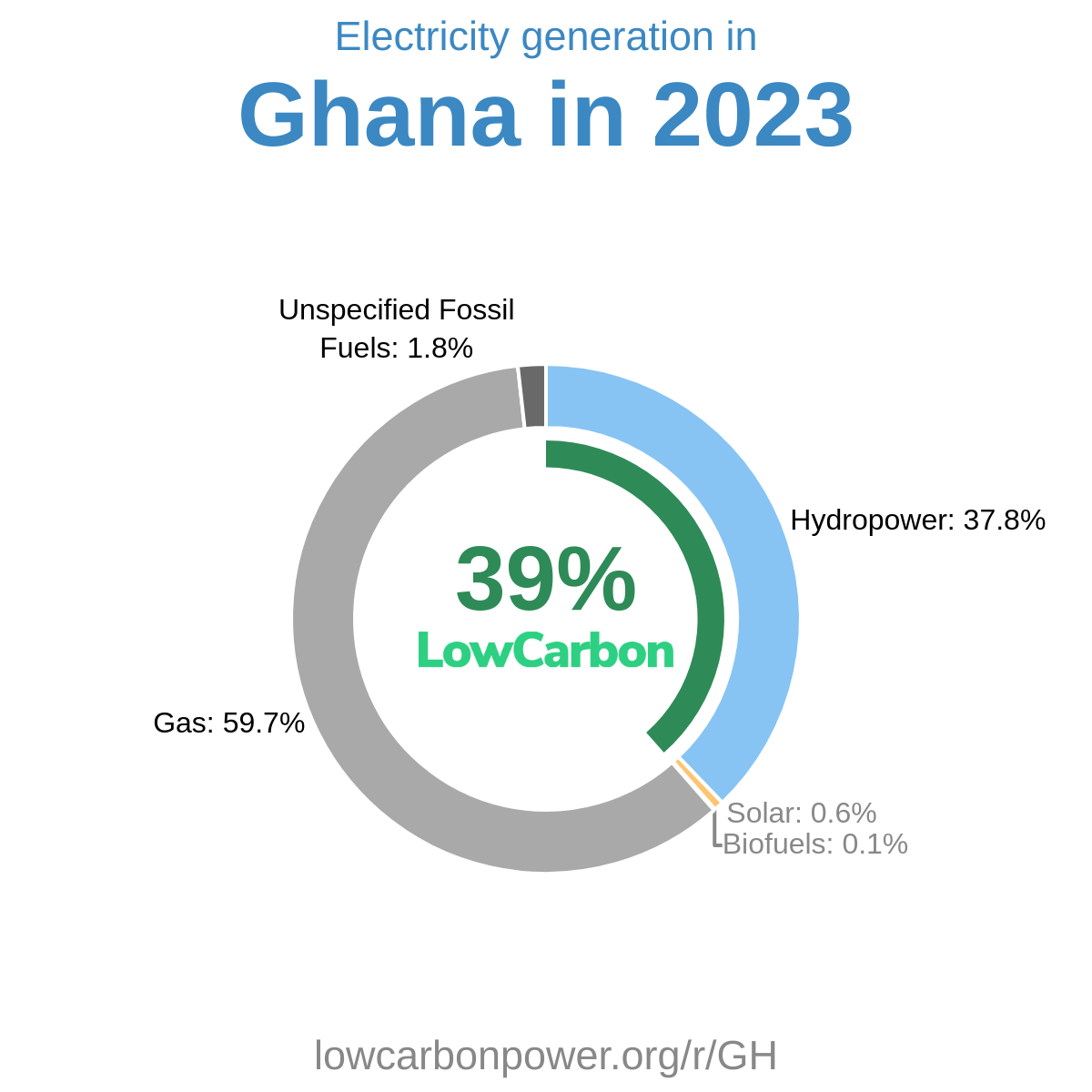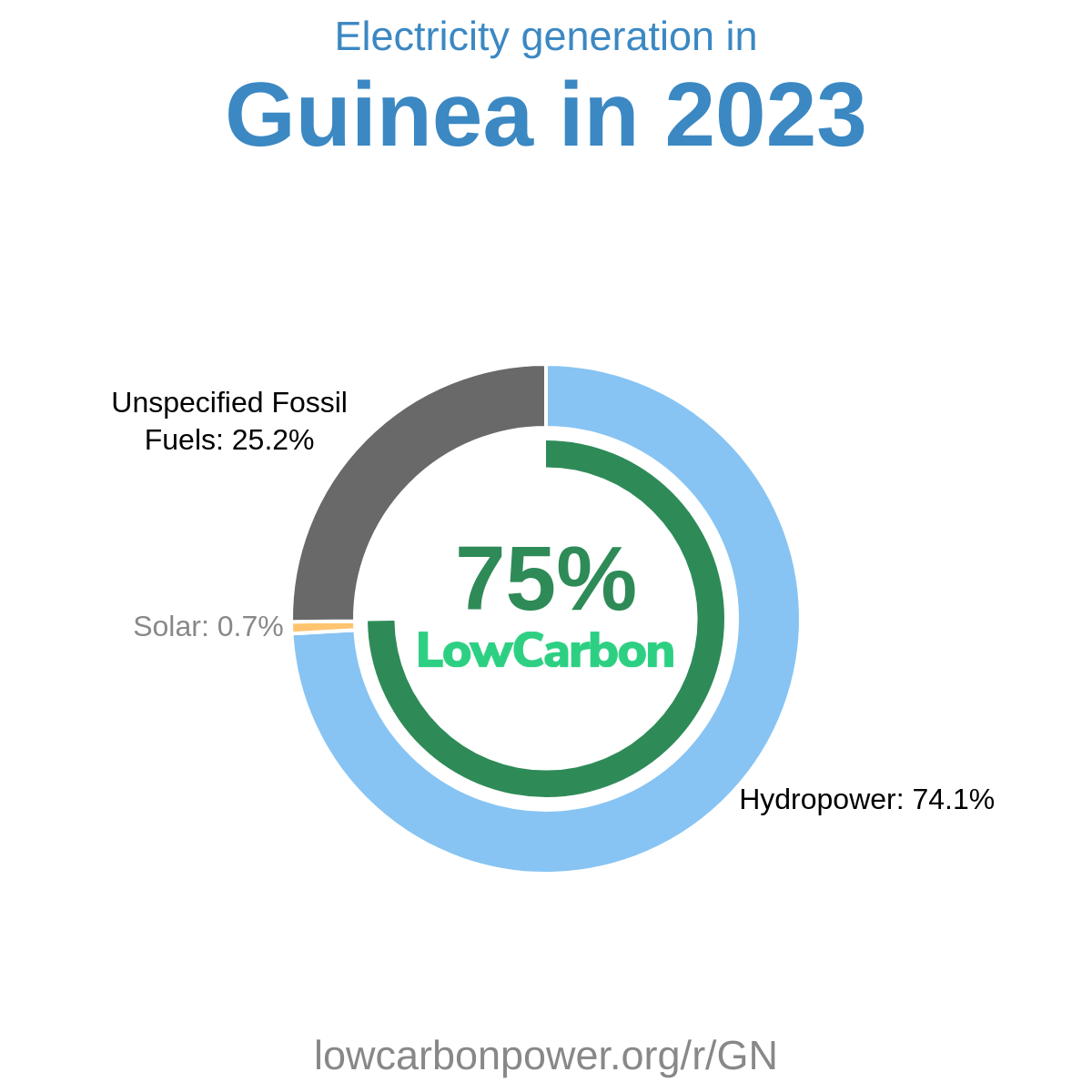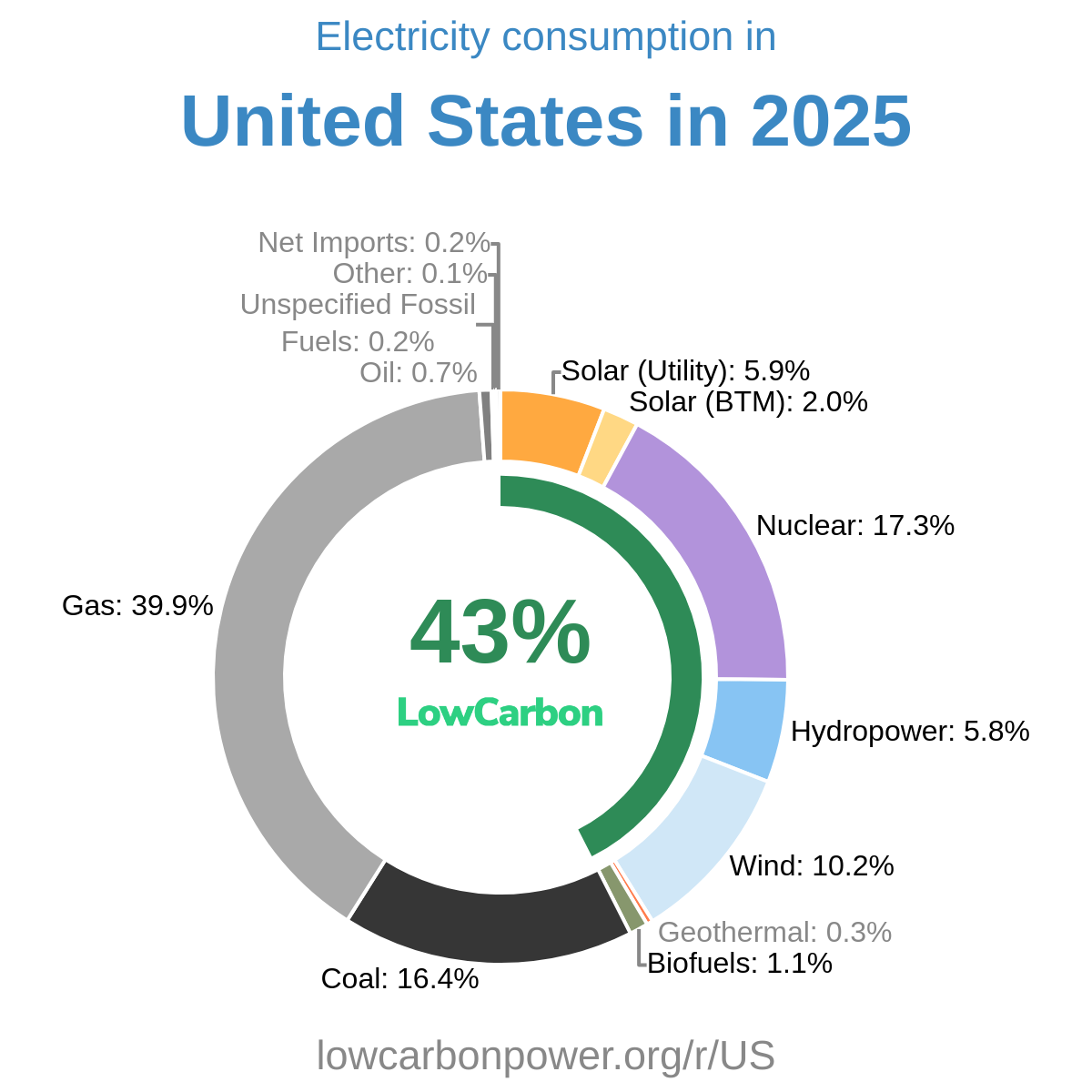


In 2023, Côte d’Ivoire’s electricity consumption totaled about 11.1 TWh. Fossil fuels supplied more than two-thirds—about 7.7 TWh—almost entirely from gas. Low-carbon sources provided almost a third, or 3.5 TWh, with hydropower accounting for nearly all of that clean electricity. Consumption averaged just 357 kWh per person, less than one-tenth of the global average of 3,794 kWh per person. Such low electricity availability can constrain industrial development, healthcare, education, and household living standards, while limiting opportunities to electrify transport and other activities.
Is Electricity Growing in Côte d’Ivoire?
The latest per-person figures do not show electricity growth in Côte d’Ivoire. Consumption in 2023 fell by 58 kWh per person from the 2022 record of 415 kWh—a decline of about 14%. Low-carbon electricity generation reached 111 kWh per person, roughly 44% below its historic peak of 199 kWh in 1981. These shortfalls are concerning: the country needs sustained growth in clean electricity to improve access and support future demand from electrification, industry, and digital services, including AI. However, declining per-person figures alone do not establish whether total national electricity generation declined.
Suggestions
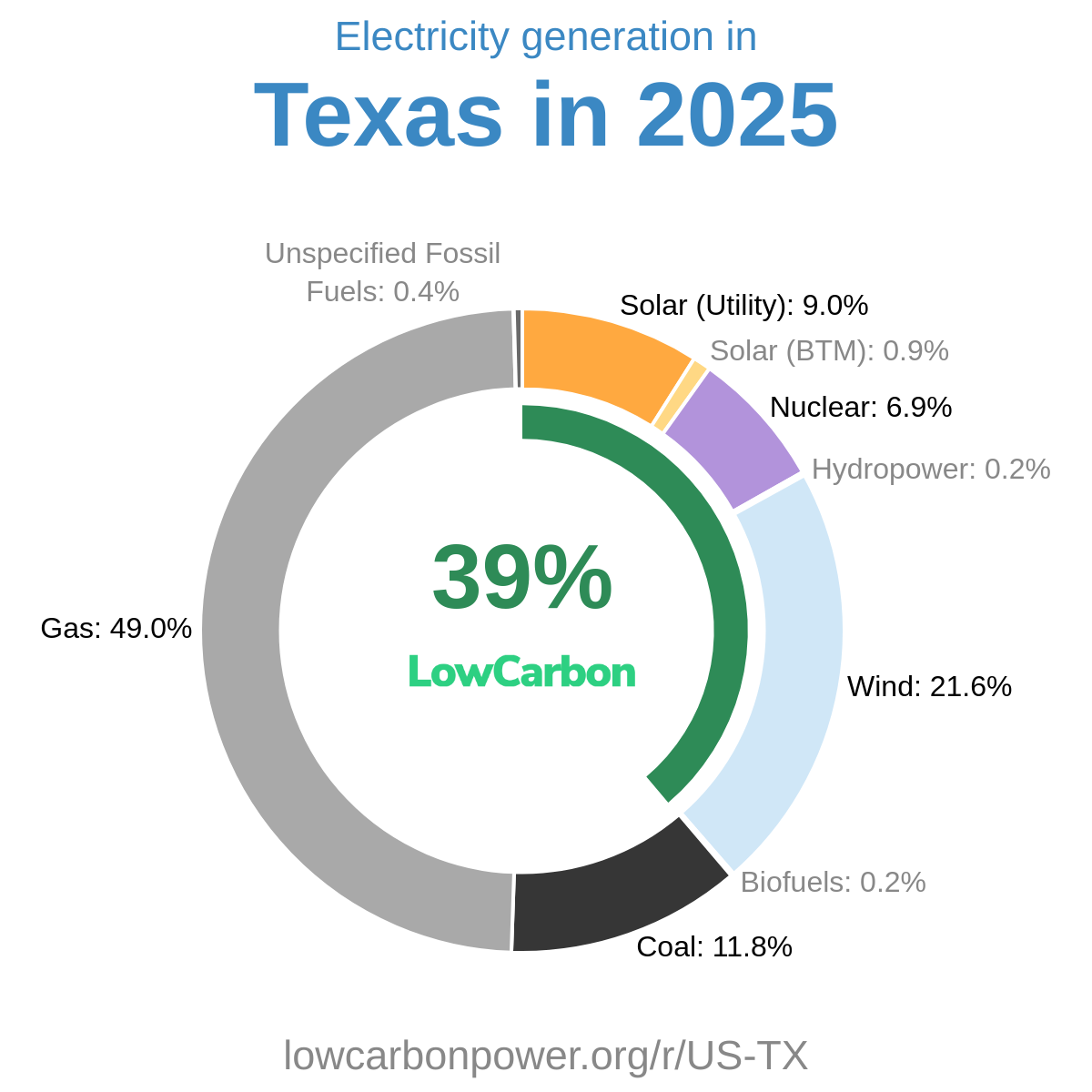
Côte d’Ivoire should expand solar electricity, develop wind projects where local conditions are suitable, and consider nuclear electricity as part of a long-term clean-power strategy. South Africa offers a particularly relevant African example, generating 20 TWh from solar, 12 TWh from wind, and 12 TWh from nuclear. Brazil, another tropical region with substantial hydropower, demonstrates how solar and wind can complement that foundation, producing 85 TWh and 111 TWh respectively. For nuclear development, Côte d’Ivoire could also learn from France, which generates 379 TWh of nuclear electricity, and the United Arab Emirates, with 32 TWh. These examples offer lessons in deployment rather than directly transferable production targets; investment in grids, workforce training, and long-term planning would help Côte d’Ivoire build a larger, diversified low-carbon electricity supply and reduce reliance on fossil fuels that contribute to climate change and air pollution.
History
The supplied history of Côte d’Ivoire’s low-carbon electricity is a story of fluctuating hydropower output. In the early 1980s, generation rose by 0.4 TWh in 1981, fell by a combined 1.3 TWh in 1983–1984, and rebounded by 0.9 TWh in 1985. The 1990s brought further alternating losses and gains, including a 0.6 TWh increase in 1995. During the 2000s and early 2010s, modest increases were interrupted by declines, notably 0.5 TWh in 2010 and 0.6 TWh in 2015. Strong growth followed in 2017–2019, when the listed annual gains totaled 1.9 TWh. A 0.7 TWh decline in 2021 was then matched by a 0.7 TWh recovery in 2022. These repeated reversals underline the importance of adding solar, wind, and nuclear to support sustained growth in clean electricity.
Electricity Imports and Exports
Balance of Trade
Nearby Regions