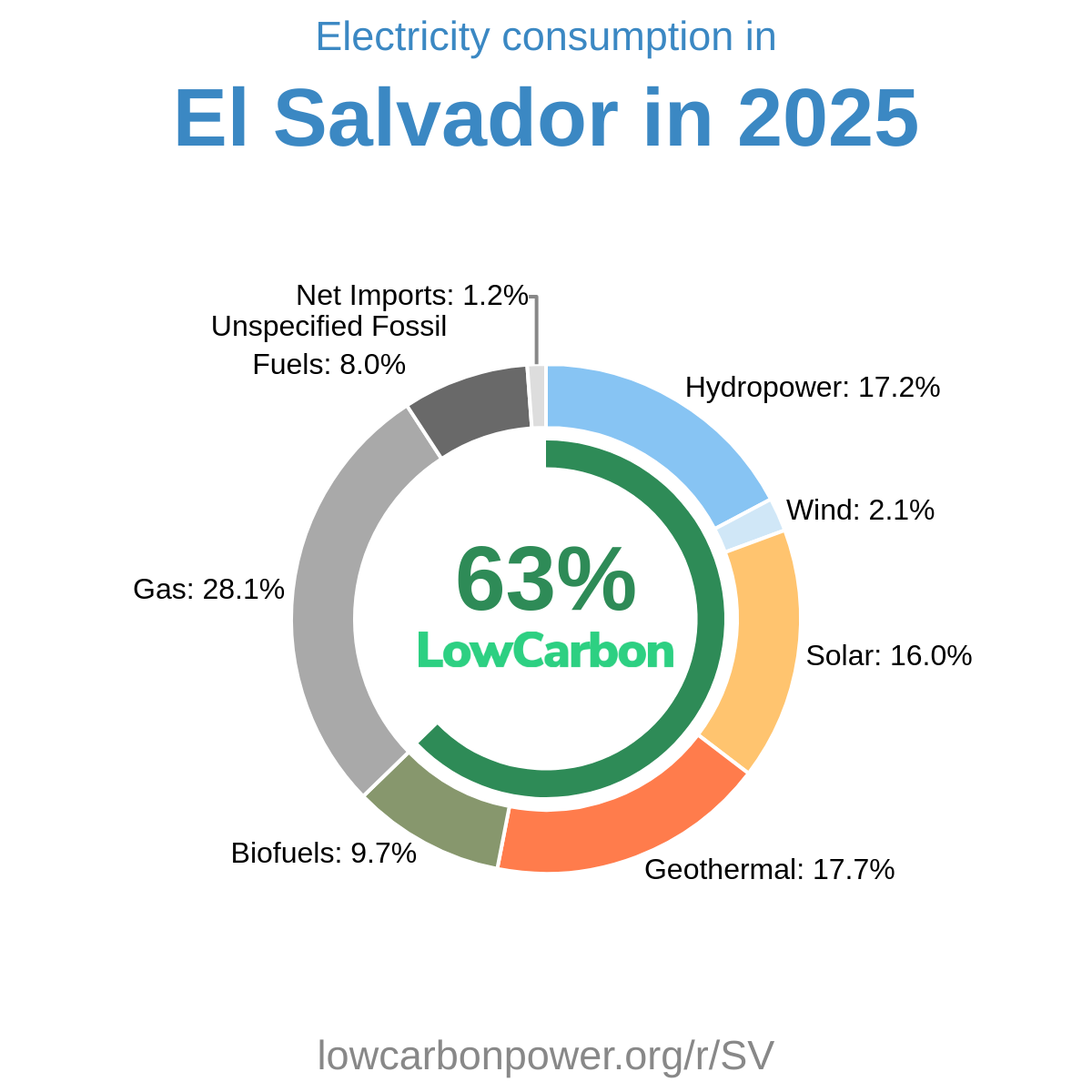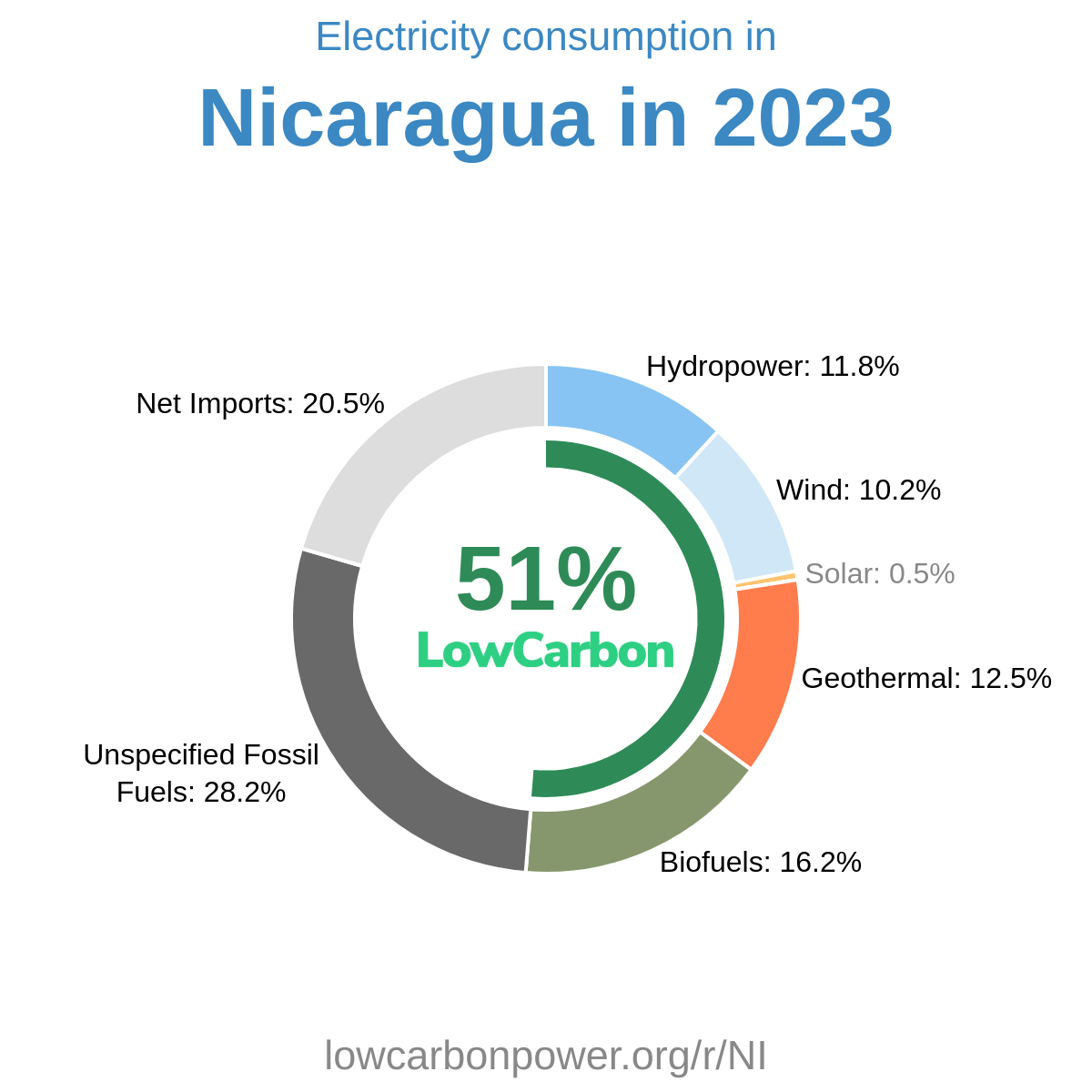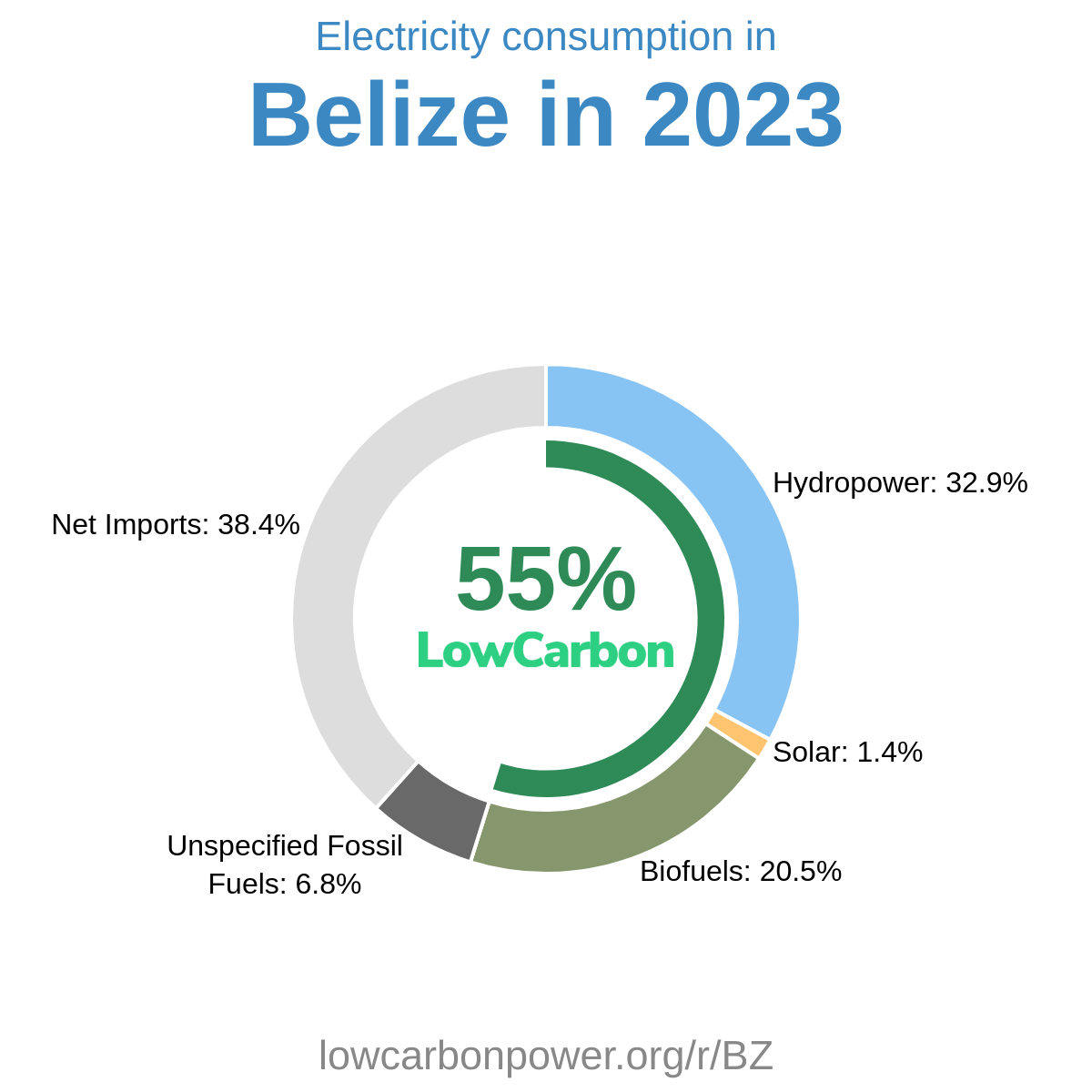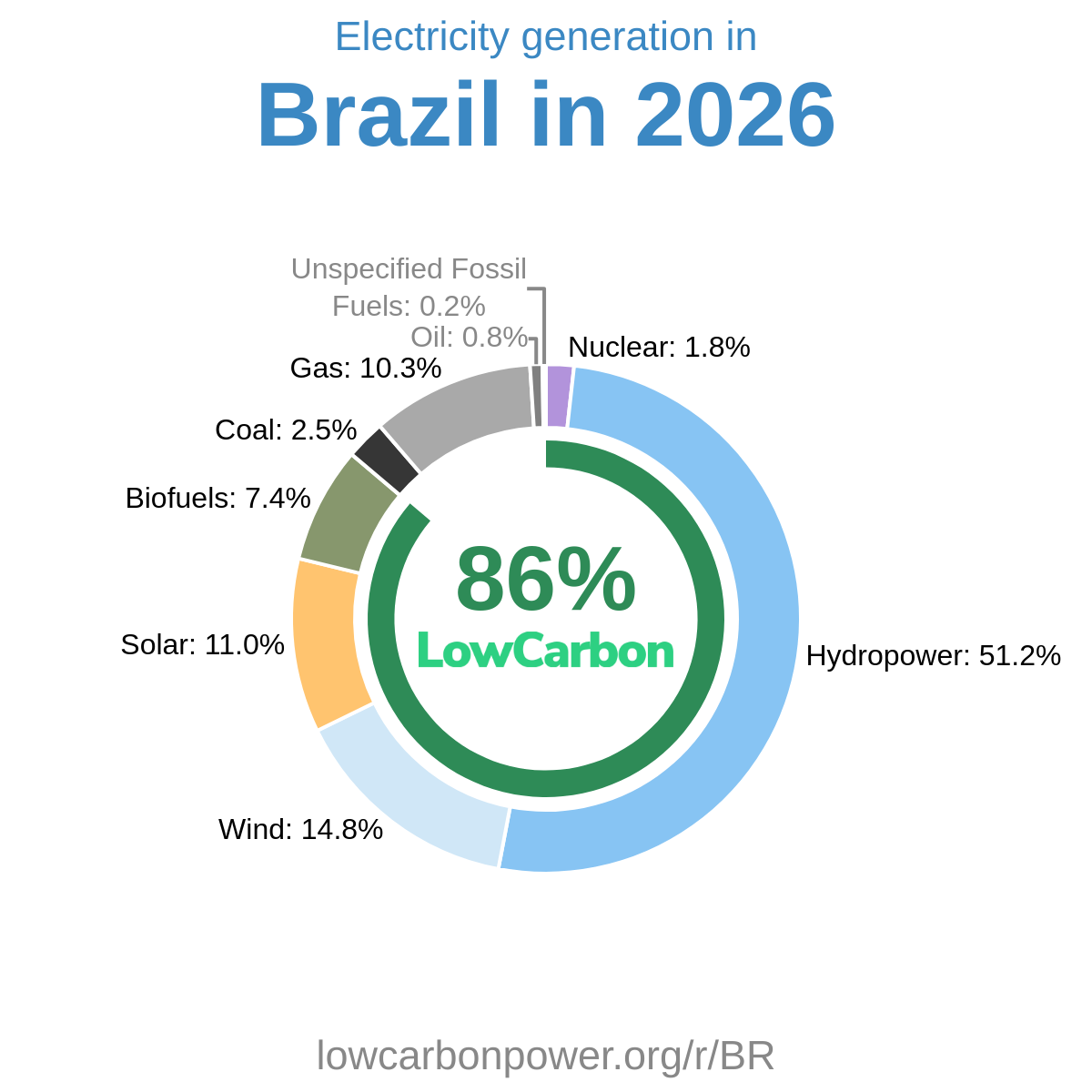


In 2023, more than 60% of Honduras’s electricity consumption came from low-carbon sources, while fossil fuels supplied about 38% and net imports accounted for roughly 2%. Hydropower was the largest clean source, providing almost a third of electricity consumption. Biofuels contributed about 10%, solar nearly 9%, wind about 6%, and geothermal around 3%. This gives Honduras a strong low-carbon foundation, although fossil fuels still supply more than a third of its electricity, contributing to climate change and air pollution.
Is Electricity Growing in Honduras?
Honduras’s electricity consumption per person has not surpassed its historical peak. In 2023, consumption stood at about 1,120 kWh per person, roughly 27 kWh below the 2019 record of 1,146 kWh per person. Low-carbon electricity generation was also below its peak, reaching about 677 kWh per person—around 25 kWh below the 2021 record. These figures show a disappointing shortfall from previous highs, rather than establishing whether total national consumption is declining. Stronger growth in clean electricity would help meet future demand from electrification and AI.
Suggestions
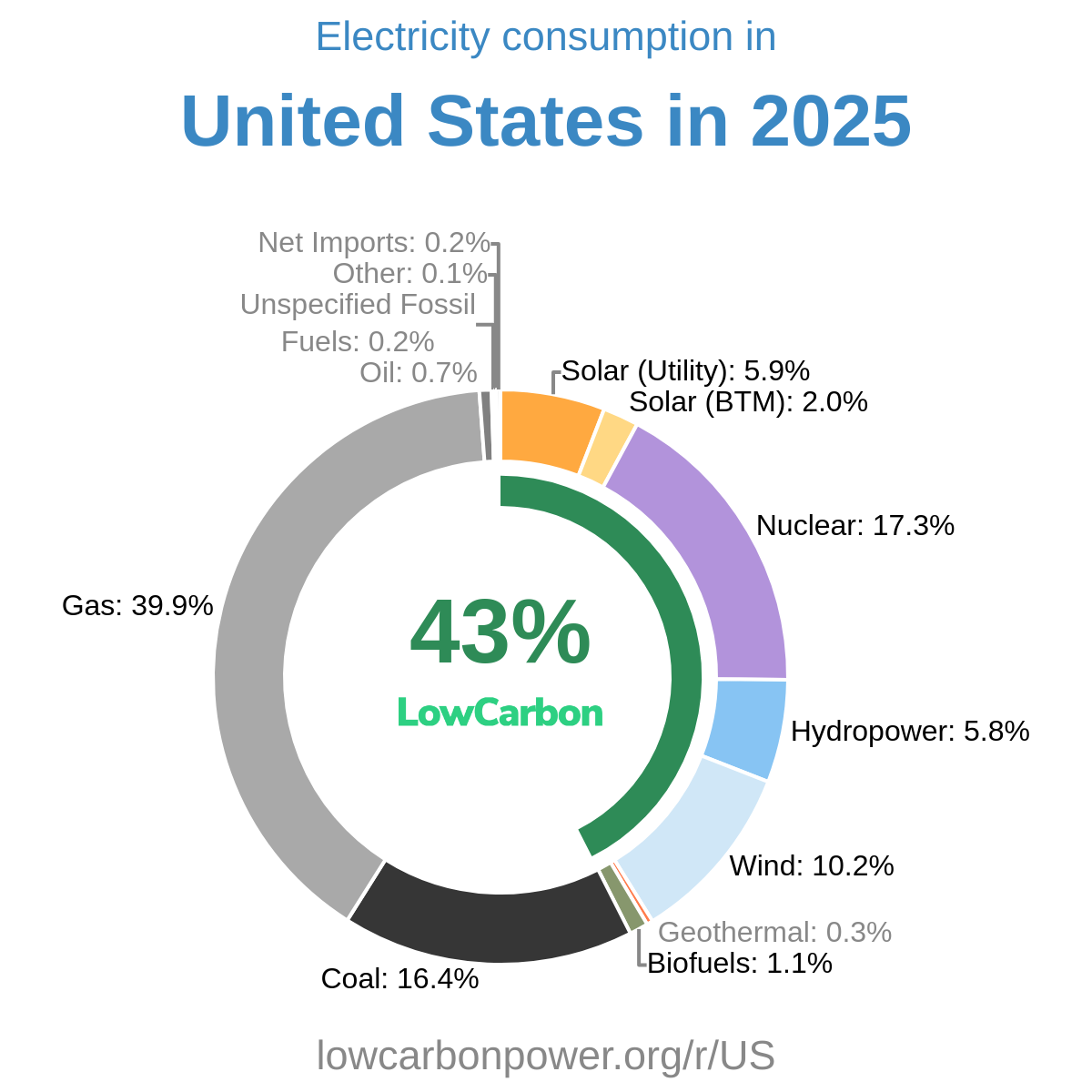
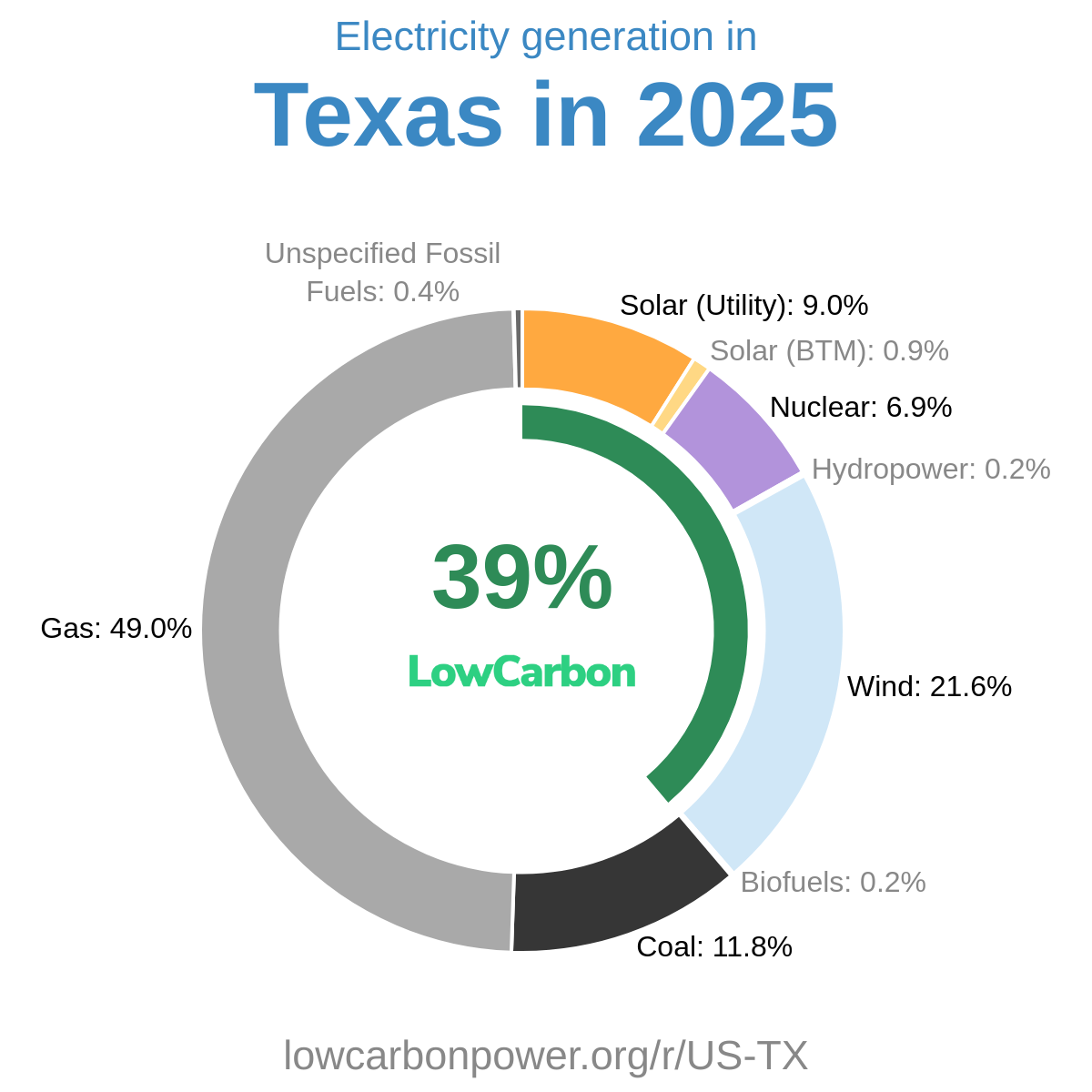
Honduras can increase low-carbon electricity generation by expanding solar and wind while considering nuclear power as a complementary source of clean electricity. Relevant regional examples include Chile, where solar supplies about a quarter of electricity, and Uruguay, where wind supplies a third. These demonstrate the substantial contributions solar and wind can make in Latin America. The US state of Nevada, with about 35% solar electricity, offers another useful example of large-scale solar deployment. For nuclear development, Honduras could study how France generates roughly two-thirds of its electricity from nuclear power, alongside the experience of smaller electricity systems such as Armenia, where nuclear supplies about 29%. Long-term planning, workforce development, and stronger electricity infrastructure would support this expansion.
History
Honduras’s low-carbon electricity history has been shaped largely by hydropower. In the late 1980s and 1990, annual hydro gains ranged from 0.4 to 0.6 TWh; a 0.4 TWh decline in 1994 was matched by a similar gain in 1996. The early 2000s brought repeated hydro declines, followed by gains in 2005, 2006, 2009, and 2010; biofuels also added 0.3 TWh in 2009. The mid-to-late 2010s saw welcome diversification: solar increased by 0.4 TWh in 2015 and 0.5 TWh in 2016, hydro added 0.7 TWh in 2017, and wind added 0.4 TWh in 2018. A substantial 0.8 TWh hydro decline in 2019 was partly offset by a 0.5 TWh increase in biofuels, before hydro recorded a strong 1.1 TWh gain in 2021.
Electricity Imports and Exports
Balance of Trade
Nearby Regions