

From May 2025 through April 2026, Nigeria’s electricity consumption totaled about 34 TWh. Fossil electricity, entirely from gas in the supplied data, accounted for roughly 22 TWh, or almost two-thirds of the total. Low-carbon electricity supplied the remaining 12 TWh, just over a third, entirely from hydropower. Electricity consumption averaged only 145 kWh per person—about 4% of the global average of 3,794 kWh per person. Such low electricity availability can constrain businesses, healthcare, education, and household living standards, while limiting Nigeria’s ability to meet growing demand from electrification and digital services.
Is Electricity Growing in Nigeria?
Nigeria’s latest figures do not indicate growth relative to its historical per-person peaks. Total electricity consumption in 2026 was 145 kWh per person, down 42 kWh, or about 22%, from the record of 187 kWh in 2023. Low-carbon electricity generation reached 51 kWh per person, 11 kWh below its 2002 record of 62 kWh—a decline of about 18%. These shortfalls are concerning: Nigeria needs sustained expansion in electricity supply, especially clean generation. However, comparisons with historical records alone do not establish whether electricity increased or decreased from the immediately preceding year.
Suggestions
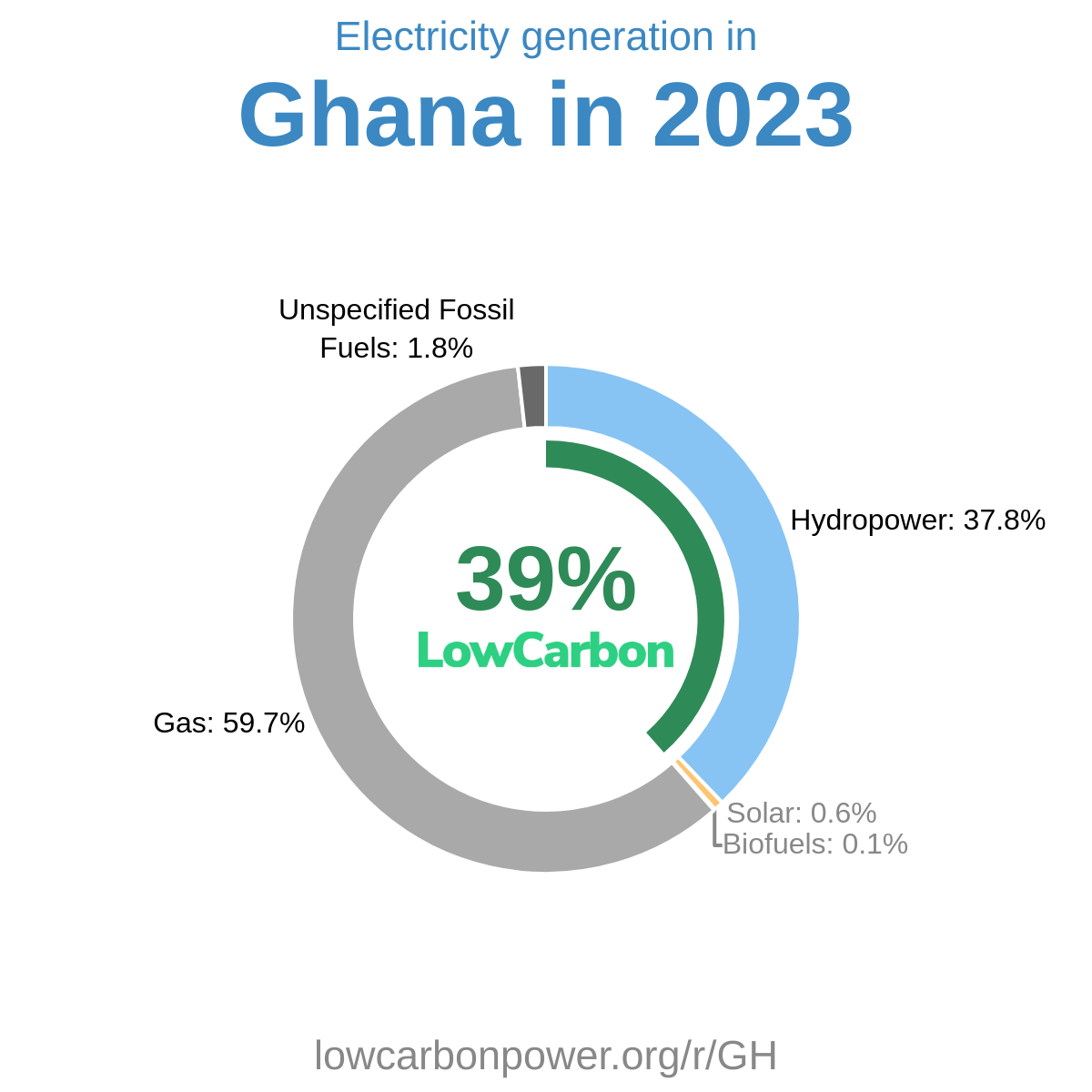
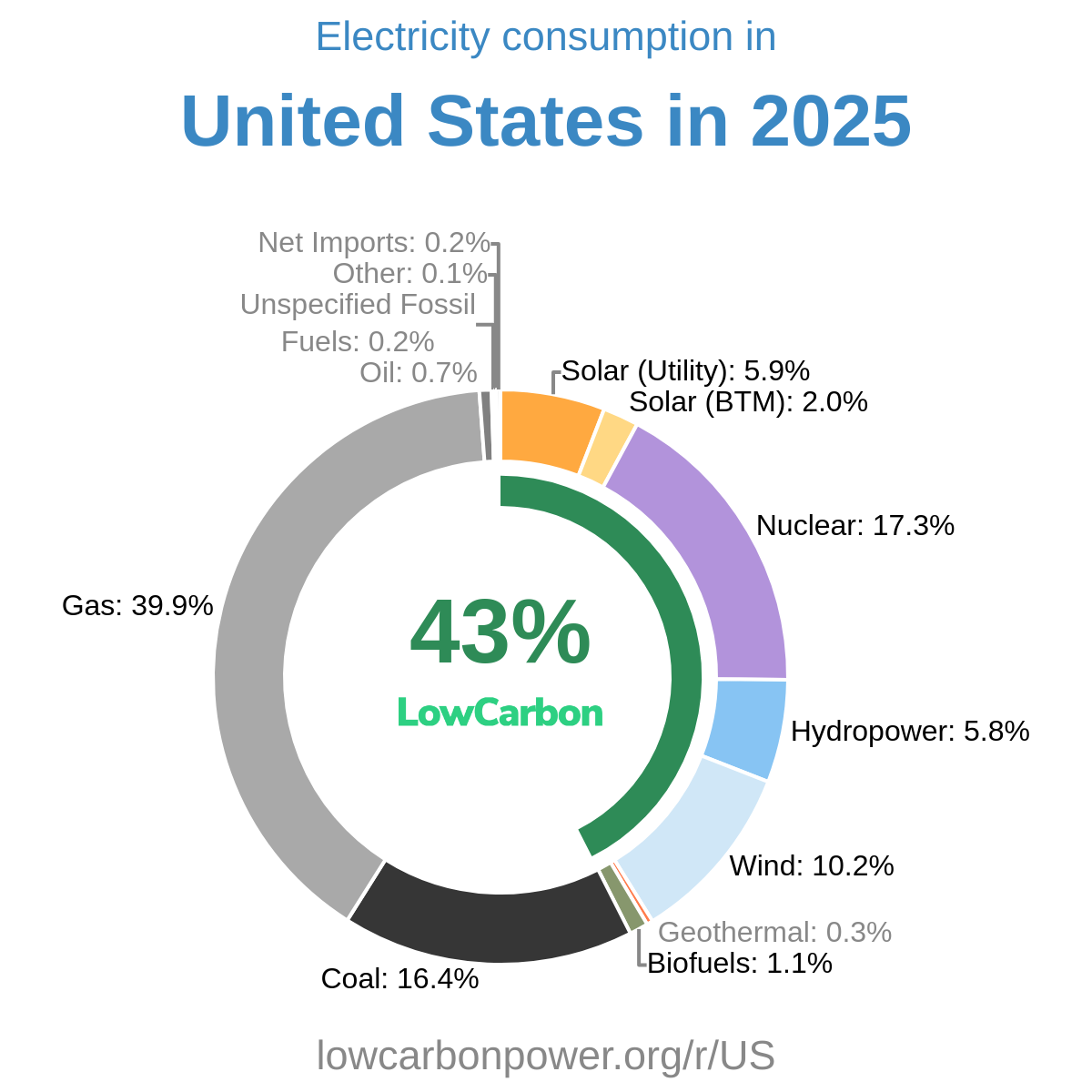
Nigeria can increase low-carbon electricity by expanding solar, developing suitable wind resources, and building a nuclear electricity programme alongside its hydropower base. Relevant examples include South Africa, which generated about 20 TWh from solar, 12 TWh from wind, and 12 TWh from nuclear, and Pakistan, with about 41 TWh of solar and 22 TWh of nuclear electricity. India’s roughly 192 TWh of solar generation also demonstrates the scale achievable in a large developing economy. Nigeria could learn from these regions by supporting utility-scale and distributed solar, strengthening transmission networks, and developing the institutions, workforce, and partnerships needed for nuclear generation. France’s approximately 379 TWh of nuclear electricity illustrates nuclear’s potential to provide substantial clean supply, complementing solar and reducing dependence on fossil electricity and its associated climate and air-pollution impacts.
* 12M = Last 12 months (May 2025 – Apr 2026) — a rolling 12-month period, not a calendar year.
History
Nigeria’s recorded low-carbon electricity history is dominated by hydropower, with gains repeatedly interrupted by setbacks. In the 1980s, a decline of about 0.5 TWh in 1983 was followed by increases of roughly 0.6–0.7 TWh in 1984, 1986, and 1988; another 1.5 TWh was added in 1991. The 2000s were uneven: a strong 2.3 TWh increase in 2002 and a smaller gain in 2004 were offset by declines in 2000, 2003, 2006, 2008, and 2009. The 2010s brought substantial increases in 2010, 2016, and 2019, despite a 1.3 TWh setback in 2018. More recently, a 0.7 TWh decline in 2020 was followed by gains of 1.3 TWh in 2022, 2.3 TWh in 2025, and 0.7 TWh in 2026. These recent additions are encouraging, but sustained growth and a broader clean electricity mix are essential to raise electricity availability per person.
* 12M = Last 12 months (May 2025 – Apr 2026) — a rolling 12-month period, not a calendar year.
Electricity Imports and Exports
Balance of Trade
* 12M = Last 12 months (May 2025 – Apr 2026) — a rolling 12-month period, not a calendar year.
Nearby Regions