

Electricity in Guyana in 2023
In 2023, Guyana's electricity consumption remains heavily reliant on fossil fuels, with over 90% of electricity sourced from these non-clean energy sources. Low-carbon energy accounts for a modest fraction of the total electricity generation, just below 7%. Within the low-carbon category, biofuels make up the majority, generating about 5% of the total electricity, while solar contributes to approximately 1.5%. This distribution highlights an urgent need for Guyana to transition towards clean energy solutions to combat the adverse effects of climate change and reduce air pollution associated with fossil fuel usage.
Data sources used on this page include EIA and Ember. More about data sources →
Is Electricity Growing in Guyana?
Electricity consumption in Guyana is witnessing notable growth. In 2023, the electricity usage per person reached 1,622 kWh, surpassing the previous high recorded in 2022 by 76 kWh per person. This upward trend reflects an increase in electrical demand, which underscores the importance of augmenting supply, particularly from clean energy sources. Encouragingly, low-carbon electricity generation has also risen significantly from the low record of 40 kWh per person in 2015 to 109 kWh in 2023. This growth of 69 kWh per person highlights a positive shift towards cleaner energy, although there remains considerable room for improvement to fully leverage Guyana's clean energy potential.
Suggestions
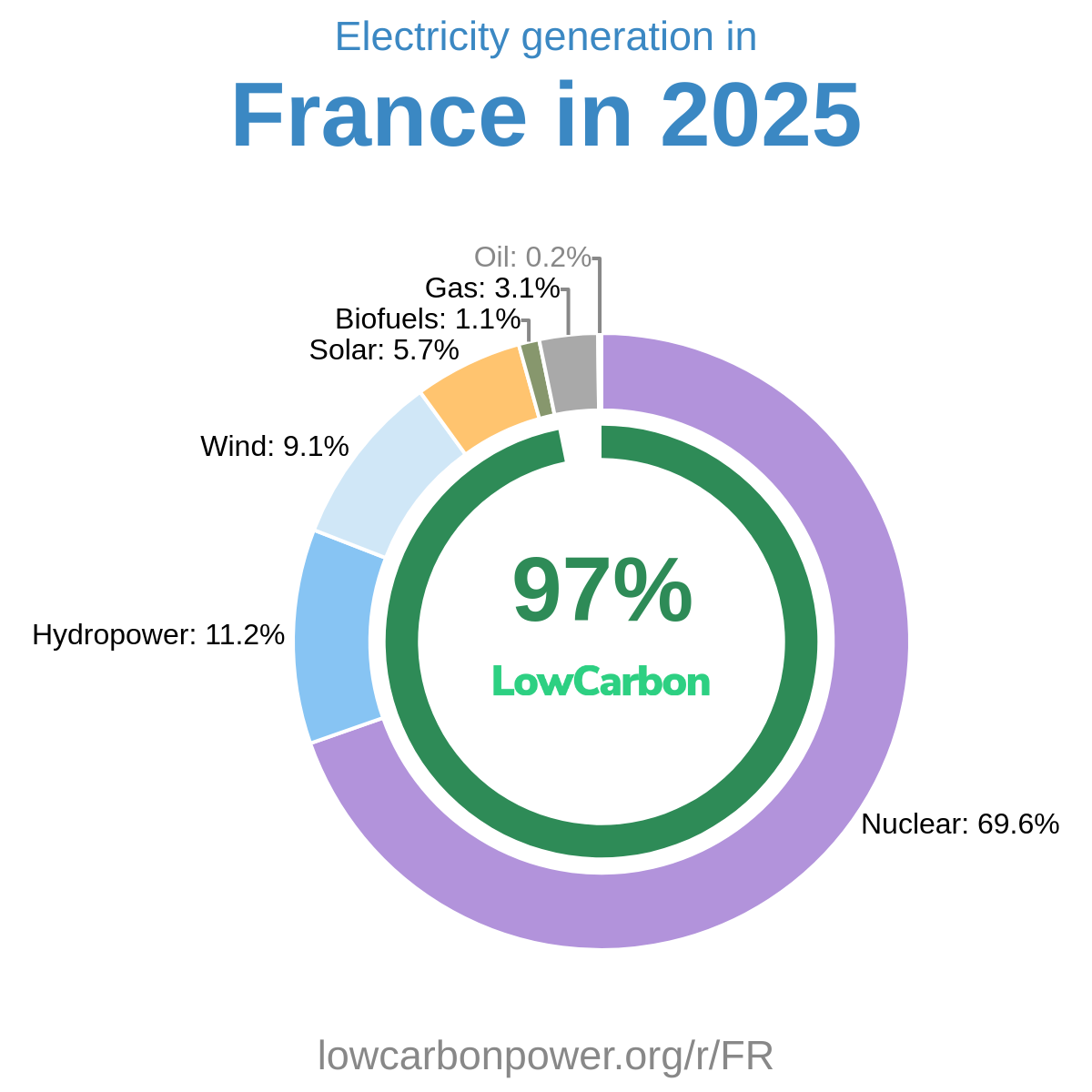
To further boost low-carbon electricity generation, Guyana can draw lessons from other regions that have successfully integrated clean energy. For instance, solar energy has been remarkably adopted in countries like North Macedonia, Nevada in the United States, and Cyprus, where solar contributes significantly to their energy matrix. Similarly, nuclear energy, a robust and reliable low-carbon source, is pivotal in countries like France and Slovakia where it accounts for over 60% of electricity generation. By considering the implementation of both solar and nuclear energy strategies, Guyana could significantly enhance its low-carbon electricity share, ensuring a more sustainable and environmentally friendly energy future.
History
Historically, Guyana's journey towards low-carbon electricity generation has been gradual. Starting from the year 2000 to the early 2010s, biofuels consistently generated negligible amounts of electricity. Solar power made its first appearance in 2017, although it didn't contribute any significant energy until recent years. The most notable change in Guyana's clean energy landscape occurred in 2023 with a small increase in biofuels electricity generation by 0.1 TWh. Despite this small step forward, the country's overall progression towards embracing low-carbon electricity has been slow, emphasizing the need for a more aggressive stance in adopting clean energy technologies like solar and nuclear to ensure energy security and environmental sustainability.