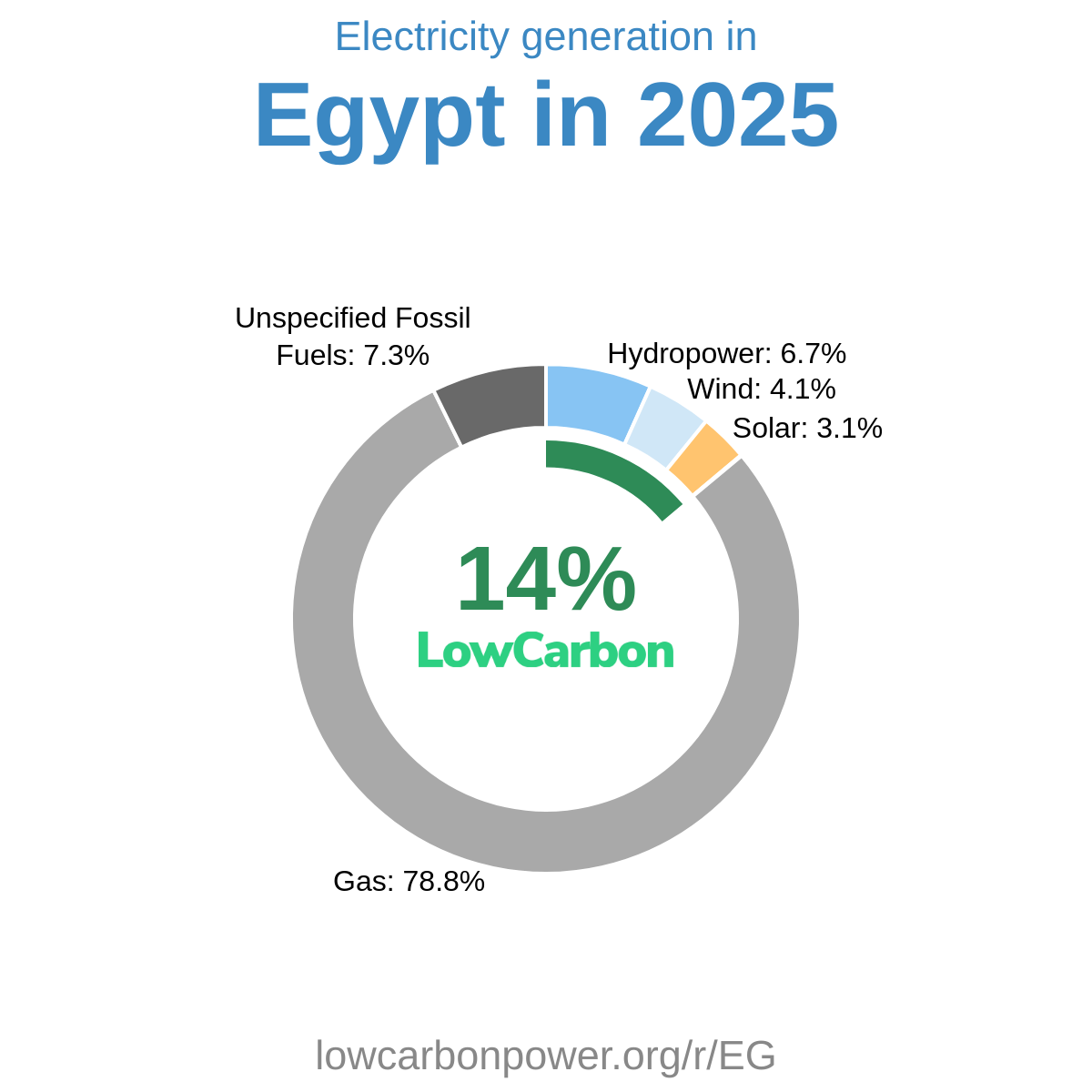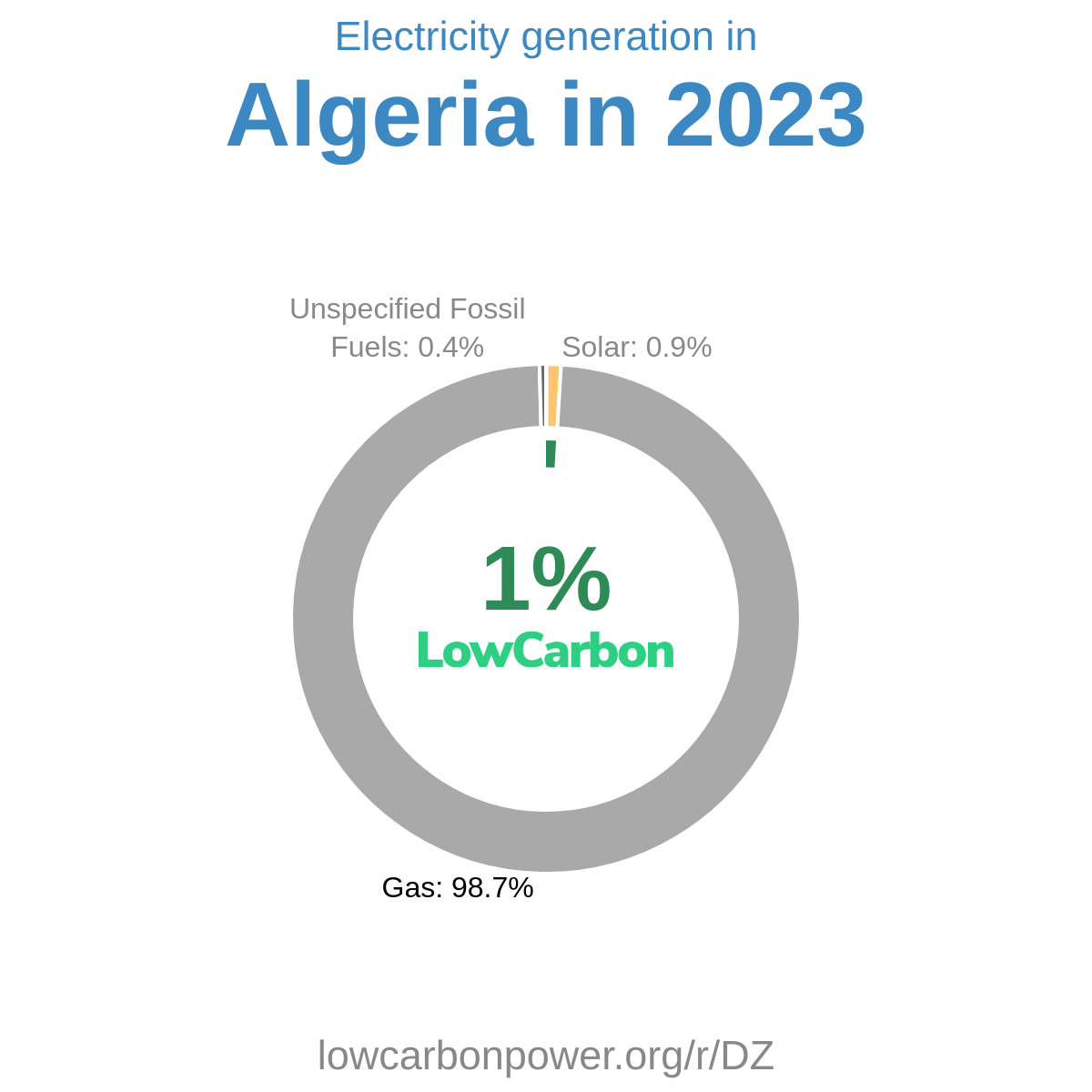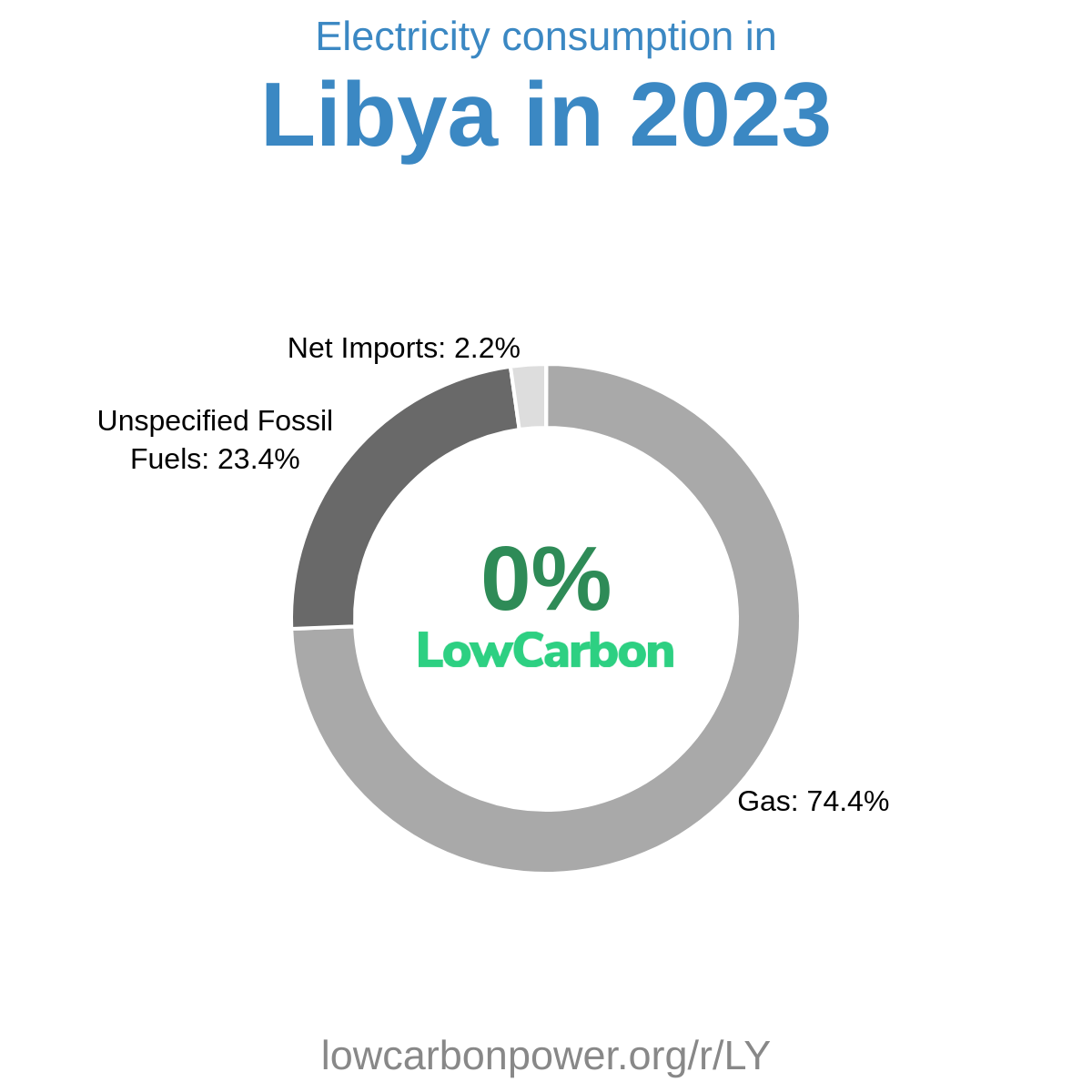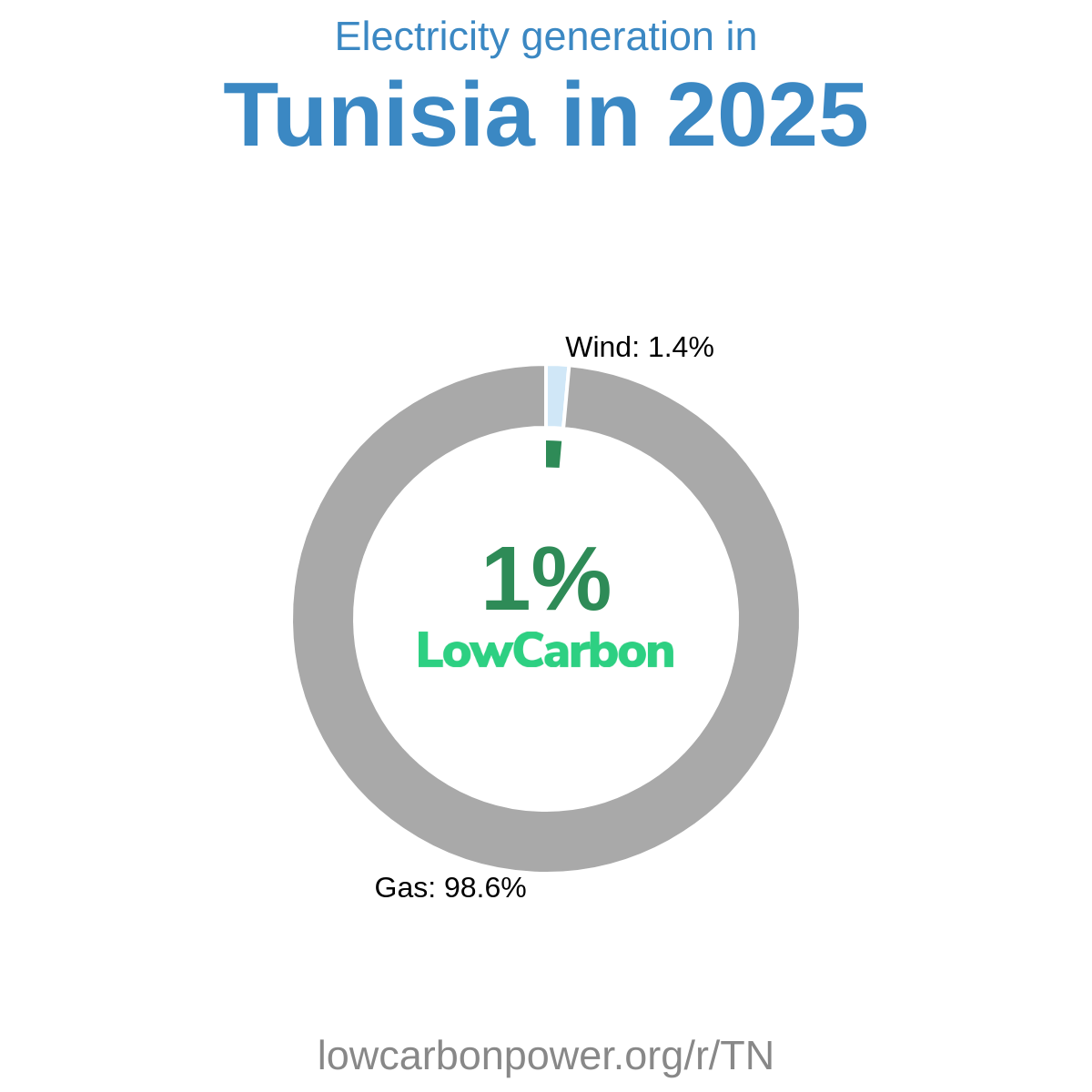


From April 2025 through March 2026, Morocco’s electricity consumption remained dominated by fossil fuels, which supplied about 64% of the total. Coal alone accounted for more than half, at roughly 54%, while gas supplied around 9%. Low-carbon electricity contributed almost 27%, led by wind at 20%, followed by solar at 4% and hydropower at about 2.5%. Net imports supplied the remaining 9%; their low-carbon or fossil composition is not specified. Expanding clean electricity would help Morocco reduce its reliance on fossil fuels and their associated climate-changing emissions and air pollution.
Is Electricity Growing in Morocco?
Electricity consumption per person has not yet surpassed Morocco’s previous peak. The latest 2026 figure is 1,203 kWh per person, down 16 kWh, or about 1%, from the 2024 record of 1,219 kWh. This shortfall is concerning as electrification and growing digital activity will require more electricity, although these figures alone do not establish whether total national consumption declined. Encouragingly, low-carbon generation reached a new record of 322 kWh per person, exceeding the 2024 high of 316 kWh by 6 kWh, or roughly 2%. Clean generation is therefore progressing, but faster growth would help meet future demand.
Suggestions
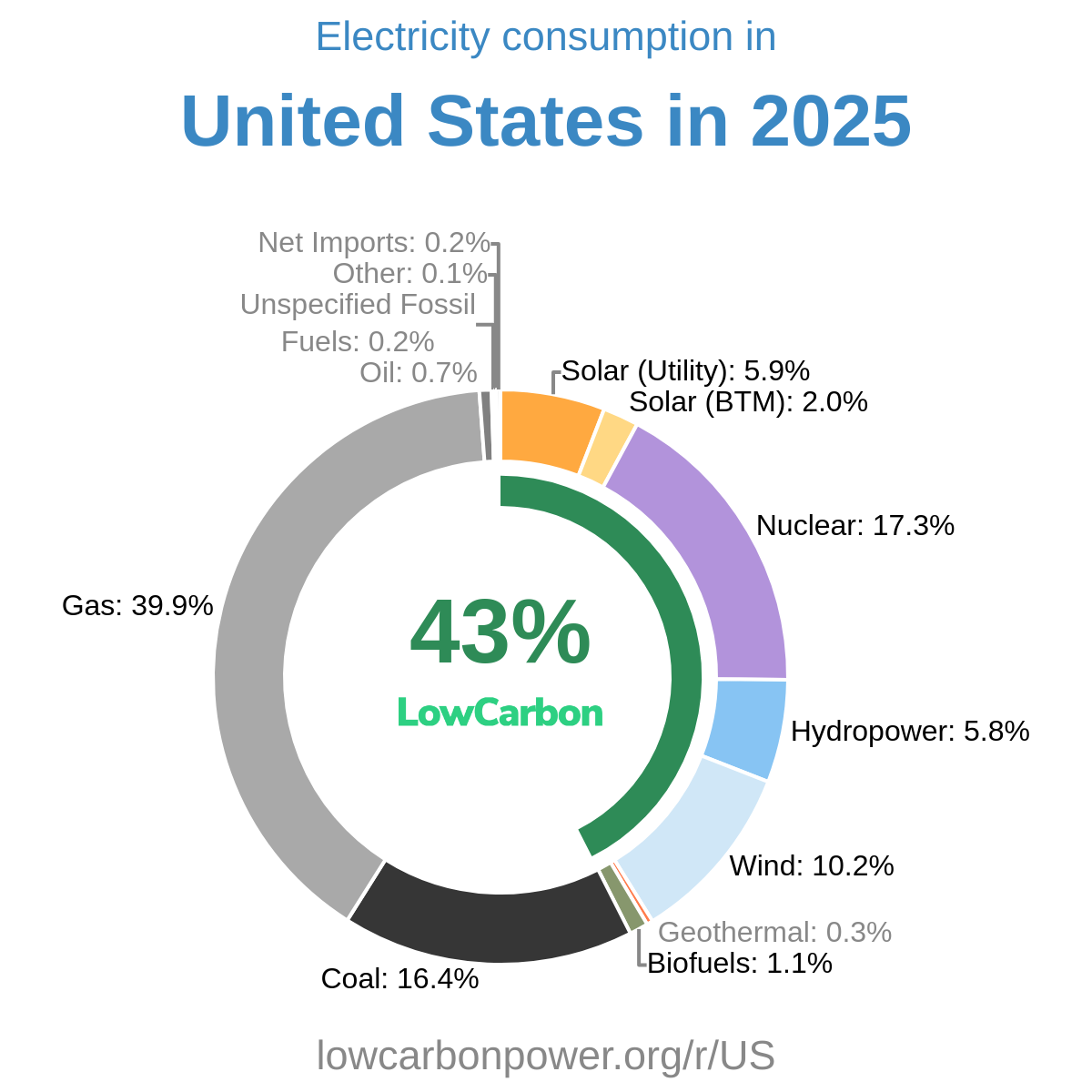
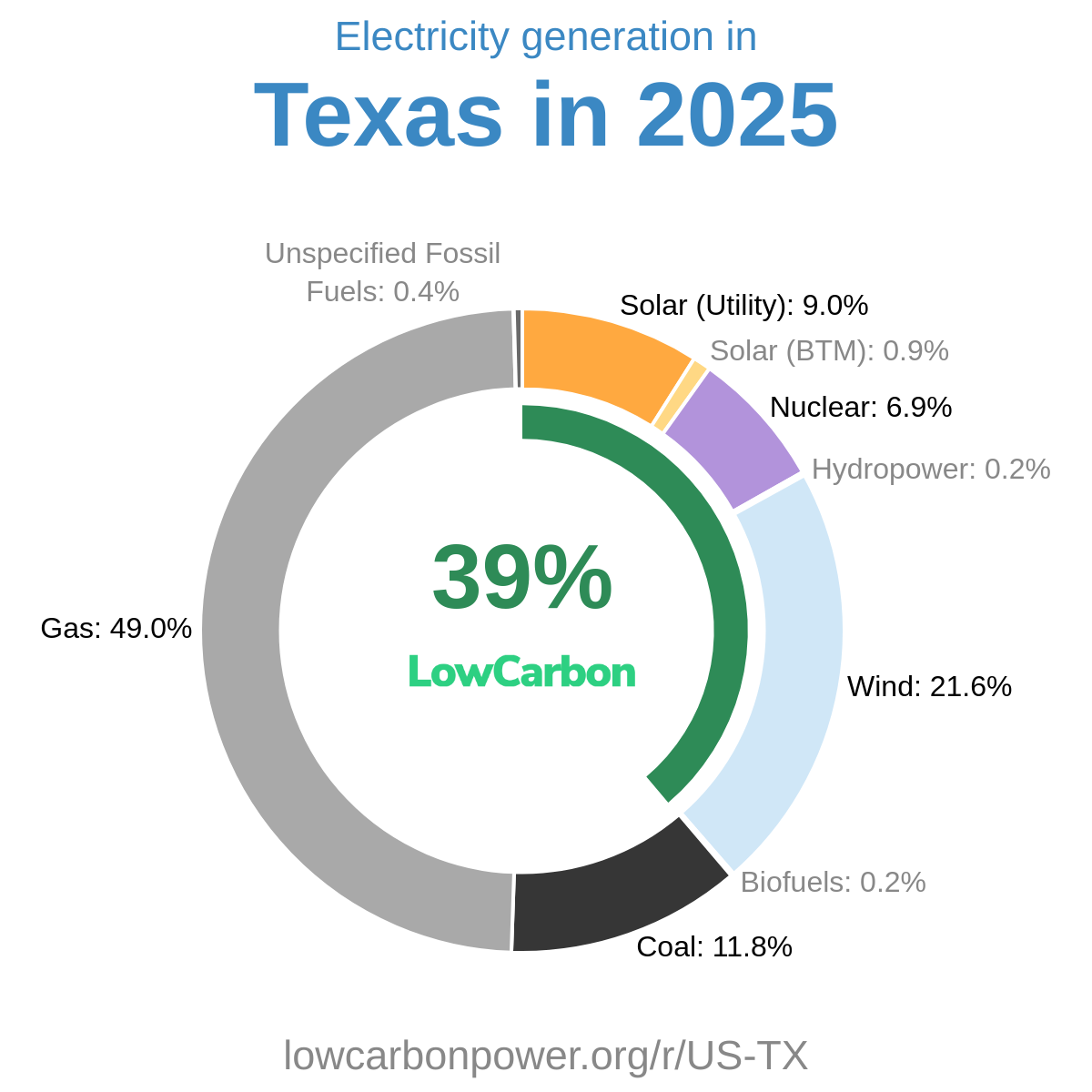
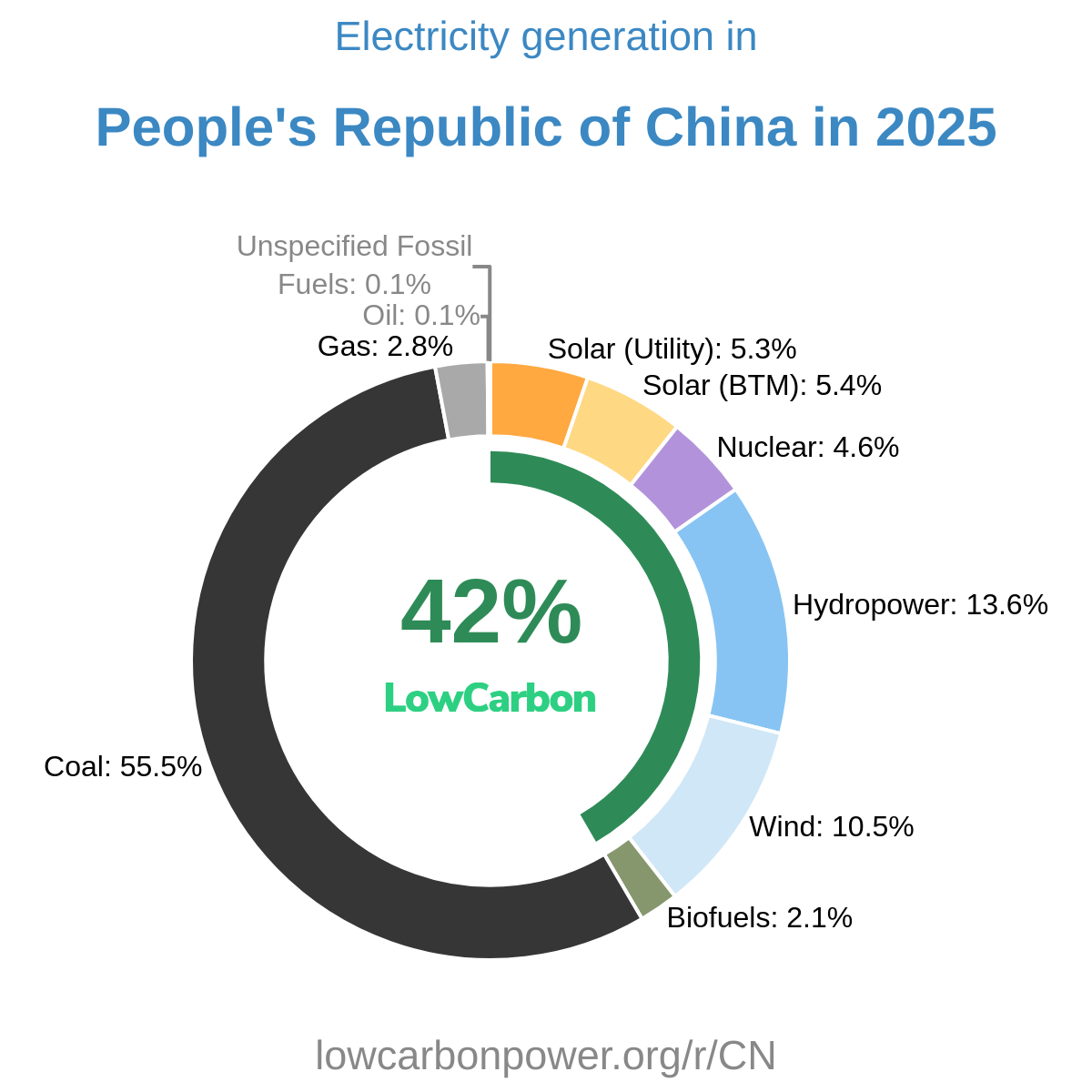
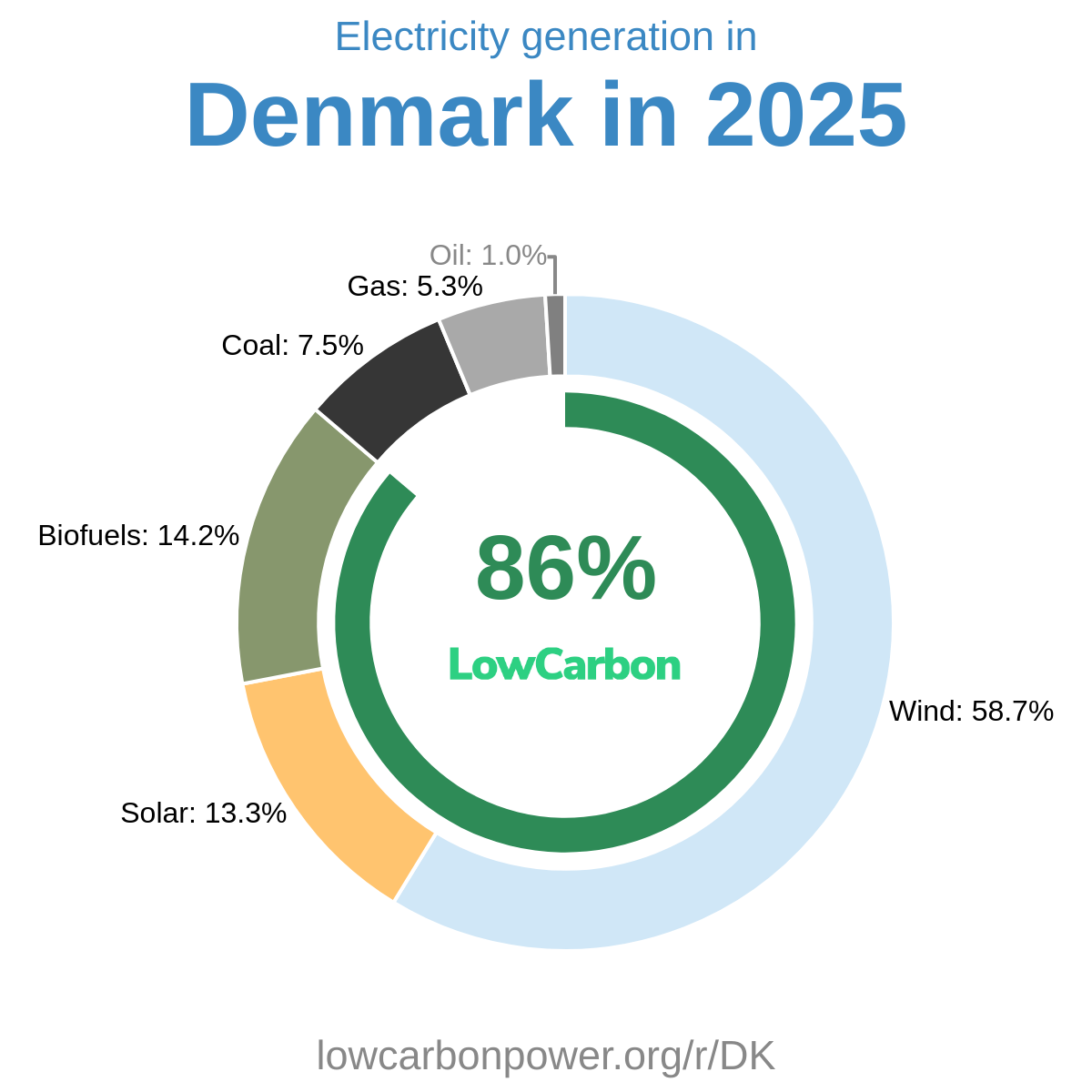
Morocco can build on its strong wind sector while substantially expanding solar electricity and considering nuclear generation. Denmark and the US state of Iowa each generate about 57% of their electricity from wind, demonstrating the potential for wind to contribute much more than Morocco’s current fifth. Nearby Spain provides a relevant solar example, generating about 23% of its electricity from solar, while sunny regions such as Chile and the US state of Nevada achieve roughly 24% and 35%, respectively. Morocco could also learn from France, where nuclear supplies around two-thirds of electricity, and the United Arab Emirates, where it supplies a fifth. Combining expanded wind and solar with nuclear development and investment in electricity networks would support a larger, cleaner electricity supply.
* 12M = Last 12 months (Apr 2025 – Mar 2026) — a rolling 12-month period, not a calendar year.
History
Morocco’s low-carbon electricity history shows fluctuating hydropower output followed by increasingly important wind and solar growth. In the late 1990s, hydropower rose by 1.3 TWh in 1996 but fell by 1 TWh in 1999. Gains of 0.6 TWh in 2003, 1.6 TWh in 2009 and 0.7 TWh in 2010 were followed by a disappointing 1.5 TWh decline in 2011; further hydropower gains in 2013 were offset by declines in 2014 and 2016. Wind added 0.6 TWh annually from 2013 through 2015, then gained another 0.8 TWh in 2018 and 0.9 TWh in 2019, alongside solar increases of 0.5 and 0.6 TWh. In 2023, wind and solar grew by 1.2 and 0.7 TWh, respectively, before wind delivered an exceptional 3.3 TWh increase in 2024. Its 0.9 TWh decline in 2025 was a concerning setback, underscoring the need for sustained expansion across clean electricity sources.
* 12M = Last 12 months (Apr 2025 – Mar 2026) — a rolling 12-month period, not a calendar year.
Electricity Imports and Exports
Balance of Trade
* 12M = Last 12 months (Apr 2025 – Mar 2026) — a rolling 12-month period, not a calendar year.
Nearby Regions