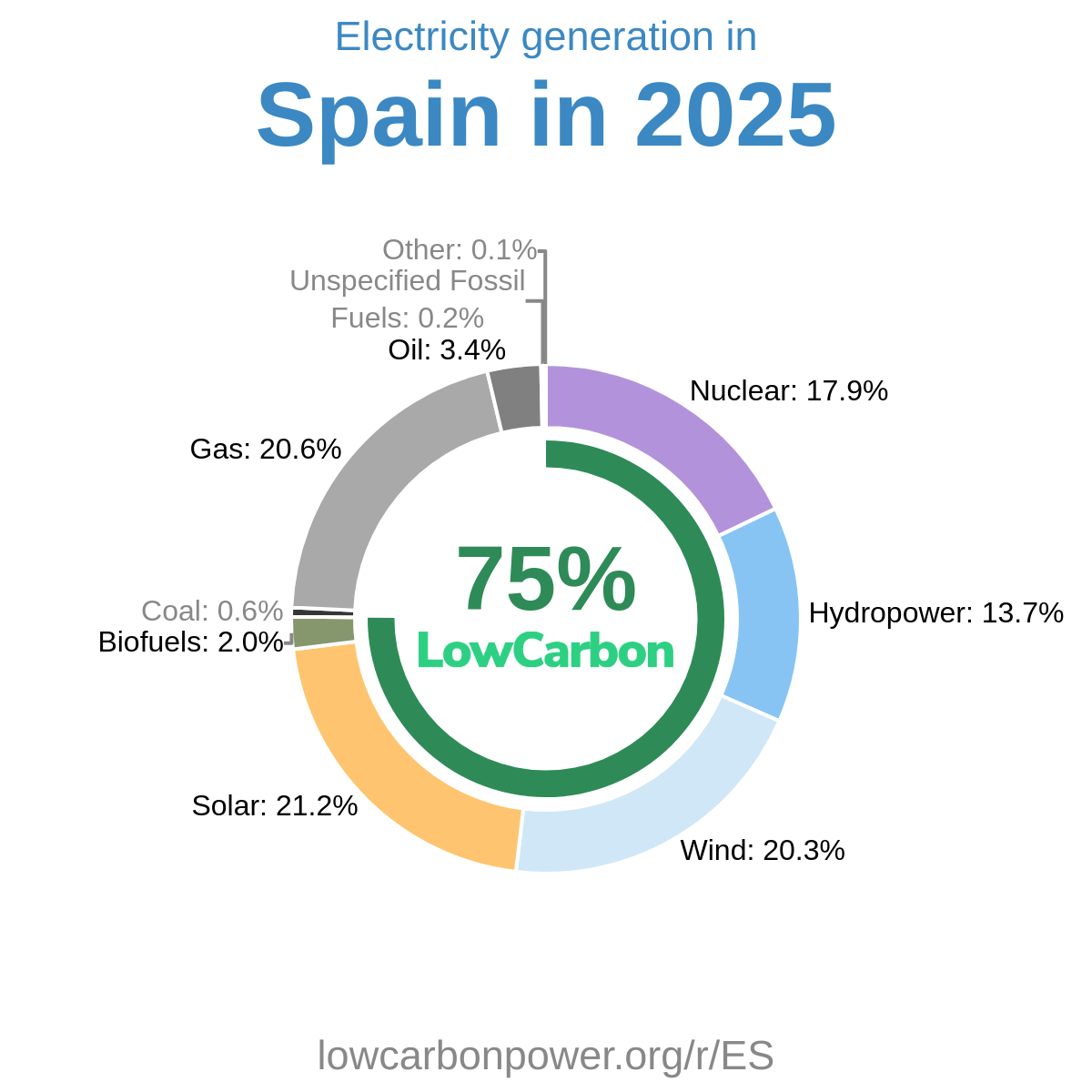


Spain's electricity consumption in 2025 shows a significant lean towards low-carbon sources, with more than 75% of its electricity deriving from clean energy types. This includes solar, wind, nuclear, hydropower, and biofuels. Solar and wind contribute nearly an equal share, each representing over 20% of Spain's electricity generation. Nuclear energy is not far behind, accounting for about 18%, while hydropower adds almost 14%. The remaining nearly 25% comes from fossil fuels, primarily natural gas at around 21%, with oil contributing a modest 3%. The move towards cleaner energy suggests a commendable shift to reduce climate change and air pollution impacts.
Data sources used on this page include IEA and World Bank. More about data sources →
Is Electricity Growing in Spain?
Despite these strides in clean energy, Spain's overall electricity consumption has declined from its 2008 peak. In 2025, the average Spaniard consumes around 6025 kWh, which is notably lower by 761 kWh from the 2008 high of 6786 kWh. However, the generation of low-carbon electricity has increased, establishing a new high of 4527 kWh per person, a rise of 60 kWh compared to the previous record set in 2024. This highlights progress in clean electricity production, although the overall consumption drop could be concerning in terms of meeting future energy demands, especially with the expected growth in electrification and technological developments.
Suggestions
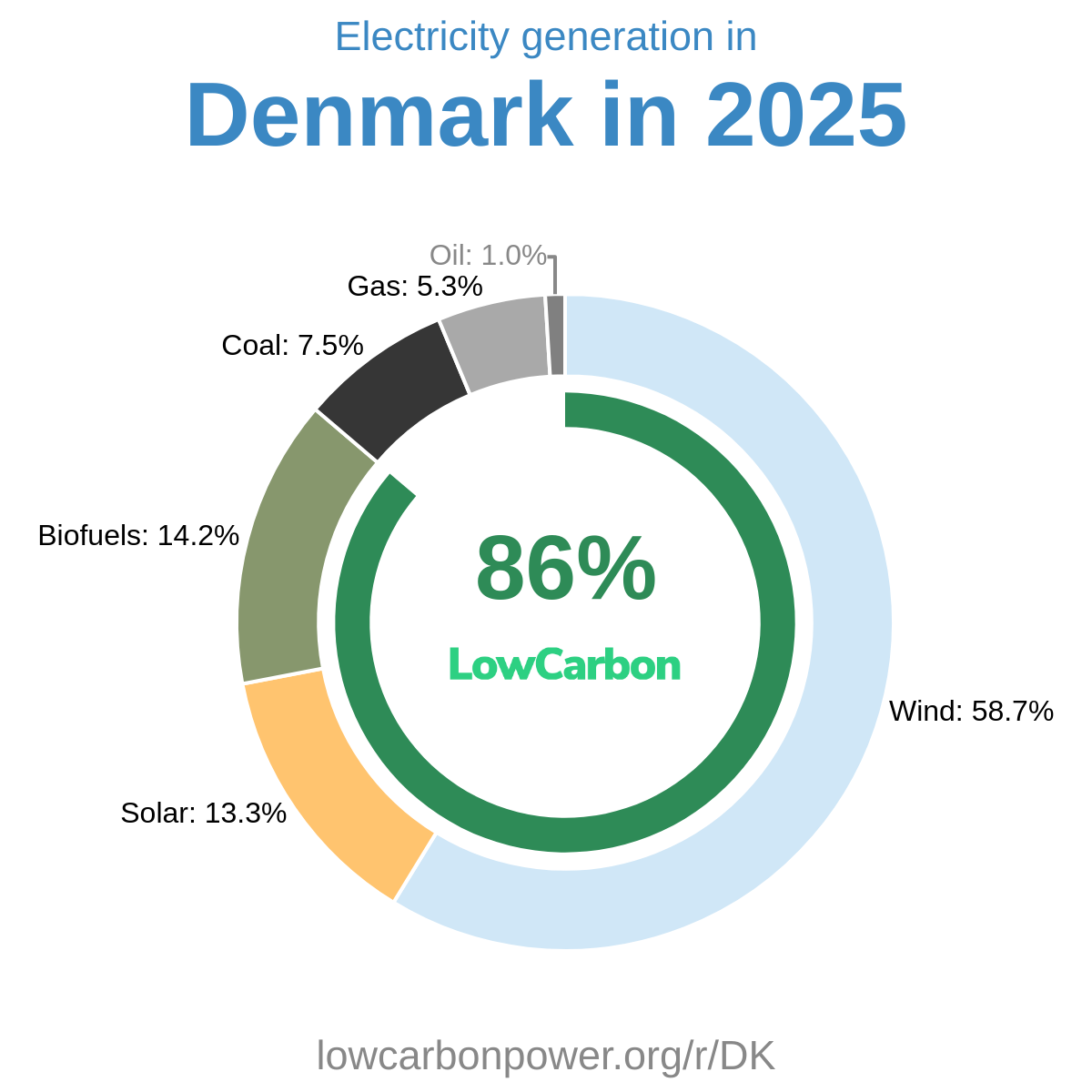
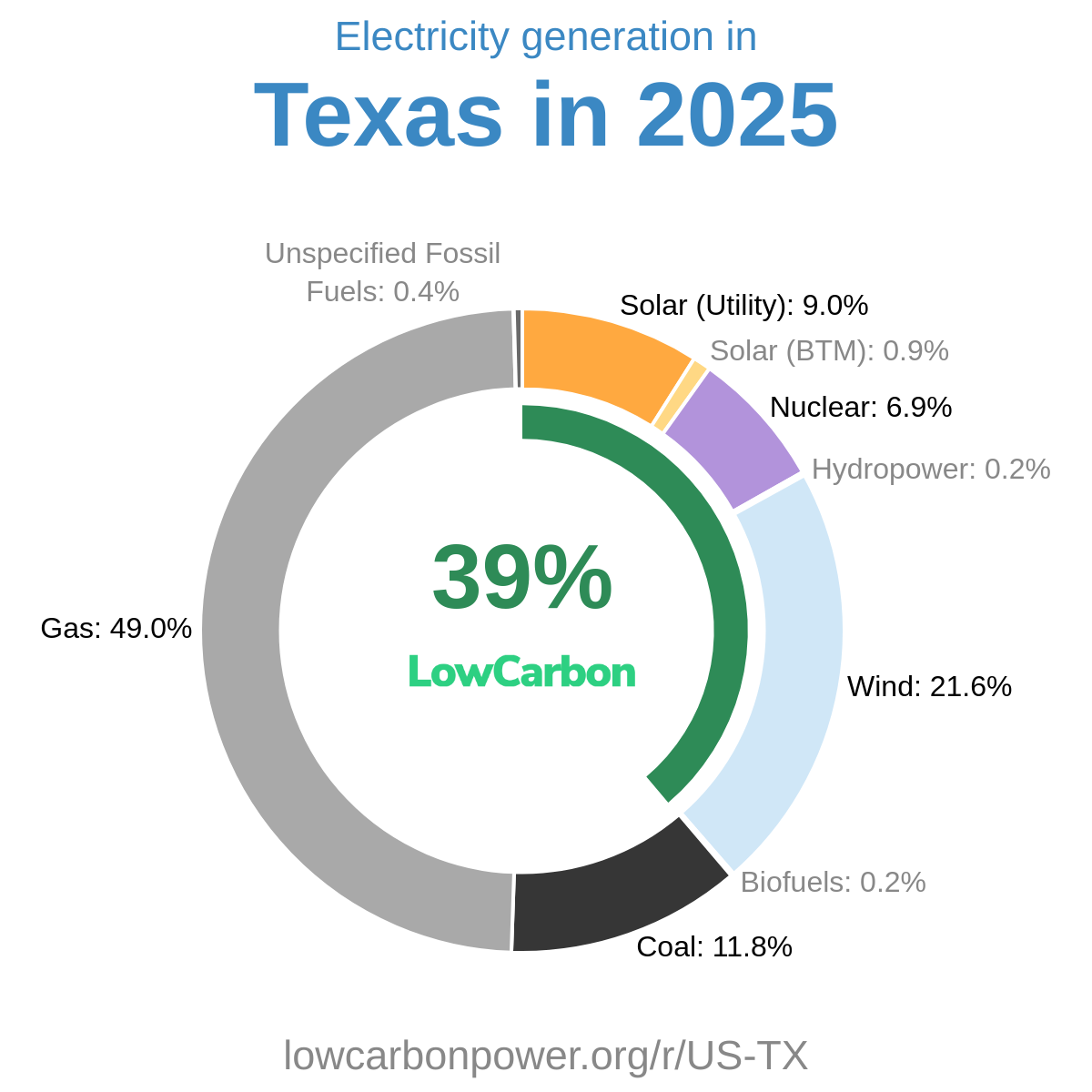
To bolster Spain's low-carbon electricity generation, expanding existing capacities in nuclear, wind, and solar energy should be a priority. These technologies already play substantial roles in Spain's electricity landscape, and increasing their output is crucial. Spain might look to countries like France and Slovakia, where nuclear energy constitutes more than 60% of electricity generation, showcasing the potential scale of nuclear power. For wind energy, Spain could take inspiration from Denmark and Iowa, demonstrating that a significant portion of electricity, up to 60%, can be sourced from wind. The integration of these insights can guide Spain in enhancing its clean electricity supply.
History
Historically, Spain has seen fluctuations in its low-carbon electricity generation. The late 20th century was marked by erratic changes in hydropower output, with periods of growth and significant declines. The year 1984 witnessed a notable increase in nuclear energy production, which played a key role in diversifying Spain's electricity sources. Hydropower has experienced periods of both growth and decline, as seen between the late 1990s and early 2000s, with gains and losses year to year. Recently, the growth of solar energy has been encouraging, particularly noted in 2023 with an increase of nearly 13 TWh. These historical movements underline the importance of stable and sustainable strategies to enhance Spain's low-carbon electricity infrastructure further.