

In 2022, Ukraine's electricity consumption leaned heavily on low-carbon sources, accounting for more than 70% of its total electricity generation. The majority of this clean electricity came from nuclear power, which contributed more than half of the total electricity produced. Hydropower made up an additional portion, while solar and wind played smaller roles, together generating almost 6% of the electricity. On the other hand, electricity generated from fossil fuels was nearly 30%, with coal being the primary contributor, followed by gas. This distinction highlights that, despite a strong dependency on nuclear energy, there is still an opportunity to further reduce reliance on fossil fuels and enhance clean energy generation.
Is Electricity Growing in Ukraine?
Electricity consumption in Ukraine has seen a significant decline compared to historical records. In 2022, the total electricity consumption per person was approximately 2,767 kWh, less than half of what was recorded in 1988. This reduction signifies a drop of almost 3,000 kWh/person. Additionally, low-carbon electricity has decreased compared to its peak in 2021, showing a reduction of nearly 500 kWh/person. This downward trend is disconcerting, especially for a country that has made considerable strides in generating sustainable electricity. It's imperative to reverse this trend to fulfill future electricity needs as demand inevitably rises.
Suggestions
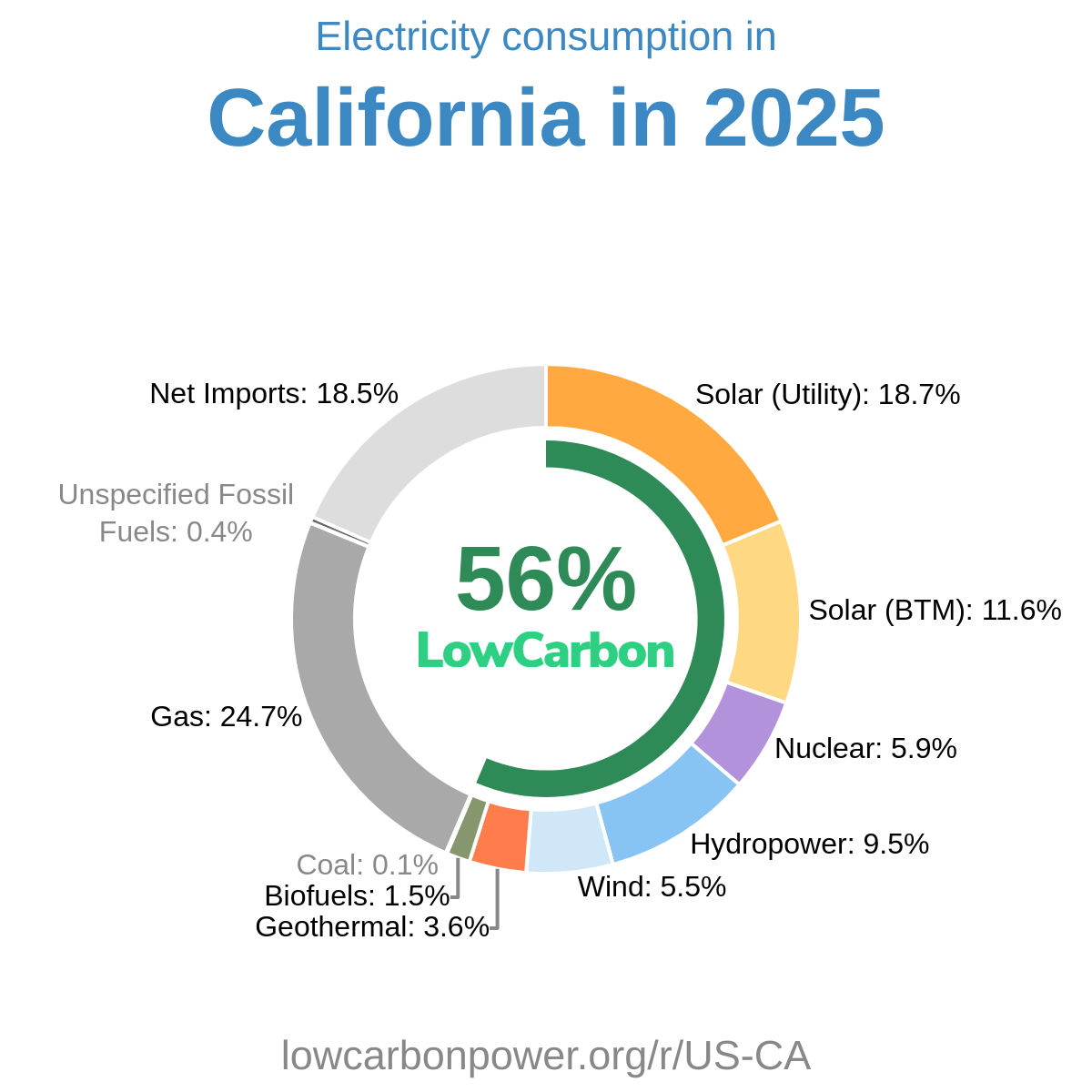
To increase low-carbon electricity generation, Ukraine could look at expanding its existing nuclear infrastructure, given its significant role in the energy mix. Furthermore, the country can draw inspiration from regions with impressive clean energy accomplishments. For example, Ukraine could follow France's lead, as nuclear accounts for 67% of its electricity, warranting the potential benefits of increased nuclear adoption. Additionally, considering the potential for solar energy, Ukraine might learn from Lebanon and California, where solar generates about 31% of electricity in each location, and from North Macedonia and Germany, both excelling with around 30% and 19% solar energy, respectively. Emulating these strategies could significantly bolster Ukraine's clean energy production and reduce its dependence on fossil fuels.
History
Looking back at the history of low-carbon electricity in Ukraine, several critical shifts have shaped the current landscape. In the late 1980s, nuclear energy witnessed dynamic changes, with substantial increases in 1987 and 1988 followed by notable declines in subsequent years, such as 1989 and 1994. The late 1990s brought a period of growth for nuclear and hydroelectric power. However, the 2000s saw erratic patterns of nuclear output with both growth spurts and declines, alongside marked fluctuations in hydroelectricity. Recently, in the 2010s and early 2020s, nuclear generation again faced challenges with several declines offset by periodic gains. The steep reduction noted in 2022 is a concerning development that Ukraine must aim to counteract by strategically investing in sustainable energy infrastructure to realize a resilient low-carbon future.
Electricity Imports and Exports
Balance of Trade
Nearby Regions