

Electricity in Washington, D.C. in 2025/2026
Over the past 12 months, from April 2025 to March 2026, Washington, D.C.’s electricity consumption heavily relied on net imports, with more than 95% of its electricity being sourced from outside the area. A mere 4% of electricity consumption in the city came from low-carbon sources, with a significant portion of that, about 3.6%, being solar power, including BTM (behind-the-meter) solar systems which comprised 3.16%. The reliance on fossil energy remains dominant, highlighting an urgent need for the city to diversify its energy portfolio and invest more in clean, sustainable energy solutions.
Is Electricity Growing in Washington, D.C.?
Despite the critical need for a stronger clean energy portfolio, electricity consumption in Washington, D.C. seems to have reached a plateau. The latest figures for 2026 show an electricity consumption of 16,340 kWh per person, which matches the historical record set in 2025. Meanwhile, there has been a welcome increase in low-carbon electricity generation, with the current figures showing 664 kWh per person, marking an increase of 50 kWh compared to the previous year. Although this growth in low-carbon electricity is a positive sign, it remains insufficient to significantly alter the overall energy mix, and the overall stagnation in total electricity suggests more aggressive policies and infrastructure investments are necessary.
Suggestions
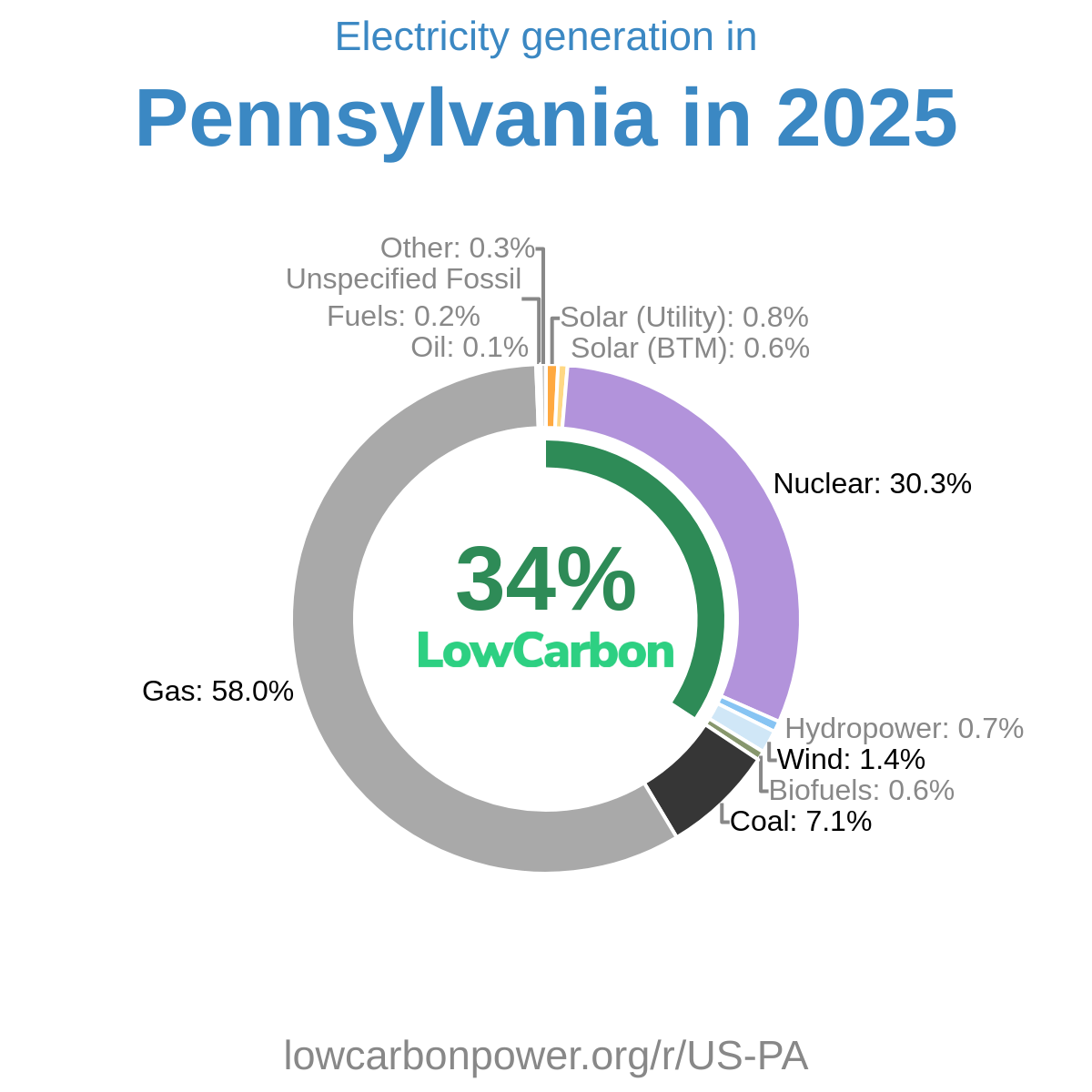
For Washington, D.C. to boost its low-carbon electricity generation, it would be wise to take insights from regions that have successfully harnessed nuclear and solar power. For instance, Nevada has excelled in solar power, generating 34% of its electricity from this clean source, illustrating its potential as a substantial contributor to the energy mix. Meanwhile, nearby states like New Jersey and Pennsylvania have demonstrated the effectiveness of nuclear energy, with a 33% and 30% share in their electricity mixes, respectively. These examples can serve as models for D.C. to consider expanding its solar and nuclear energy capacities, not only to enhance energy security but also to combat the detrimental effects of fossil fuel reliance such as climate change and air pollution.
* 12M = Last 12 months (Apr 2025 – Mar 2026) — a rolling 12-month period, not a calendar year.
History
Looking back at the history of low-carbon electricity in Washington, D.C., biofuels remained consistently static from 2024 to 2026, with no change in its electricity generation. The absence of significant growth or diversification within the city’s low-carbon energy sector over this period suggests a missed opportunity for development, particularly when considering the global and national discourse on the necessity for clean energy transformation. This stagnation calls for urgent action to break the status quo and capitalize on the growing potential of nuclear and solar technologies to ensure a cleaner and more sustainable future for the capital.
* 12M = Last 12 months (Apr 2025 – Mar 2026) — a rolling 12-month period, not a calendar year.
Electricity Imports and Exports
Balance of Trade
* 12M = Last 12 months (Apr 2025 – Mar 2026) — a rolling 12-month period, not a calendar year.
Nearby Regions
.png)