

Austria is currently seeing a positive contribution from low-carbon sources in its electricity mix. Over the past year, from June 2025 to May 2026, more than three-quarters of Austria's electricity came from low-carbon sources. Hydropower is the most dominant among these, contributing slightly under half to Austria's electricity. Solar and wind both make substantial contributions, accounting for about 13% and 12% respectively. In contrast, fossil fuels collectively represented about 15% of the electricity mix, with natural gas at approximately 11% and coal at close to 2%. Net imports make up about 9% of the total, and biofuels contribute just over 5%, showing the strength of low-carbon electricity in Austria.
Is Electricity Growing in Austria?
Unfortunately, electricity consumption in Austria has not been growing in recent years. As of 2026, electricity consumption stands at 8,250 kWh per person, which is a decrease from its peak of 8,943 kWh per person in 2012. This signifies a downward change of 693 kWh per person. The recent numbers for low-carbon electricity generation per person also indicate a downturn, with the latest figure at 6,267 kWh per person, which is a significant decline from the previous peak of 7,663 kWh per person in 2024. This drop of 1,396 kWh per person is certainly worrisome, and it emphasizes the need for Austria to bolster its clean electricity infrastructure to meet future needs and leverage sustainable energy sources amidst a dynamically changing global landscape.
Suggestions
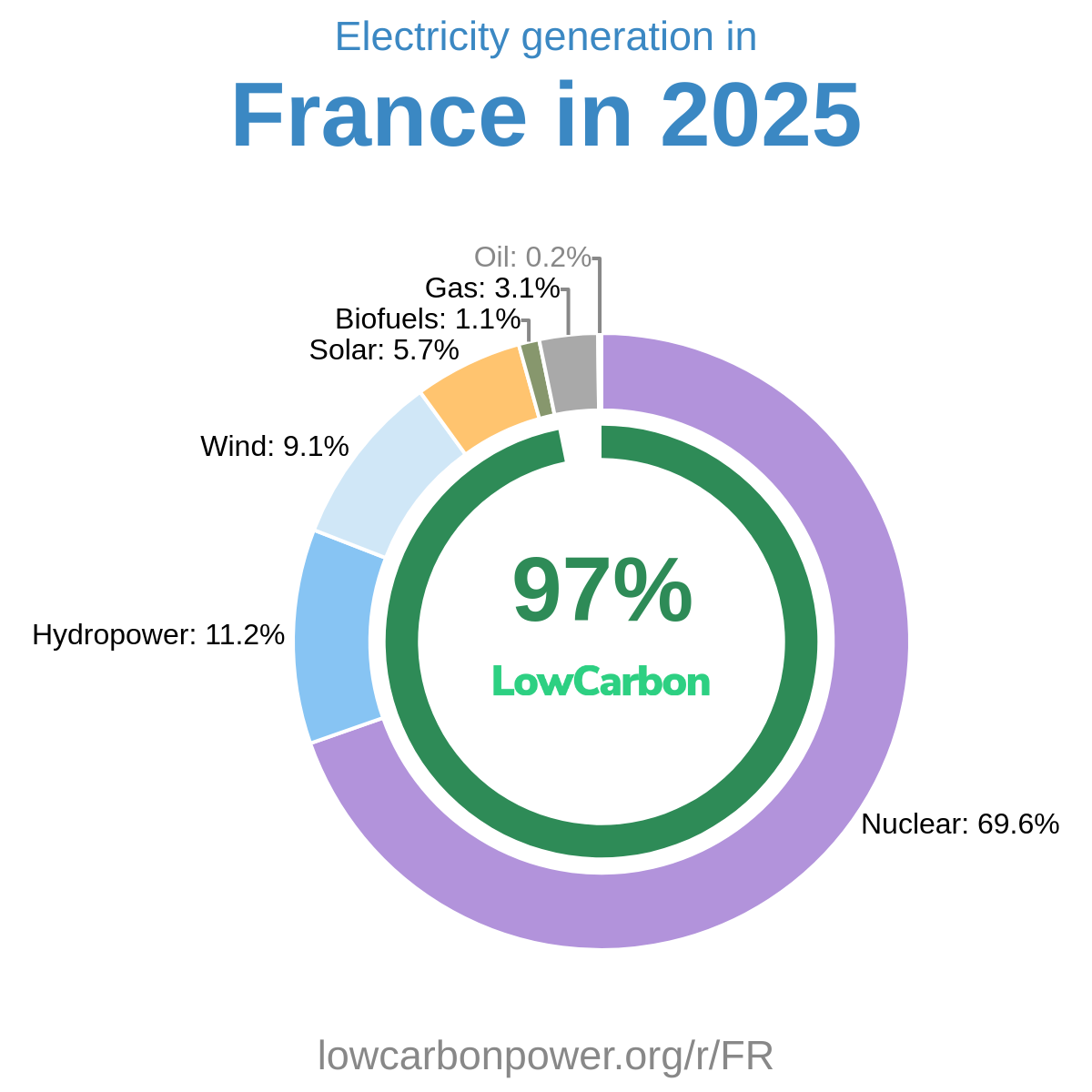
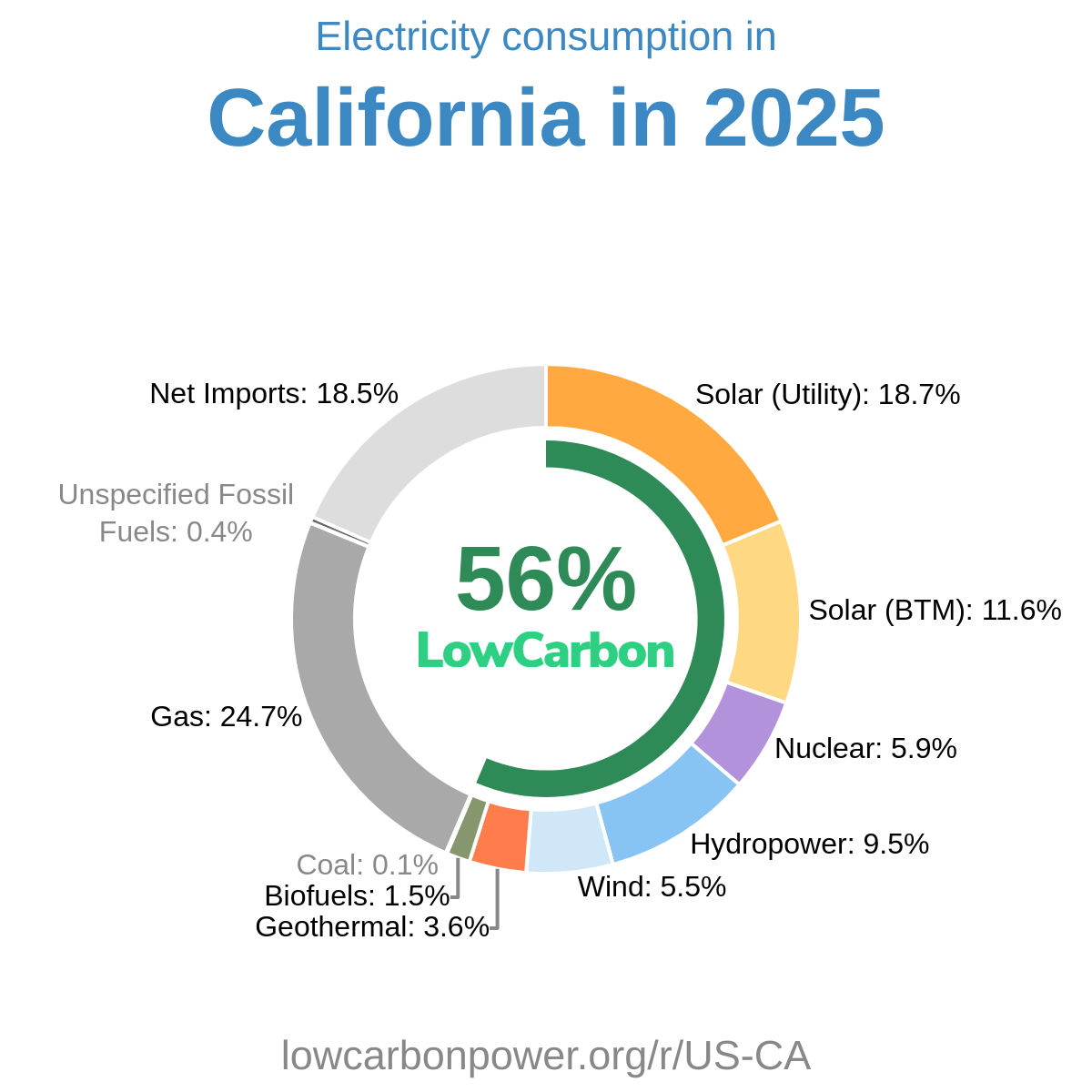
To address this, Austria should consider expanding its wind and solar sectors, given their already significant contributions. Furthermore, looking at successful examples can provide guidance. Denmark's success with wind energy, where it constitutes 60% of its electricity, may offer a useful model for enhancing wind capacity. Likewise, for solar energy, Austria might look to examples like California and Lebanon, where solar comprises more than 30% of their electricity. Moreover, embracing nuclear energy could be another pathway, as seen in France and Slovakia, where it accounts for around two-thirds of their electricity. These examples demonstrate how diversifying Austria’s clean energy sources by investing in wind, solar, and nuclear can drive both growth and sustainability in the country's electricity generation.
* 12M = Last 12 months (Jun 2025 – May 2026) — a rolling 12-month period, not a calendar year.
History
Historically, Austria has seen both challenges and successes in low-carbon electricity generation, particularly with hydropower. In the decades past, fluctuations occurred with significant increases and declines in hydropower output. Notable periods include the early 1980s and the late 1990s, both of which saw substantial boosts in hydropower generation, with increases like 4.9 TWh in 1987 and 3.5 TWh in 1999. However, setbacks occurred, notably in 2003 with a large decline of 6.7 TWh. Yet, more recently in 2023, there was a promising increase of 6 TWh alongside growth in solar energy totaling 3.2 TWh. These historical shifts highlight both the resilience and volatility in clean energy generation, emphasizing the need for consistent development in diverse low-carbon sources moving forward.
* 12M = Last 12 months (Jun 2025 – May 2026) — a rolling 12-month period, not a calendar year.
Electricity Imports and Exports
Balance of Trade
* 12M = Last 12 months (Jun 2025 – May 2026) — a rolling 12-month period, not a calendar year.
Nearby Regions