

In the past year, from April 2025 to March 2026, electricity consumption in New Mexico has shown a balanced mix between clean and fossil energy sources. More than half of the state's electricity, at approximately 52%, comes from low-carbon sources such as wind and solar, which emphasizes New Mexico's commitment to clean energy. Wind alone contributes almost a third of the total electricity, while solar provides nearly 18%, split between utility-scale and behind-the-meter installations. Fossil energy, primarily from gas and coal, accounts for about 48% of the electricity consumption, with coal and gas providing close to a quarter each. This distribution reflects New Mexico's ongoing transition towards more sustainable energy practices.
Is Electricity Growing in New Mexico?
Examining recent trends, electricity consumption in New Mexico is on a modest upward trajectory. The latest figures show an average consumption of 19,427 kWh per person in 2026, marking an increase of over 400 kWh per person compared to the previous high in 2024. This increase suggests a growing demand for electricity, likely fueled by industrial development and population growth. In terms of clean electricity specifically, there has been a slight increase as well, with the latest generation numbers reaching 10,133 kWh per person, a minor rise compared to the prior low-carbon record set in 2025. This growth, though incremental, is essential for moving towards a more sustainable energy future.
Suggestions
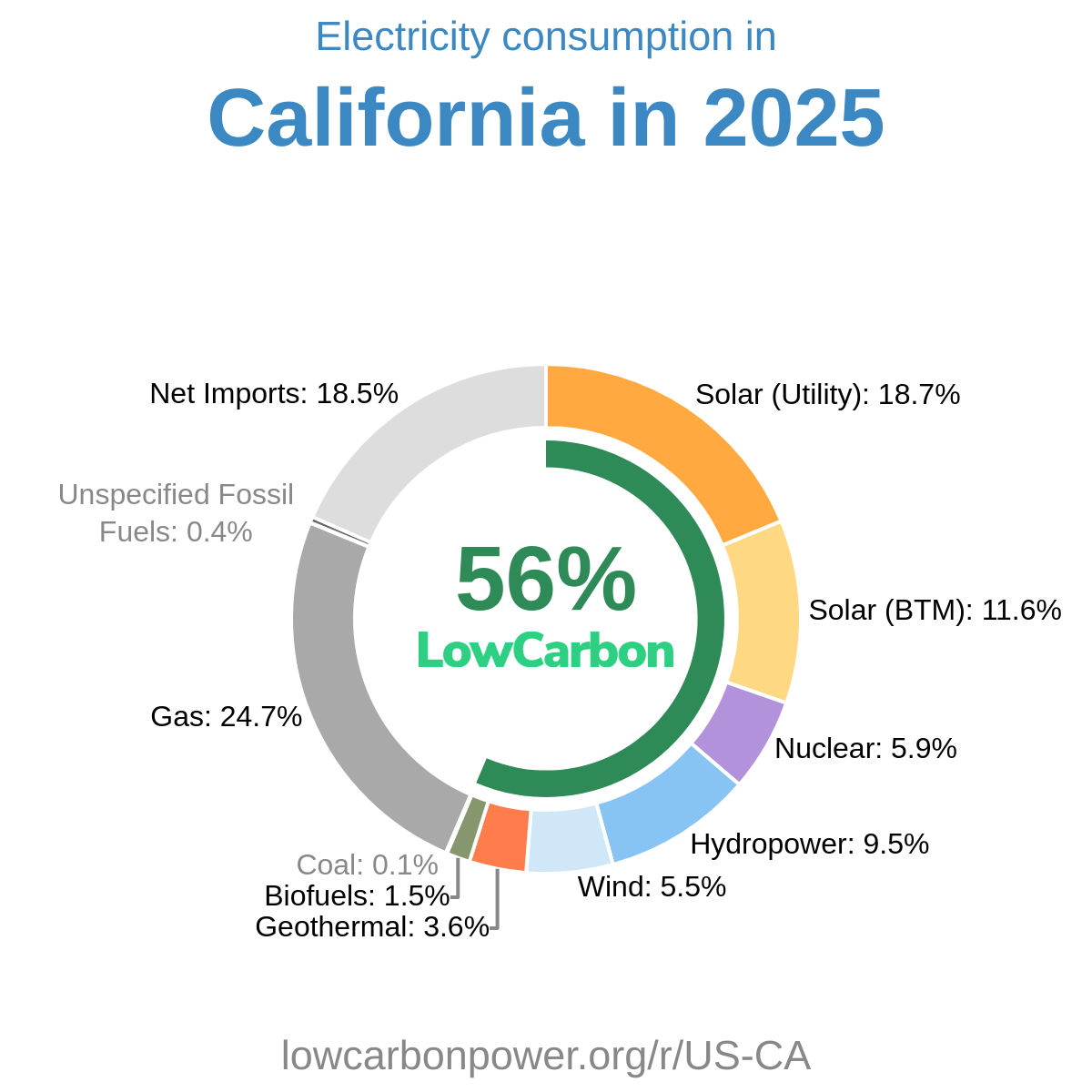
To further increase low-carbon electricity generation, New Mexico should focus on expanding its wind and solar capacities, given their already substantial contributions. Learning from successful regions, the state could look to Nevada and its 34% solar generation as a model for increasing solar capacity. Additionally, New Mexico could benefit by considering nuclear energy as part of its energy portfolio, following examples from states like New Hampshire, which generates a significant 54% of its electricity from nuclear power. By integrating more solar and pursuing nuclear options, New Mexico can accelerate its transition to a cleaner energy landscape, reducing reliance on fossil fuels and mitigating negative environmental impacts such as climate change and air pollution.
* 12M = Last 12 months (Apr 2025 – Mar 2026) — a rolling 12-month period, not a calendar year.
History
Reflecting on the broader history, the recent years have seen mixed results in New Mexico's wind generation. After a positive spike in 2024, wind generation experienced declines in both 2025 and 2026. This decrease illustrates the need for strategic investments and policy support to stabilize and enhance wind capacity further. Other low-carbon sources like geothermal and biofuels have remained static with no significant changes in generation during these years. While biogenic sources hold potential, it's critical that the state pivots towards more scalable solutions such as solar and nuclear, which have proven effective in other regions. These insights encourage New Mexico to take bold steps toward a robust and sustainable electricity future.
* 12M = Last 12 months (Apr 2025 – Mar 2026) — a rolling 12-month period, not a calendar year.
Electricity Imports and Exports
Balance of Trade
* 12M = Last 12 months (Apr 2025 – Mar 2026) — a rolling 12-month period, not a calendar year.
Nearby Regions
.png)