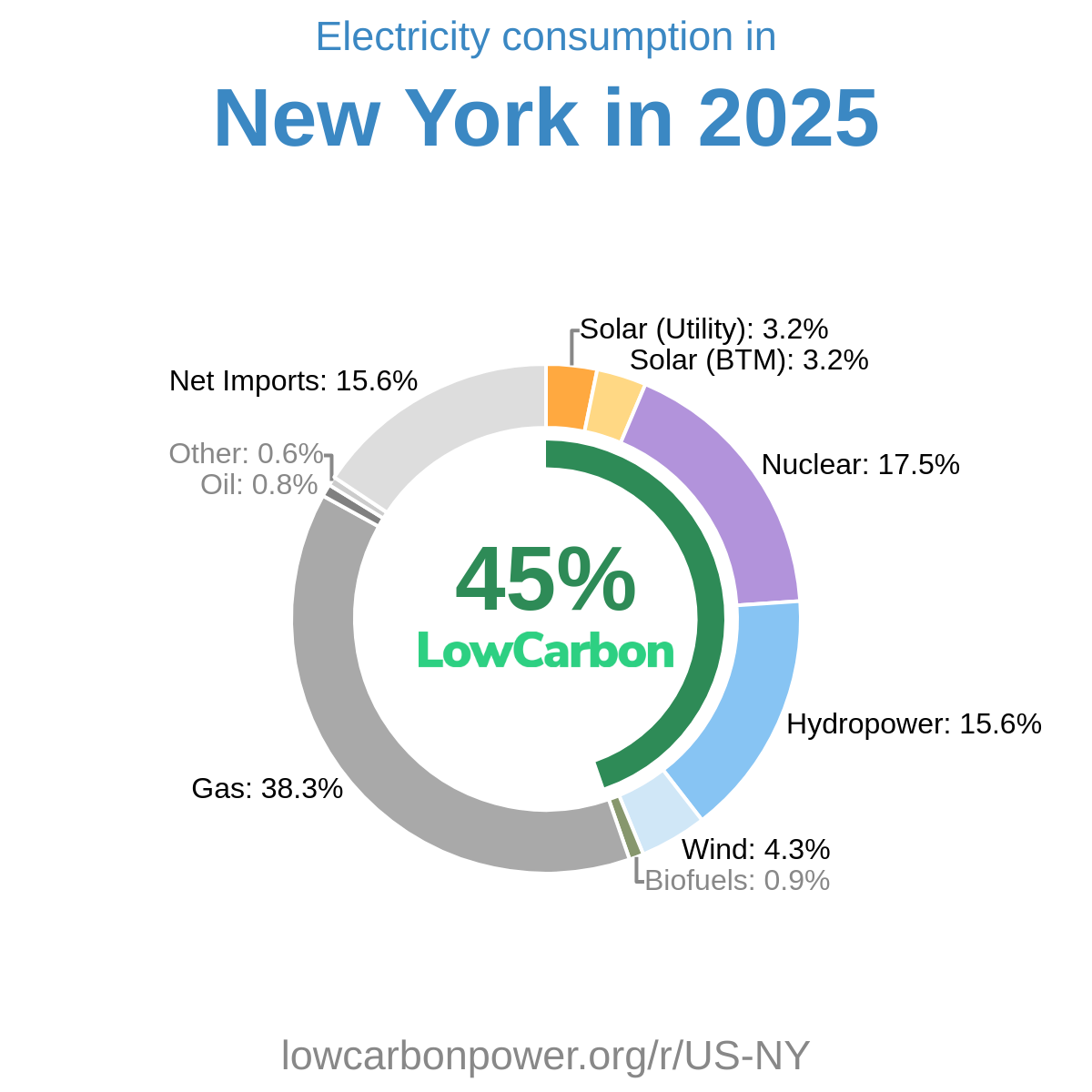


Unspecified-renewables refer to a collective category of energy sources that harness natural phenomena to generate electricity, but are not explicitly defined as a specific type of renewable resource like wind or solar. This designation can include a variety of green energy forms with variable environmental impacts, yet they are generally recognized for their potential to provide electricity without the significant environmental footprint of fossil fuels. Emphasizing the clean energy agenda, unspecified-renewables symbolize a crucial shift towards more sustainable electricity generation practices.
To generate electricity from unspecified-renewables, several technologies might be at play, including but not limited to, wind turbines, solar panels, hydroelectric dams, and potentially even biomass or geothermal facilities. Each of these technology types harnesses natural forces or substances to produce electricity. For example, wind turbines convert the kinetic energy of wind into mechanical energy, which is then used to turn a generator and produce electricity. Likewise, solar panels utilize photovoltaic cells to convert sunlight directly into electricity. Both represent pivotal, low-carbon energy technologies within the broad category of unspecified-renewables.
Despite their benefits, there are some challenges associated with unspecified-renewables. One significant drawback is the variability in carbon intensity. While unparalleled in their role as green energy sources, some renewable forms like biofuels have a carbon intensity of up to 230 gCO2eq/kWh, slightly higher than other low-carbon sources. Nonetheless, when compared to fossil fuels like coal and oil, which contribute upwards of 650 to 820 gCO2eq/kWh, unspecified-renewables offer a cleaner alternative essential for combating climate change.
Another limitation associated with unspecified-renewables is air pollution. While technologies such as wind and solar emit virtually no pollutants during operation, some methods, including biomass, might release pollutants when combusted. These emissions can contribute to local air quality issues and health problems, though they are still significantly less than those associated with fossil fuel energy sources. Therefore, it is vital to continue refining and advancing clean technologies such as wind, solar, nuclear, and others to reduce any negative impacts further and ensure a clean energy future. These endeavors will play a pivotal role in achieving sustainable and reliable electricity generation while minimizing environmental consequences and addressing urgent climate issues effectively.
In advocating for clean electricity, a focus on expanding nuclear and solar is critically important. These technologies are not only low in carbon emissions but also offer a sustainable path to large-scale electricity generation. Nuclear power stands out with its incredibly low carbon intensity of just 12 gCO2eq/kWh, offering a stable and reliable power source. Meanwhile, solar energy, at 45 gCO2eq/kWh, presents an ever-growing opportunity to harness the abundant energy of the sun. Expanding these green energy sources is crucial in ensuring that more than half of our electricity comes from clean, low-carbon technologies, helping us combat climate change and air pollution while powering the future demands of electrification and AI development.
| Country/Region | kWh/person | % | TWh |
|---|---|---|---|
| Republic of China (Taiwan) | 166.2 W | 1.3% | 3.8 TWh |
| New Mexico | 95.2 W | 0.5% | 0.2 TWh |
| Hawaii | 49.5 W | 0.6% | 0.1 TWh |
| Alaska | 43.2 W | 0.5% | 0.0 TWh |
| Utah | 28.1 W | 0.3% | 0.1 TWh |
| Vermont | 21.2 W | 0.2% | 0.0 TWh |
| South Dakota | 19.7 W | 0.1% | 0.0 TWh |
| Czechia | 17.9 W | 0.3% | 0.2 TWh |
| Minnesota | 17.1 W | 0.1% | 0.1 TWh |
| Idaho | 13.9 W | 0.1% | 0.0 TWh |
| Finland | 13.7 W | 0.1% | 0.1 TWh |
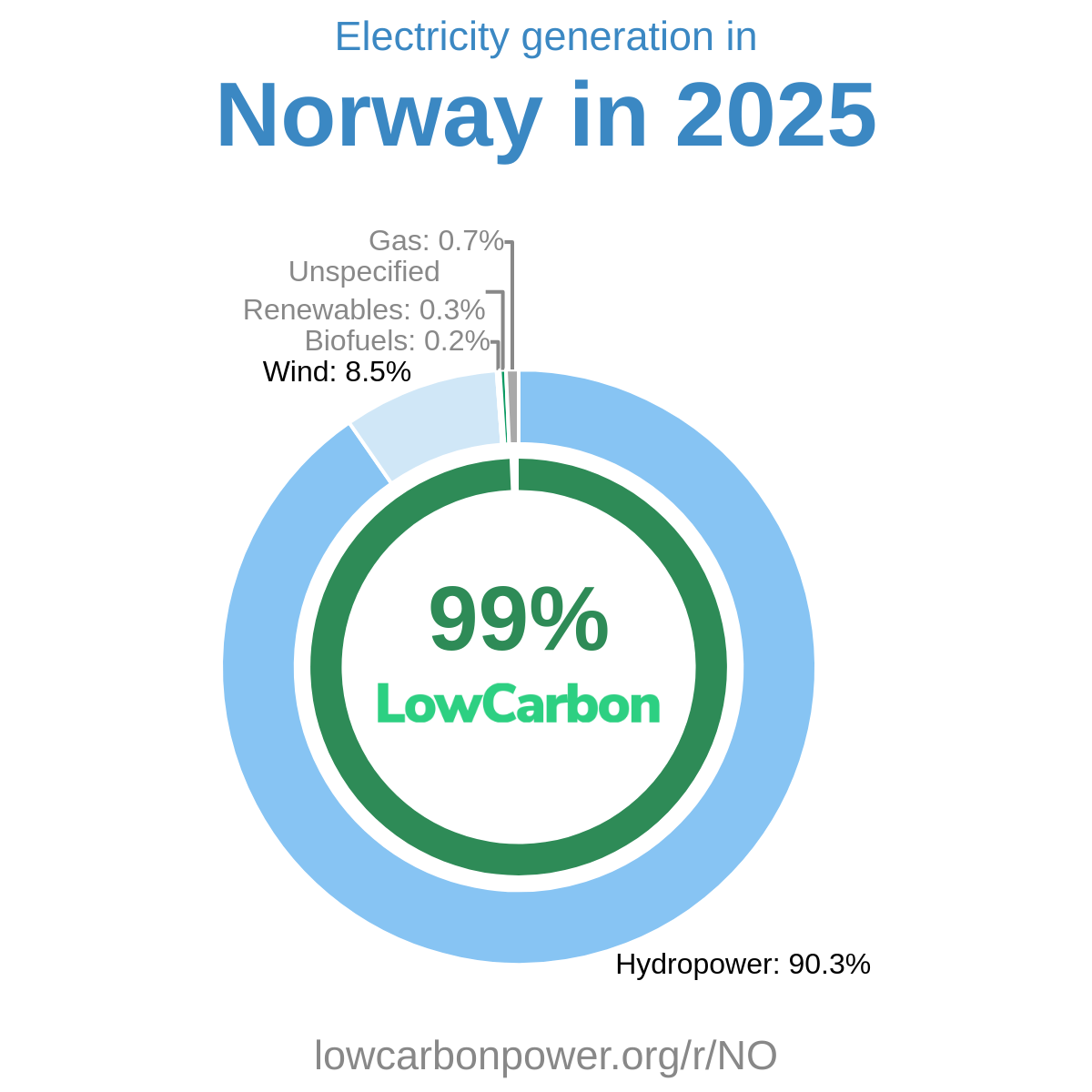
| Norway | 7.7 W | 0.0% | 0.0 TWh |
| Slovakia | 7.2 W | 0.1% | 0.0 TWh |
| Croatia | 6.7 W | 0.1% | 0.0 TWh |
| Belgium | 6.3 W | 0.1% | 0.1 TWh |
| Delaware | 5.7 W | 0.0% | 0.0 TWh |
| Illinois | 4.7 W | 0.0% | 0.1 TWh |
| Poland | 4.3 W | 0.1% | 0.2 TWh |
| Washington, D.C. | 4.1 W | 0.0% | 0.0 TWh |
| Florida | 4.0 W | 0.0% | 0.1 TWh |
| Arizona | 3.9 W | 0.0% | 0.0 TWh |
| New Hampshire | 3.4 W | 0.0% | 0.0 TWh |
| Lithuania | 3.1 W | 0.1% | 0.0 TWh |
| Rhode Island | 2.8 W | 0.0% | 0.0 TWh |
| Italy | 2.8 W | 0.1% | 0.2 TWh |
| West Virginia | 2.3 W | 0.0% | 0.0 TWh |
| Estonia | 2.2 W | 0.0% | 0.0 TWh |
| EU | 2.1 W | 0.0% | 1.0 TWh |
| Romania | 2.0 W | 0.1% | 0.0 TWh |
| Montana | 2.0 W | 0.0% | 0.0 TWh |
| Slovenia | 1.4 W | 0.0% | 0.0 TWh |
| Kansas | 1.4 W | 0.0% | 0.0 TWh |
| Nevada | 1.3 W | 0.0% | 0.0 TWh |
| Ireland | 1.3 W | 0.0% | 0.0 TWh |
| Hungary | 1.2 W | 0.0% | 0.0 TWh |
| Spain | 1.1 W | 0.0% | 0.1 TWh |
| Germany | 0.7 W | 0.0% | 0.1 TWh |
| France | 0.4 W | 0.0% | 0.0 TWh |
| Connecticut | 0.4 W | 0.0% | 0.0 TWh |
| United Kingdom | 0.2 W | 0.0% | 0.0 TWh |
| Wyoming | 0.0 W | 0.0% | 0.0 TWh |
| Arkansas | 0.0 W | 0.0% | 0.0 TWh |
| Colorado | 0.0 W | 0.0% | 0.0 TWh |
| Tennessee | 0.0 W | 0.0% | 0.0 TWh |
| North Carolina | 0.0 W | 0.0% | 0.0 TWh |
| Alabama | 0.0 W | 0.0% | 0.0 TWh |
| Ohio | 0.0 W | 0.0% | 0.0 TWh |
| South Korea | 0.0 W | 0.0% | 0.0 TWh |